
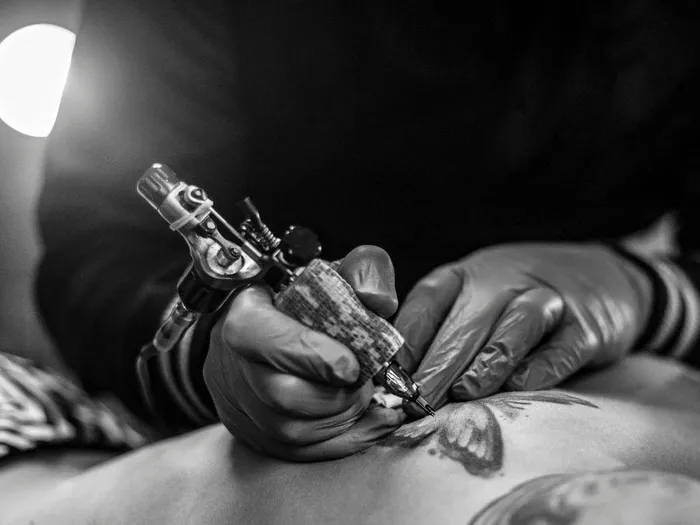
There is no code of conduct regulating tattoo artists or body piercing in South Africa.
Image: Files
ETHEKWINI Municipality has called on all tattoo and body-piercing businesses to register with the City and comply with health and safety regulations.
The City confirmed today that fewer than 20 such businesses are officially registered and said there are currently no reports of unregistered studios.
Tattoo and body-piercing businesses are required to register with the municipality and must hold a valid health compliance certificate issued by the City.
“Tattooing and body-piercing practices within the municipality are regulated under the Municipal Public Health By-Law and the Environmental Health Norms and Standards (No. 6740). These establishments are required to comply with prescribed hygiene and health standards,” said municipal spokesperson Gugu Sisilana.
Sisilana told the Independent on Saturday that environmental health officials conduct bi-annual inspections of tattoo and body-piercing facilities to ensure compliance with legislation.
“Where a studio fails to meet hygiene or safety requirements, the City may issue compliance notices instructing the operator to rectify the non-compliance. Fines may also be imposed, where applicable,” she said.
Last week, the Independent on Saturday reported that the vast majority of tattoo and piercing parlours in South Africa were unregistered and lacked formal health and safety standards.
Bradley Wilson, who founded the Council for Piercing and Tattoo Professionals in 2010, said there is no compulsory training or national standard for tattooing or piercing - even though nerve damage from piercings can have lifelong consequences and tattoos can transmit disease.
“You’re not just drawing on the skin - you’re carving it,” he said, calling for urgent regulation.
Wilson also raised concerns about the materials used, such as ink, stressing the need to ensure safety. “There’s an immense number of manufacturers worldwide. I don’t know where all these products come from or how they’re made. As an artist, you get them from your supplier and trust they’re okay. But you have to do your homework. It’s about ethics.”
He added that South Africa has thousands of tattoo artists, but nobody knows the exact number.
While the council encourages apprenticeships in established studios and courses in first aid and blood-borne pathogens, the lack of legislation means anyone can currently open a studio.