
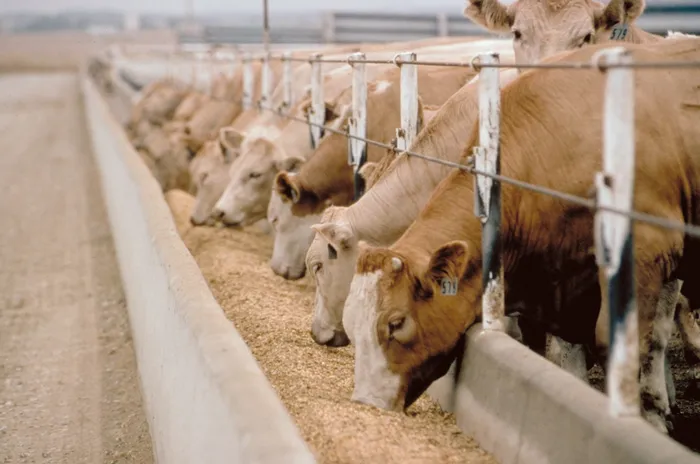
South Africa has taken a major step in protecting its livestock with the production of the first locally made foot-and-mouth disease vaccine
Image: File picture
AGRICULTURE minister John Steenhuisen, has appointed Dr Gary Bauer of Wildlife Ranching South Africa (WRSA) to the Ministerial Task Team overseeing South Africa’s Foot-and-Mouth Disease (FMD) response.
Steenhuisen said that Bauer will represent the wildlife sector, bringing critical expertise at a time when the intersection of wildlife, livestock, and disease control has never been more important.
African buffaloes (Syncerus caffer) are the natural, asymptomatic reservoirs of all three Southern African Territories (SAT) serotypes of the FMD virus. They maintain and transmit the virus, remaining the primary source of infection for livestock in Southern Africa. Once a herd in a red-line district is infected, the virus cannot be eradicated.
The implications for South Africa’s wildlife and livestock industries are profound. The country has more than 3 200 registered disease-free buffalo farms, supporting tens of thousands of jobs in rural areas and contributing billions of rand annually to hunting, tourism, genetic sales, and related services. The disease-free buffalo industry is therefore highly vulnerable to the current outbreaks.
“Infection in a certified disease-free herd currently requires complete culling,” Dr Bauer explained. “In large reserves spanning tens of thousands of hectares, with thousands of buffaloes, this is practically unworkable and poses enormous logistical, environmental, and economic challenges.”
Steenhuisen stressed the importance of integrating the wildlife sector into South Africa’s FMD recovery plan. “Buffaloes are central to the epidemiology of this disease in southern Africa. Any serious strategy to restore our status must account for that reality,” he said.
Other wildlife species, including warthog and kudu, can act as intermediaries. Factors such as poor fencing, shared water points, and intensive feeding practices further increase the risk of transmission. Targeted cattle vaccination around buffalo zones, strict biosecurity, and science-based movement controls are therefore essential pillars of the national response.
Steenhuisen outlined the government’s strategy: South Africa will vaccinate the national herd in a phased, controlled, and verifiable manner to regain FMD-free status with vaccination, in line with the World Organisation for Animal Health (WOAH).
The Ministerial Task Team is part of a broader three-pronged structure that includes the Department of Agriculture, the Technical and Scientific Task Team, and the FMD Industry Coordination Council. This partnership ensures alignment between policy, veterinary science, and operational execution.
“The stakes are extremely high. If we do not get this right, the consequences for both livestock and wildlife will be long-lasting,” Steenhuisen said. “But if we stay disciplined, science-driven, and united, we can restore our status and protect the entire value chain.”
The task team is currently implementing a fact-driven blueprint focused on vaccination, regionalisation, traceability, surveillance, and market re-entry readiness.
Bauer’s appointment strengthens that effort and ensures the wildlife industry’s expertise is fully integrated into South Africa’s National Disease Recovery Plan.