
SURREAL. That’s how South African filmmaker SJ Van Breda describes the five international awards she scooped for Squashbox, her documentary about KZN Maskandi duo David ‘Qadasi’ Jenkins and Maqhinga Radebe.
Shot with just an iPhone and a drone, the film won Best Film, Best Documentary, Best Cinematography, Best Music Score, and the Blackmagic Cam Award at the 2026 SF3 (SmartFone Flick Fest) in Australia, one of the world’s most prestigious smartphone film festivals.
Only 16 out of 400 film entries were selected for screening at the gala event in the Sydney Opera House.
But behind the international accolades is a deeply human story. While millions around the world turned to sourdough during lockdown, Qadasi was busy making squashboxes — the Zulu concertina that gives the film its name. It’s a craft that mirrors the duo’s musical journey: rooted in tradition, yet moulded to suit them.
Van Breda, who filmed, directed and edited the documentary, said the awards were so unexpected she initially thought it was a mistake, but the excitement of the South Africans in the audience who live in Australia made it extra special.
“I don't think I've fully processed that it happened yet, and I wasn't expecting to win so many awards, because as a documentary, you never really win best film, you know? And when you're competing against narrative films, they tend to win all the awards, so it was quite surprising, but very nice.”
The idea for the documentary came from her dad, who knew ‘Qadasi’ and Maqhinga.
Van Breda followed their journey over a year and a half in places like Ballito, Pietermaritzburg, Lion’s River, Durban, Kwanomponjwana, Sangoyana and parts of Ireland.
She says the documentary is a celebration of art, culture, resilience and the way, despite their cultural differences, they’ve become family.
“It's a very human story that I think a lot of people relate to. They're both so likable and I think genuinely honest as well within the film, and I think that comes through.”
The turning point for Van Breda came when they travelled to Maqhinga’s home in northern KZN and she witnessed the depth of their relationship. She was stressed — it took a long time to get there, they were running out of daylight, and some of the roads had been washed away.
“But when I arrived, Mac and his family were so welcoming and just open to sharing, which was so amazing. And we got such great footage. Mac allowed his grandchildren to be in the film and they were all around him watching him play the squashbox. I realised there's something special here and it kind of changed my whole thinking about the film. I just shot this really nice moment that I was privileged enough to be allowed to witness, and at that moment I knew that this story is something else.”
South Africans will have to wait to see Squashbox as it can only go public once it has completed its film festival run.
Van Breda hopes the documentary will encourage South Africans to remain at home rather than move abroad.
“It has changed so much and there are so many cool people doing amazing things and appreciating each other's culture in this country. And yes, we definitely have problems, but you should stay and help build the country. And for everyone else who watches it, I'm just hopeful that they feel they want to go to South Africa because it's a beautiful place filled with amazing people.”
Qadasi told the Independent on Saturday that his relationship with Maqhinga is special because it’s not what anyone would expect. “Looking at us and looking at me standing there with traditional regalia on and with my guitar, immediately, it's different.”
Most importantly, he says they don’t preach, they go on stage and lead by example by doing what they love.
“This is what we are passionate about. This is what I'm passionate about, what I grew up loving, and I think that's important for everyone out there; if you're really passionate you can make anything happen if you put in the effort.”
Qadasi says he and Maqhinga have known each other for 15 years but have worked together since 2013. “It’s been an incredible journey, and we're very excited to see what the future holds, especially with travelling abroad and taking our music to foreign audiences.”
They love traditional Maskandi music, but while Maqhinga’s style is influenced by the music he grew up with in the Ladysmith area, Qadasi enjoys fusing traditional sounds with Western folk. They’ve built an “organic” fan base in Europe, especially Germany, where audiences seem to connect strongly with the music, he says.
Initially he planned to study cinematography, but music was always part of his life and as his live Maskandi performances increased while still at school, he and his family realised that this was the path he should follow.
“During matric, I met Maqhinga in Durban where we had a jam session, we just immediately clicked. And that was essentially when I realized, there's something here, let's see where this can go.”
Qadasi says the documentary is timeous, especially for young people.
“You've got two guys from totally different backgrounds, two different races. Maqhinga is older — I'm young enough to be his son. So we’re just two guys from totally different backgrounds who are doing what they love and not thinking anything about it. This is who we are. This is what we love. We don't see anything else other than that, and we hope that that's what people will see from the documentary — it’s just us being who we are.”
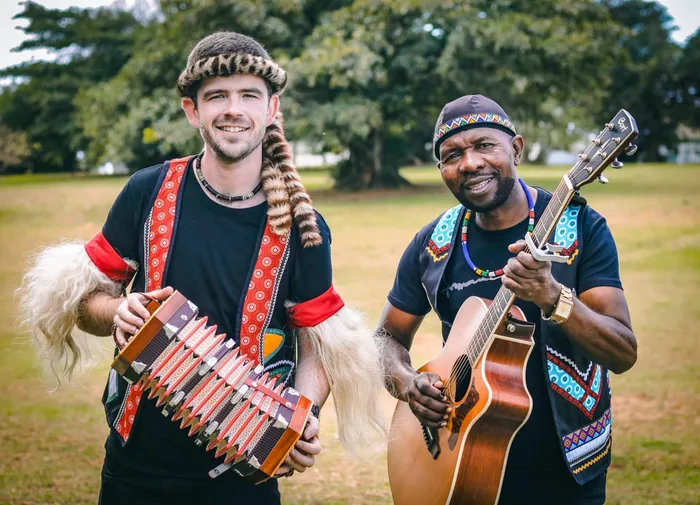
Maskandi duo David ‘Qadasi’ Jenkins and Maqhinga Radebe.
Image: Sue Jenkins
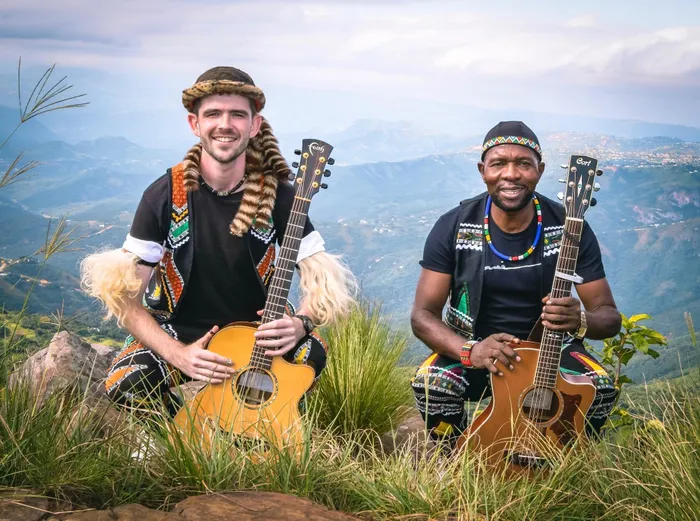
Maskandi duo David ‘Qadasi’ Jenkins and Maqhinga Radebe.
Image: Sue Jenkins
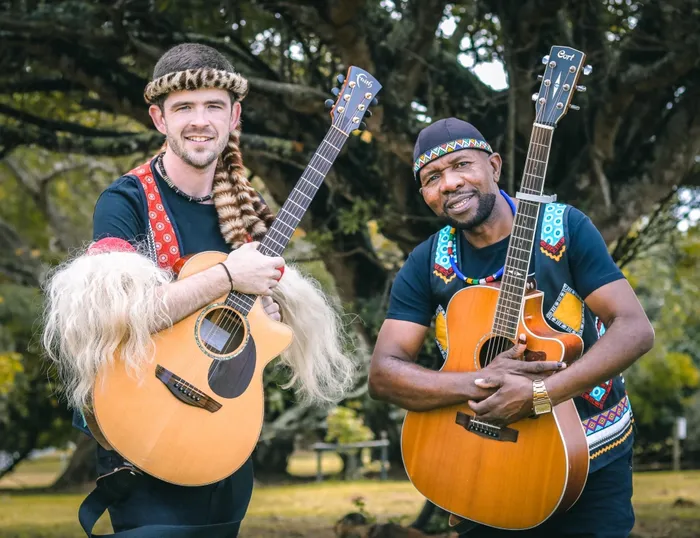
Maskandi duo David ‘Qadasi’ Jenkins and Maqhinga Radebe.
Image: Sue Jenkins