
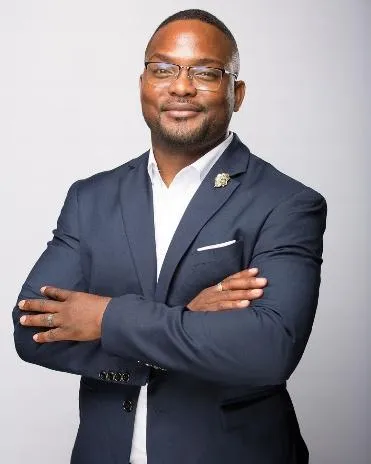
Dr Njabulo James Nkosi has written his third book, Father of Man: The 5 Ideals to Build Better Men.
Image: Supplied.
HE was about to get married and pondering how to be a better man when Dr Njabulo James Nkosi decided it was time to work on his latest book, Father of Man: The 5 Ideals to Build Better Men.
The project took almost six years to complete, a period in which he went through many hardships.
“I wasn’t writing from a place of, okay, Google, what does it take to be a man? I was tested in every single metric possible,” he says, citing personal losses, financial setbacks, and family challenges that reinforced the principles he was writing about.
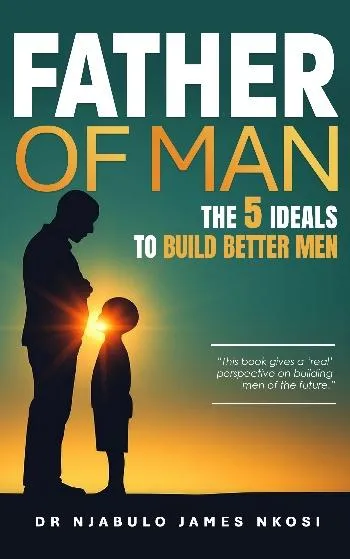
The latest book by Dr Njabulo James Nkosi.
Image: Supplied.
Nkosi says that in a country scarred by gender-based violence and fractured families, he wanted to find the answers to the urgent conversation about how to create men of integrity, compassion, and accountability.
"You can be a male without being a man. Being a man is a choice, a choice to adopt responsibility and consciousness, every single day," he told The Independent on Saturday this week.
“The lesson that must stay with them is that we can all become better people to ourselves and to each other,” Nkosi says. “More importantly, when we have better men, we inevitably have a better world, inevitably have a better society. And the realisation will hit — and must hit — that this journey is hard. It is gut-wrenching. It is not simple. But it is far more than worth it for you to make sure that you become a much better person and make sure that other people become better, especially around building better men.”
Blending personal reflection with social commentary, Nkosi argues that transforming society begins with the inner work men are willing to do, and the example they choose to set. And while many in South Africa believe that change starts with educating boys, Nkosi believes it really starts with men.
“To build better men, start with the adults; healed, responsible men teach boys how to be men,” he says. Men must become the person they needed in their lives when they were younger, confronting and dealing with childhood trauma, thereby creating a blueprint for boys to be better adults.
Through 35 chapters, with titles including Manhood, Uncomfortable Questions, Evil, Identity and Imagination, and When Superman Becomes Clark Kent, his book is a roadmap from hurting to healing.
Nkosi explains that part of the growth process is stepping into the five non-negotiable roles that define manhood: protector, provider, promoter, priest, and prophet. As a project management specialist and life coach, he says a man protects those around him, provides emotional, financial, and physical security, and promotes the growth and well-being of others.
Being a man, he emphasises, is a daily choice. “Being a male doesn’t automatically make you a man. Being a man is a choice to adopt a high level of responsibility and consciousness every single day.”
He also delves into the emotional conditioning of men, who are often taught not to cry, to always be strong, and to keep their struggles to themselves. And in a country where therapy is still largely whispered about, and a taboo for many men, Nkosi encourages it as a tool for healing childhood wounds, “regardless of how well or how broken life is.” He has been in therapy for a substantial period and says it has profoundly benefited him.
Not expressing grief, whether from the death of parents or childhood abuse, can be disastrous for life and relationships, he warns.
“That always ends up an unmitigated disaster in the long run. Even if it is just a mentor or a fellow brother, everyone should have a counsellor around them that allows them to talk and to share their grievances or to share their struggles. If you get into a car accident or fall and break an arm, you get a band-aid or go to the hospital. But when you face an emotional wound, we just move past. The healing for that is some form of therapy and therapeutic interventions.”
Fittingly, the dedication at the start of the book reads: “To my father, whose strength became my standard, and to every man brave enough to rebuild himself.”
Nkosi has also written two other books: Inspired Success: The Five Keys to Reach Greater Heights of Achievement (2017) and You Are a Business: Treat Yourself Like One! (2019).
Father of Man: The 5 Ideals to Build Better Men, a 270-page paperback, retails for R349 and can be found at all major bookshops and on his website: www.njabulojames.com.