
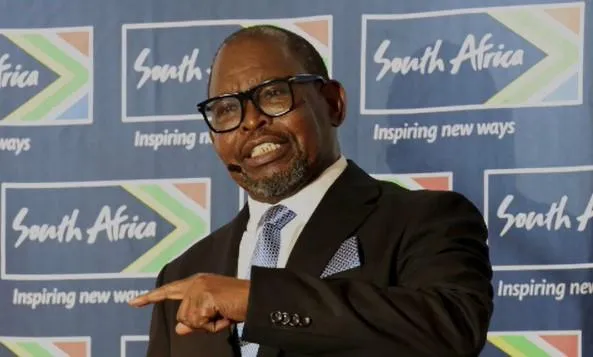
Minister of Finance Enoch Godongwana.
Image: GCIS
A LEADING development agency has criticised the modest rise in education spending in the national budget, warning that the increase falls short of what is needed to tackle deep inequalities in the sector.
Kagiso Trust said the 2.44% funding increase announced by Finance Minister Enoch Godongwana risks entrenching systemic gaps that undermine economic growth.
The budget allocates R358.5 billion to basic education and R155.8 billion to higher education. While education remains one of the largest spending items, Kagiso Trust chief financial officer Mzomhle Nyenjana said the increase does not match the scale of the crisis.
“We are grateful for government’s continued commitment to education, which is the largest budget item after the costs of servicing debt and remains the single most powerful lever for breaking the cycle of poverty,” Nyenjana said. “However, the scale of the challenge demands far greater investment. Inequality within our education system is an economic threat that will limit our growth for generations to come.”
The organisation welcomed additional funding for early childhood development (ECD), after President Cyril Ramaphosa signalled an expansion of access. Treasury has set aside R12.8 billion over three years, expected to create space for about 300 000 more children.
“ECD is where inequality begins,” Nyenjana said, noting that children who miss quality early learning often struggle to catch up. He added that increased spending projections for ECD over the next two years were encouraging but warned that nutrition support remains limited to the existing 9.9 million learners.
Kagiso Trust also backed major increases in funding for technical and vocational education and training (TVET) infrastructure, which is set to rise sharply from 2026. The boost, Nyenjana said, could help address South Africa’s persistent mismatch between graduate unemployment and scarce technical skills.
However, the agency raised concern about cuts to student funding. The budget projects a 6.68% reduction in the allocation to the National Student Financial Aid Scheme in 2026/27, leaving the so-called “missing middle” — students who do not qualify for aid but cannot afford fees — with few options.
Infrastructure remains another pressure point. Kagiso Trust noted that many schools still lack reliable water, electricity and safe sanitation, despite R1.2 billion earmarked for improvements in Eastern Cape, KwaZulu-Natal and Limpopo.
“You cannot deliver quality education in buildings that leak, classrooms without electricity, or schools where children use pit latrines,” Nyenjana said.
While acknowledging fiscal constraints, the trust argued that stronger, targeted investment is essential. “We understand the trade-offs, but we cannot trade away our future,” he said, urging the government to treat education as a central pillar of economic security in South Africa.