
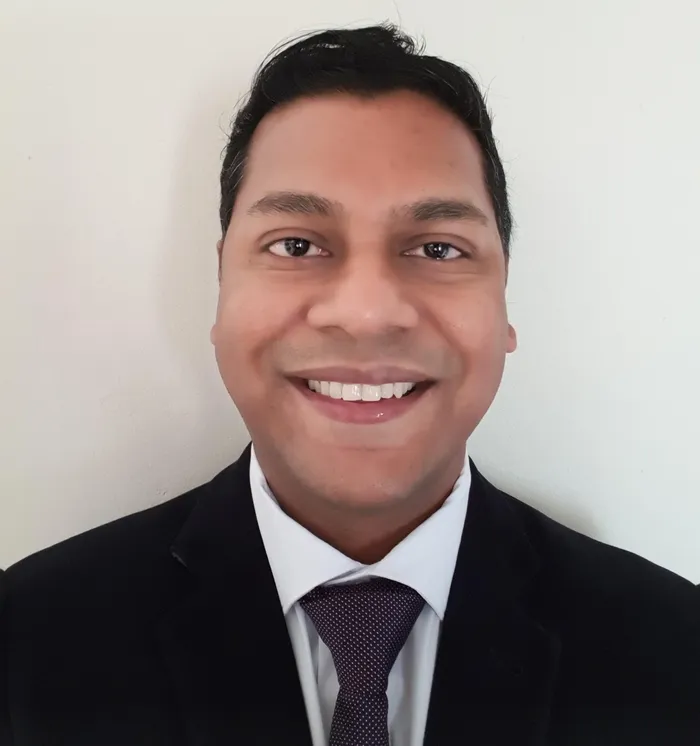
Professor David Lokhat is the uMngeni-uThukela Water Chair in Water Resources Research and Innovation at the University of KwaZulu-Natal.
Image: Supplied.
Professor David Lokhat
THE lack of access to clean drinking water in the developing world is a threat to global sustainability, biodiversity and ecosystem resilience. Around 2 billion people globally use a source of drinking water that is contaminated. Worldwide, more than 2 million people die every year from diarrhoeal diseases. Poor hygiene and unsafe water are responsible for nearly 90 per cent of these deaths and mostly affect women and children. Although access to improved water sources (such as boreholes) has increased, the quality of the water obtained from them is still unsatisfactory, as they carry various microorganisms and suspended contaminants.
The 22nd of March has been, for the last 33 years, observed as World Water Day, which underscores the continued importance of access to fresh water and sustainable management of water resources. The theme adopted for this year is “Water and gender” with the campaign title “Where water flows, equality grows”.
This theme emphasizes safe drinking water and sanitation as fundamental human rights and critical enablers of gender equality. The lack of safe drinking water and proper sanitation services is a global crisis that affects everyone, but not equally. It creates and exacerbates health issues, stunts socio-economic progress and widens the gender and equality gaps. South African is not exempt from these challenges.
In addressing these issues, several key considerations should be taken. Firstly, recognizing the impact of climate change on water services development and provision is critically important. The world is changing at an appreciable rate. We have to embed sustainability and resilience into the water value chain. Secondly, policy and governance frameworks have to adapt as rapidly as technologies do, to ensure tangible uptake of such technologies.
They should provide a structured framework that translates high-level strategic goals into actionable, consistent, and accountable operational steps. Lastly, implementation of new infrastructure and technologies should benefit all communities, either directly or indirectly, to ensure that the most vulnerable are not left behind.
The deep interdependence of water, energy, and food systems underpins a framework at the centre of the current drive towards sustainable development (i.e. the water-energy-food nexus). Conventional and emerging energy technologies have substantial water footprints, which have to be carefully managed.
Thus, integrated planning for both water and energy resilience should be emphasized. Sanitation and water resources are also critically linked, with inadequate sanitation a significant threat to water quality. Circular water solutions can address both of these issues.
For example, thermal hydrolysis processing and anaerobic digestion of water treatment sludge can generate clean energy from water and sanitation systems, enhance water reclamation and produce a digestate that can be upgraded to a high-quality, pathogen-free fertilizer for land application and agriculture. Such solutions are technologically mature, but integration into local contexts requires innovation in financing, governance and operation.
South Africa is a water scarce country. Moreover, development and maintenance of water infrastructure remains a critical challenge within our borders. However, we are encouraged by the remedial efforts at the national level. The recently tabled national budget makes provision for over R150 billion over the next three years for water and sanitation projects, which demonstrates key consideration of the importance of the sector for social upliftment and economic growth.
In response to constrained water supply in some of the most densely populated areas of the country, the President has established the National Water Crisis committee. We are yet to see the impact that this entity will have, but are hopeful that such measures will place renewed emphasis on the shared challenges in this area.
Mitigation and adaptation strategies require strong partnerships to transition to tangible solutions. At the University of KwaZulu-Natal for example, the uMngeni-uThukela Water Chair in Water Resources Research and Innovation was established to produce use-inspired technological innovations for improvement of the water sector in the KZN region.
Industry and academic partnerships such as the one between uMngeni-uThukela Water and UKZN are very important for developing a sustainable innovation ecosystem, as they allow for developing solutions to authentic problems, cross-pollination of ideas and capacity building amongst stakeholders.
To meet the needs of the water sector, innovators have been working on a variety of solutions. Geographic Information Systems (GIS) monitoring of water quality, distribution, and infrastructure is helping address the issues around water losses and improve water resource management. Development of more sustainable and environmentally benign water treatment materials is reducing the dependence on synthetic chemicals.
Beneficiation of water treatment waste is being developed as a potential method of reducing environmental impact of operations. The enablers of these solutions will be the water boards, municipalities and end-users.
A concerted effort needs to be made to translate these solutions into working prototypes and further into commercial ventures. To this end, platforms for connecting innovators will be very useful, and incubation support from entities such as the Technology Innovation Agency will be critical.
The value of water cannot be overstated. In order to build an inclusive, prosperous future for all South Africans, and contribute to the achievement of Sustainable Development Goal 6, all citizens need to actively participate in water saving strategies, industries need to improve water usage efficiency and reduce water demands, municipalities need to identify and remediate water losses, and bulk water suppliers need to carefully manage water resources. Collectively, all stakeholders in the water value chain can ensure that this critical global resource is protected.
Professor David Lokhat is the uMngeni-uThukela Water Chair in Water Resources Research and Innovation at the University of KwaZulu-Natal. He is also an advisor to Sustainalutions Africa, a circular infrastructure developer. He has been actively engaged in the advocacy and promotion of engineering, serving as a past president of the South African Institution of Chemical Engineers and 7th term Governing Council member of the Engineering Council of South Africa. He is a Royal Academy of Engineering Leaders in Innovation Fellow and an affiliate of the African Academy of Science. He is also a fellow of the South African Institution of Chemical Engineers and the Nigerian Society of Chemical Engineers.
The views expressed do not reflect those of the Independent on Saturday or IOL.