
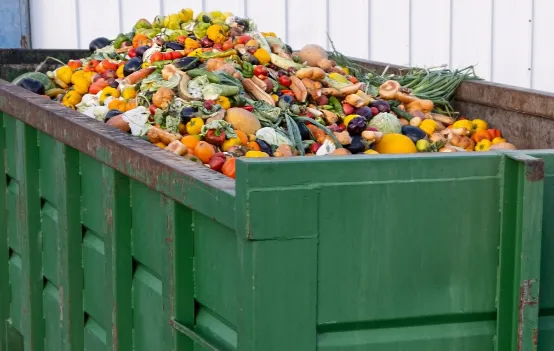
Between 9 124 and 17 969 tonnes of fruits and vegetables are wasted each year in South Africa, equivalent to roughly 450 to 900 fully loaded large trucks, according to a new study.
Image: Supplied
SOUTH Africa is discarding more than 10 million tonnes of food each year — roughly a third of the 31 million tonnes produced — at an estimated cost of R62 billion, even as hunger continues to affect millions of households.
The scale of the contradiction is stark: while vast quantities of food are lost or wasted, around one in five households in the country experiences hunger.
According to Dr Lize Barclay, a senior lecturer in futures studies and systems thinking at Stellenbosch Business School, the issue goes far beyond individual behaviour and reflects a deeper structural problem.
“Food waste is not just about throwing away a bruised strawberry,” Barclay said. “It is a complex systems issue that touches water usage, energy, land, climate and ultimately human dignity.”
Fruits, vegetables and cereals account for about 70% of the total food waste and loss, while meat, dairy, roots, tubers and oil seeds contribute a further 28%, pointing to inefficiencies across the entire food system — from production to consumption.
The environmental cost is equally significant. Around 90% of South Africa’s waste ends up in landfill, with organic waste making up roughly 27% of that total. As food decomposes, it releases methane and carbon dioxide, both potent greenhouse gases.
“About 90% of waste in South Africa goes to landfill, and organic waste makes up roughly 27% of that,” Barclay said. “As food decomposes, it releases methane and carbon dioxide, potent greenhouse gases that intensify climate pressure globally.”
Despite these impacts, Barclay noted that environmental concerns are often overshadowed by more immediate pressures, including rising living costs and global instability.
“When we experience more frequent droughts or floods, we are seeing the consequences of how resources are managed,” she said. “Reducing food waste is one of the most immediate and practical ways individuals can contribute to easing pressure on energy, water and land — while also saving money.”
She said tackling food waste does not require sweeping policy shifts alone, but also consistent behavioural changes at household level.
Simple interventions — such as planning meals, buying only what is needed, storing food correctly and using leftovers — can significantly reduce waste. Choosing imperfect produce, freezing surplus food before it spoils and composting organic waste are among the measures that can ease pressure on landfills and extend the life cycle of food.
Barclay also pointed to the role of redistribution, encouraging households to share or donate excess food where possible, rather than discarding it.
“Addressing food waste only requires awareness, intention, and small, consistent actions,” she said. “When multiplied across households, these actions can shift the system.”
At its core, she added, the issue is not only about inefficiency or environmental harm, but about a loss that carries broader social consequences.
“It is not just food we are throwing away,” Barclay said. “It is resources, money, and ultimately dignity.”