
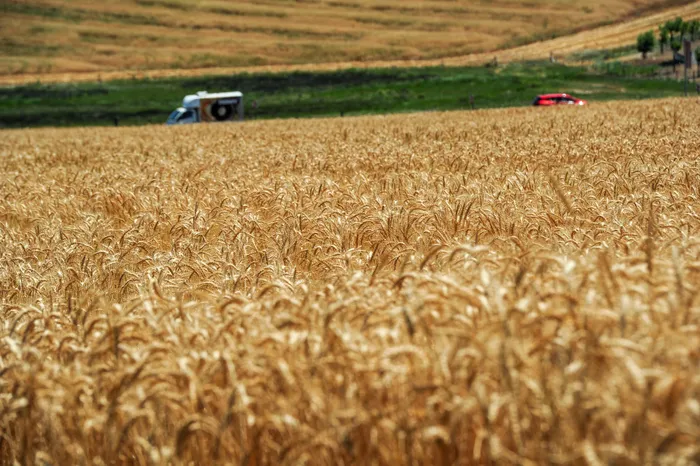
The 2026 Grain SA Congress held recently said that there is a clear message from the congress that there is a widening gap between the cost of production and the returns producers receive.
Image: Picture: Henk Kruger Independent Newspapers
SOUTH African farmers are facing mounting pressure as geopolitical tensions in the Middle East push up fuel, fertiliser and freight costs, disrupting supply chains and increasing strain across the agricultural sector.
The instability, particularly around key shipping routes near the Strait of Hormuz, has driven up diesel prices, tightened fertiliser supply and complicated export logistics, placing significant stress on grain producers and export-oriented horticulture.
Sanele Nkosi, Head of Agriculture at BDO South Africa, said the sector’s reliance on imported inputs leaves it highly exposed to global shocks.
“South Africa’s agricultural sector is uniquely exposed to global shocks,” Nkosi said. “Farmers rely heavily on imported inputs such as fertilisers, fuel and machinery, while selling into globally priced markets.”
The most immediate impact has been felt in fuel prices. Inland diesel prices rose by 62 cents per litre in March, increasing costs across planting, irrigation, harvesting and transport.
“Diesel is the lifeblood of commercial farming,” Nkosi said. “When costs rise, especially alongside currency pressure, the impact compounds quickly.”
South Africa’s dependence on imported fuel, much of it sourced from Gulf countries, is amplifying the effect as shipping risks and insurance costs increase.
Fertiliser costs are also rising at a critical time. The country imports most of its fertiliser from Saudi Arabia, Qatar, Oman, Russia and China, and disruptions to shipping routes are pushing up prices ahead of a key procurement window for the next planting season.
“Fertiliser can account for up to 50% of input costs in grain production,” Nkosi said. “If supply becomes unstable, farmers may reduce application, switch crops or plant less.”
Any reduction in fertiliser use is likely to affect yields and could, in turn, drive up food prices.
Export logistics are also under pressure. South Africa’s citrus, wine and fresh produce industries depend on reliable shipping, but delays and rising freight costs are increasing the risk of losses.
“Fresh produce exports rely on timing and reliability,” Nkosi said. “A delay at port can translate directly into financial loss.”
The disruption is particularly significant as some of South Africa’s fastest-growing export markets are in the Middle East.
Financial pressures are compounding the strain. Sanctions, stricter compliance requirements and South Africa’s grey-list status are complicating trade finance, with banks becoming more cautious and processing times slowing.
Grain producers are seen as most exposed to rising input costs, while export-oriented horticulture faces heightened logistics risks. Irrigated regions are also under pressure due to higher energy costs.
Nkosi warned that while costs may stabilise if disruptions ease in the coming months, prolonged instability could entrench higher input costs, compress margins and force weaker producers out of the market.