
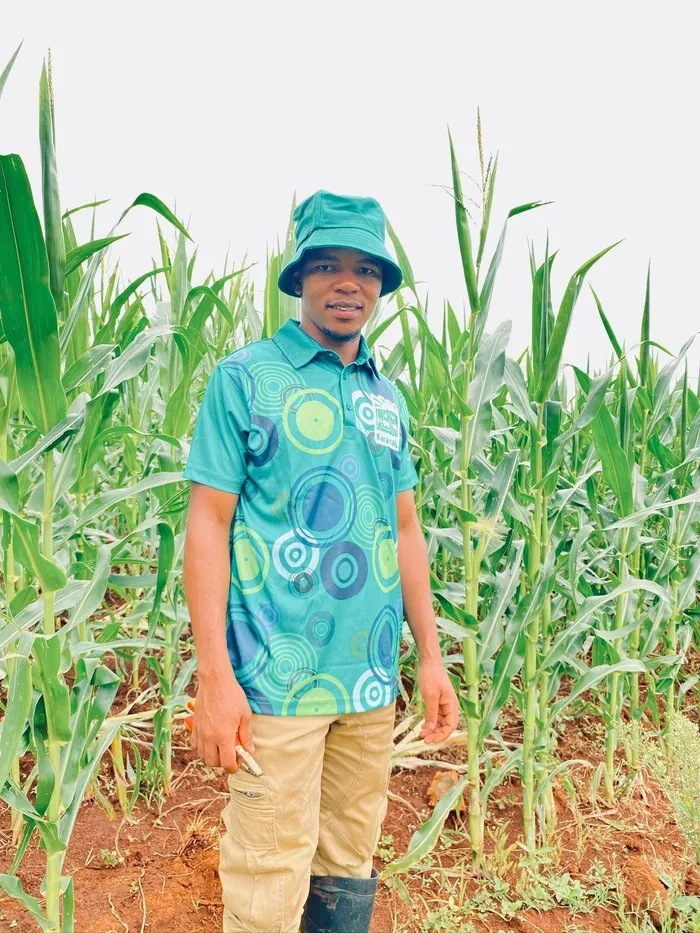
NQUBEKO Tenza is a crop and livestock farmer from Highflats, eMadungeni,
Image: Supplied.
NQUBEKO Tenza wanted to be a pilot.
That dream never took off. Instead, his fresh produce now lands on shelves at Spar and Boxer, as well as in the hands of street vendors.
The farmer from Highflats, eMadungeni, says Covid-19 was the turning point in his life. While the world was in lockdown, he started growing food; it was something he was familiar with because his mom always had a vegetable garden.
Today, his farm, Kdwa-Dliwehleli Crops and Livestock Farming, produces tens of thousands of cabbages each year, planting more than 10 000 seedlings every three months.
“Growing it from seeds to seedlings, and then making it to production makes me so happy. It’s proof of life. It’s like you’re bringing something into life,” he said.
Currently, he works on 8.5 hectares of land with permission from the local chief and aims to expand to 15 hectares in the near future.
“Agriculture is something that will always be there, whether the cost of living changes or not, because everybody needs food. We are the producers. We are the foundation of everything that’s moving around,” said Tenza.
He is one of several emerging farmers from rural KwaZulu-Natal turning small plots into viable businesses, reporting rising incomes and expansion plans. Backed by the KwaZulu-Natal Agricultural Union (KwaNalu) and Nedbank, the Women and Youth in Rural Entrepreneurship (WYRE) initiative has supported more than 1 500 participants since 2021, with income increases reportedly up to 20% within six months.
Tenza says he applied for an agri-learnership with KwaNalu in 2023. “I got interested because they would teach management skills, money management, how to calculate profit, and how to handle buying and selling. So I said, ‘let me give this a chance,’ and it helped me a lot.”
At the time, he was planting 1 000 cabbage seedlings. Today, he plants ten times that every quarter. He also farms goats and chickens, and says KwaNalu’s support with medication and resources has reduced livestock losses.
“When I was young, I dreamed of something more famous than farming. You don’t think of it as something important, you just take it for granted. But once you get into it, you see its value. I wish my children will fall in love with it like I did.”
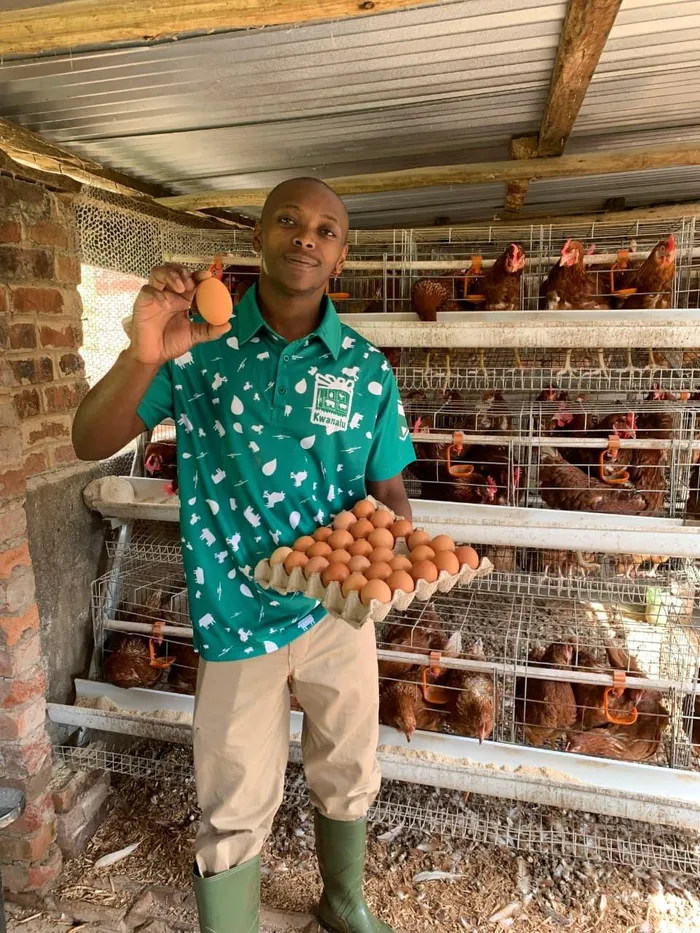
Bukhosibakhe Dlamini is a poultry farmer at Carnduff Glen farm near Ixopo.
Image: Supplied.
When Bukhosibakhe Dlamini finished matric, he moved to Durban hoping for a maritime job. Eight years later, he returned home to assist on the farm his father had bought with retirement savings.
“My father was struggling. He was about 84 years old, and people were stealing from him. So I decided to come back to help him, and that’s when I started my journey in farming.”
At the time, Carnduff Glen farm had 21 goats but his dad didn't have any more money to use the land productively.
“I was selling firewood and saving money to fix up the space and buy equipment. While researching; checking who was raising broilers, who supplied eggs, and talking to small supermarkets, I realised starting with broilers made sense because they are easy to manage.”
His poultry business has since grown, supplying street vendors, tuck shops and shisanyama operators. He also cultivates cabbage, broccoli and green peppers.
While farming is a 24/7 job, he wouldn’t trade it for anything else. “Just to be in a quiet space like this, giving you time to experiment without anyone judging you — it’s just you and yourself.”
After learning about KwaNalu, Dlamini approached them for support and they helped him to upgrade structures, receive feed, and gain business training. He is now pursuing food safety and halal certification after approaching a fast-food chain. He says being a farmer means that you have to be on duty around the clock.
“If I hear a funny noise in my coop, I just go and check. I don’t say, ‘I’m off now.’ Some people are shocked at the hours I work, but if you love what you do, it gives results in return. It comes with time,” he said.
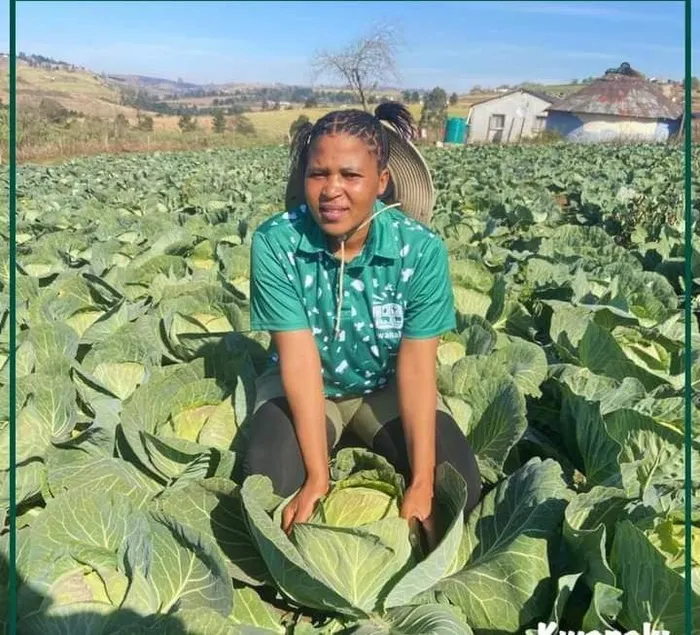
Neliswa Khanyile always wanted to be a farmer, following in the footsteps of her mother and grandmother.
Image: Supplied.
Neliswa Khanyile is a third-generation farmer, working three hectares of family-owned land in kwaSwayimane under the uMshwathi Municipality. The business began with her grandmother, passed to her mother, and now she runs Hope for Future Farming.
Her main crop is maize, but she also grows potatoes, amadumbe and up to 16 000 heads of cabbage. “Street vendors using vans are our main customers. Others buy from us and sell to bigger retailers,” she said.
Khanyile studied farming management before returning home, gradually introducing new techniques. “Older generations are used to doing things a certain way, but we are starting to bring in new ideas; trying different crops and improving the business. Now we are taking it more seriously.”
This year, she received R92 000 from Nedbank to improve the irrigation system. She has also implemented new methods on the farm. “We’ve been changing cultivars, trying different varieties, adjusting fertiliser application, doing more soil testing. It’s about understanding the land, the environment and the climate,” she said.
Khanyile admits it hasn’t been easy being a female farmer. “People don’t take you seriously, and they never want to pay the full price. But I’ve learned to be assertive. You have to stand your ground if you want your business to grow.”
The changes are already paying off. She now employs about 20 people when necessary, scaling production and renting an additional hectare to plant mielies. “I love watching things grow, from seedlings to harvest. With jobs being so scarce, farming gives you a way to support yourself. Food is something people will always need,” Khanyile said.