
ONE of classical music’s most enduring secrets might have been solved by a renowned South African human rights lawyer.
For over a century, Sir Edward Elgar’s music lifted hearts — but behind the soaring melodies lay a life of dissonance: a secret muse, a mistress, and apparently a love child known as Mignon.
Now, retired South African High Court judge Chris Nicholson claims he has unearthed information that the British establishment tried to bury. Fuelled by his love for classical music and the truth, he turned his research into a book titled Elgar’s Secret Lover.
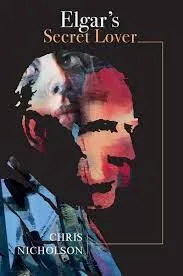
The book on Sir Edward Elgar written by retired judge Chris Nicholson.
Image: Supplied.
Solving the mystery he says became an obsession.
He says it was long speculated that Elgar portrayed friends in his music, not obviously but hidden in plain sight.
“…there was always this notion that Elgar wrote these famous Enigma Variations, where in music, he’s trying to portray his friends, and then he was clearly in love with a woman. So the XIII variation has just three little dots,” Nicholson said.
“And when he wrote this marvellous Violin Concerto, he again dedicated it with three little dots.”
Nicholson notes that, like many great musicians, Elgar hid codes in his compositions. “Buried in this work, lies the soul of…” he read from one of Elgar’s scores, “…and then left three little dots. So musicologists and writers have been battling, since he died — he died in 1934 — to find out who these muses were, in other words, who produced this incredible music.”
For decades, Nicholson sifted through letters, online archives, and coded dedications, finally tracing the muse who inspired Elgar; and the love child he never publicly acknowledged.
“In law, we have various tests for guilt, you know, beyond reasonable doubt, or in a civil case on a balance of probabilities,” Nicholson explained. “I think I almost got to the beyond reasonable doubt sort of test for who was his muse.”
According to Nicholson, Elgar was extremely passionate and deeply attracted to women. “It was almost as though when he fell in love, he got a sort of buzz, a creative energy. And that, for me, was very important to try and isolate how these geniuses find some way of creating their works.”
Though Elgar had multiple muses, there was one who captured his heart. Her identity puzzled scholars for decades, but Nicholson is convinced he finally cracked the truth.
The retired KZN-based legal practitioner argues that Elgar’s secrecy was deliberate. The Enigma Variations, first performed in 1899, marked his breakthrough onto the world stage. The Violin Concerto would later cement his reputation. Nicholson says that the clues appear in these defining works.
“Elgar loved codes and puzzles,” Nicholson said. “He was leaving a challenge.” He says the cryptic dedications and the now-famous three dots are proof that the composer embedded fragments of a hidden story into the music that made him a national icon. He hid the truth, not by erasing it, but by encoding it.
Nicholson described it as a “gigantic jigsaw puzzle.” “I had to try and fit in all the pieces, you know. Sometimes you'd get a wrong scent, and you'd go down the wrong trail. And then in the end, I thought, No, no, I think there is now enough evidence for me to set this down.”
One of Elgar’s most enduring puzzles, known as the Dorabella code, has bemused cryptographers for decades. Through his works and the subtle clues encoded in them, Nicholson believes Elgar was secretly pointing to a woman who inspired his most vaunted compositions; but given the era and his station in society, he couldn’t openly reveal her identity.
In his book, Nicholson blends fact and fiction, creating a detective character who investigates the mystery woman, piecing together her life through letters, scores, and articles all sourced from the internet. He said this allowed him to explore the story while respecting the gaps and uncertainties that remain.
Nicholson leans on historical research by musicologists like Michael Kennedy and Andrew Baker, who traced links connecting Dora Adeline Nelson to Elgar’s circle.
He says research shows that she was linked to prominent figures in the arts and music world. One of the sources reveals that her existence wasn't just gossip, but there were verifiable interactions, letters, and appointments. At the same time the network of people around Elgar knew, and many chose to stay silent.
Nicholson says the story is as much human as it is musical. “Imagine you’re Sir Edward Elgar,” he said, “and you’ve fathered a child. Your wife is a social climber, your reputation is everything… you encode the truth in your music. That’s exactly what he did.”
Beyond the personal story, Nicholson also wonders about the practical side; child maintenance, survival, and secrecy. “She must have been a very brave woman,” he said of Dora Nelson. “How do you survive when you’ve got an illegitimate child and you’ve sworn secrecy?”
In the end, Elgar’s Secret Lover is more than a biography — it is a musical detective story, a century-long puzzle finally pieced together by a man who knows how to weigh evidence, follow clues, and tell the truth.
Nicholson has written several other books, including one on Chris Hani as well as The Cradock Four. He still hopes to see the Elgar story make its way onto the big screen, with English actor Colin Firth in the lead.
“Do you know how to get hold of him?” he asked the Independent on Saturday.
In the meantime, Elgar’s three dots remain embedded in his work, the mystery either solved — or not.
The book can be bought from Nicholson at his website, https://chrisnicholson.co.za/