
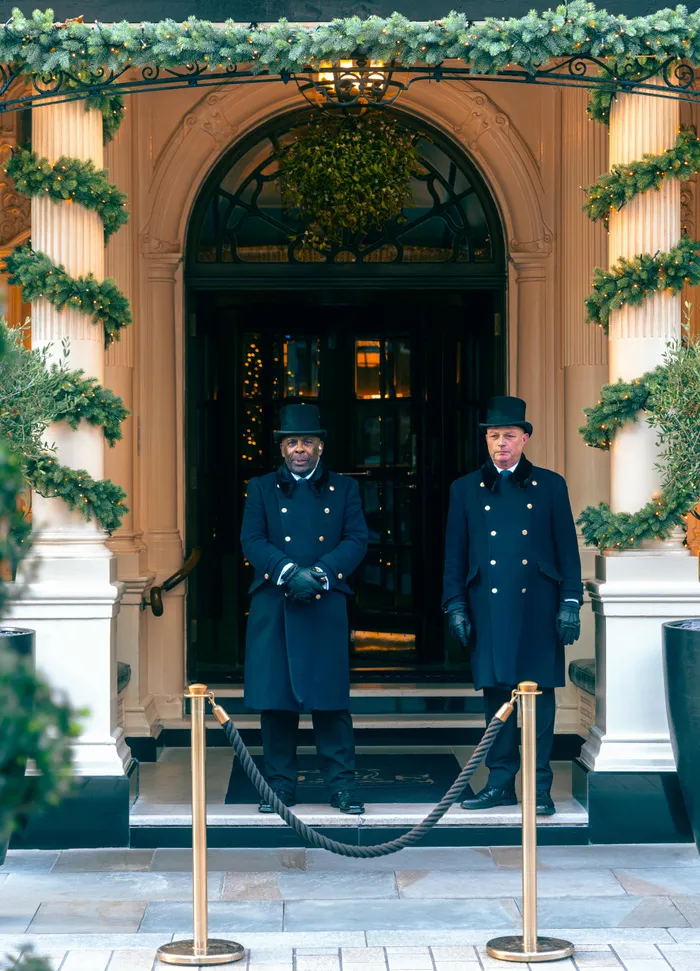
New York doormen are feeling the pinch as expenses rise but salaries remain low.
Image: Pexels
WORKING the overnight shift in a building where rents top out at $8,000 a month, concierge David Long has a front-row seat to how freely some residents of the city’s luxury properties spend.
Long, 38, accepts and secures about 300 packages each night for residents in his 370-unit building along the East River in Manhattan. On some nights, the food deliveries never stop — one apartment can order a dozen DoorDash and Uber Eats meals in a single day, he said.
That stands in sharp contrast to how Long, who lives in Brooklyn, carefully spends his $60,000-a-year salary.
“When I shop, I go to one store because eggs are on sale and a different store where bread is on sale,” said Long, who has worked as a concierge and doorman for nine years. “I go to multiple stores to chase the savings.”
Long is among 34,000 doormen, concierges, building cleaners and property managers threatening to strike in a growing dispute over wages in a city where the cost of living continues to climb. The debate centers on what constitutes a fair wage for workers who support an estimated 1.5 million residents, many living far more comfortably than those who serve them.
The standoff is also a test for a labor movement that appears reenergized under Mayor Zohran Mamdani, a democratic socialist. It poses a challenge for property owners, who say higher labor costs will collide with rising insurance, regulatory and utility expenses.
Service Employees International Union 32BJ, which represents the workers, has scheduled a strike vote for Wednesday. If a strike occurs, more than 3,000 apartment and condominium buildings could face disruptions to services such as garbage removal, package handling and security.
“Nobody would be taking out the garbage, and nobody would be keeping the building secure,” Long said. “I don’t think these buildings would function without us.”
Doormen and concierges have been a fixture of New York buildings since the mid-1800s. In addition to greeting tenants, they manage deliveries, monitor building access and handle resident requests — particularly in high-end properties.
Manny Pastreich, president of SEIU Local 32BJ, said workers are on the verge of striking because they are “insulted” by the latest contract proposal from property owners.
The Realty Advisory Board on Labor Relations, representing about 3,000 building owners, is asking workers to contribute to their health insurance for the first time. It has also proposed a two-tier wage system that could see newer employees paid less, while limiting salary increases despite rising rents.
“These are the folks who make these buildings run every day, who were there during covid and there during snowstorms,” Pastreich said. “Are they the ones who are really going to take it on the chin at this moment?”
Howard Rothschild, president of the advisory board, said owners must control costs amid economic uncertainty and Mamdani’s pledge to freeze rents on nearly 1 million rent-stabilized units.
“The likelihood of zero percent rent increases … will significantly limit the industry’s ability to support wage growth,” Rothschild said, adding that co-ops and condos already face rising taxes and common charges.
The board estimates the average doorman earns about $62,000 annually, rising to roughly $112,000 when benefits such as family health insurance are included. Officials argue it is reasonable for workers to share those costs.
Pastreich disagreed, saying it would effectively reduce wages while failing to address rising health care costs. “It is just making working people trying to get by in this city even poorer,” he said, noting that labor accounts for about 10 percent of building expenses.
The dispute comes amid broader labor unrest. Over the winter, about 15,000 nurses in the New York City area staged a 41-day strike for higher pay and benefits. Other disputes loom, including a possible strike by 27,000 hotel workers during upcoming World Cup events.
Pastreich said the union, which backed Mamdani in his election campaign, expects the mayor’s support. Mamdani has said he backs workers’ push for “a fair contract that honors their contributions.”
New York doormen last went on strike in 1991, when a 12-day walkout disrupted building services. Residents struggled with basic tasks such as trash disposal and security.
Justin Lashley-Maloney, who works in a 15-story Tribeca building where units sell for up to $7 million, said a strike today could create similar chaos.
“Imagine if we are not there — the garbage compactor would be filled until at least the second floor,” he said. “It will all back up in the building and it will stink.”
Lashley-Maloney, 42, earns $61,000 a year and is raising two teenagers. He said the job is more demanding than it appears, requiring constant vigilance — from turning away intruders to enforcing protective orders.
“We are ready to respond to anything,” he said. “It’s a demanding job.”
Even routine tasks require attention. In his building, doormen must remember each resident’s dog’s preferred treat.
“Each dog has its own treat,” he said. “And when they come in, these dogs demand their treats.”
Yet while residents’ pets are pampered, workers say it is becoming harder to support their own families. Both Long and Lashley-Maloney live in Brooklyn apartments costing more than $2,100 a month.
Long said his pay has risen by about $2 an hour over nine years, even as workloads have grown. Since the pandemic, deliveries have surged, doubling the number of packages he handles nightly.
With limited raises, any increase in health care costs could push workers to the brink, they said.
“Sometimes kids break their glasses and break their phones,” Lashley-Maloney said. “Already, life, it’s tight.”
As the strike vote approaches, he remains hopeful residents will back them.
“We know our residents love and appreciate us,” he said. “But we just don’t want to be taken for granted.”