
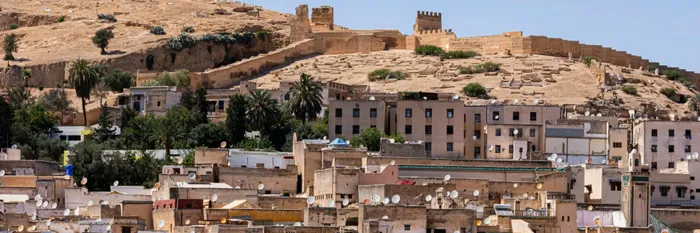
Fez in Morocco, where history is preserved in parts of the modern city.
Image: Jean Marc Bonnel/Pexels
Cities are often described as living archives of human memory. Walk through an old neighbourhood in an Islamic city such as Fez in Morocco or Cairo in Egypt, and layers of history are visible in its streets and buildings. Traces of the past remain visible in everyday life.
Urban historians sometimes call this a palimpsest – a place where layers of history remain visible, like old writing faintly showing beneath new text.
But in many parts of the world today, cities are being transformed so rapidly that these historical layers are disappearing. Entire neighbourhoods and older areas are demolished and replaced with new districts, infrastructure corridors, or megaprojects. This process recalls French civil servant Georges-Eugène Haussmann’s dramatic demolition and reshaping of Paris in the 1800s.
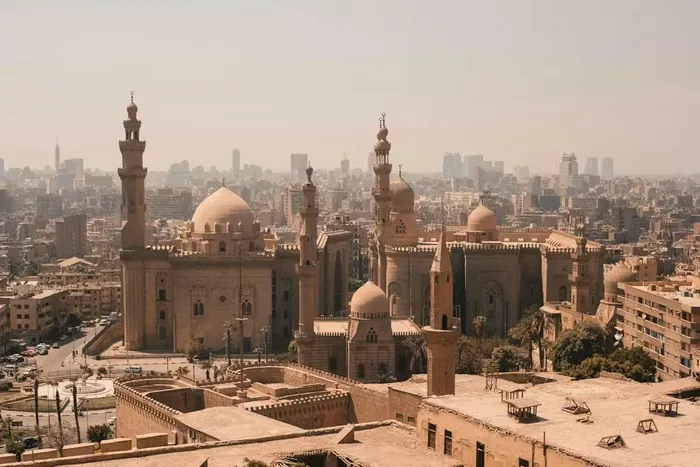
In Cairo historical Muslim districts have been preserved.
Image: Omar Elsharawy/Pexels, CC BY
Today’s speed and scale of development challenge the idea that cities grow slowly over time. Building places from scratch is often described as tabula rasa – a “blank slate” approach in which everything is cleared away and rebuilt as if nothing had existed before.
As scholars of architecture and urban design, we recently researched this tension between erasure and memory in urban design. We argue that urban transformation today cannot be understood simply as a choice between preserving the past or starting anew. Instead, cities are increasingly shaped by a complex interaction between the two.
Understanding this tension matters because it influences not only the identity and heritage of a city but also the social and cultural lives of the people who inhabit it. Our argument is grounded in the importance of understanding history to guide future development based on solutions that have been tested successfully in the past.
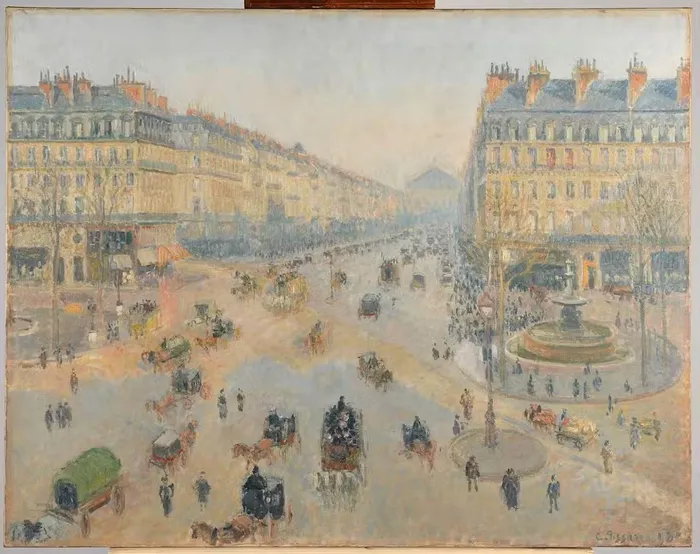
Napoleon III commissioned Haussmann to demolish overcrowded medieval neighbourhoods to open up and beautify Paris.
Image: Camille Pissarro/Museum of Fine Arts of Reim
The myth of the blank slate
For centuries, planners and philosophers have been fascinated by the idea of the tabula rasa. In practice, however, urban space is never truly empty.
Even after buildings are demolished, the forces shaping the city remain: economic pressures, planning regulations, infrastructure networks, and political agendas. Clearing land often produces what French social theorist Henri Lefebvre described as “abstract space”. These are spaces designed mainly for efficiency, profit, or control – rather than for people’s memories or everyday life.
Modern urban renewal projects have often replaced historic districts with standardised environments such as large housing estates, business districts, or transport infrastructures. These environments can feel disconnected from local identity because the historical context that once gave the place meaning has been removed.
For example, Pruitt-Igoe in St Louis in the US replaced dense, mixed-use neighbourhoods with high-rise public housing that ignored existing street patterns and community life. In Beirut in Lebanon, post-war reconstruction of the city centre prioritised modern commercial developments over the urban fabric and social networks that had defined it for decades.
French anthropologist Marc Augé described many of these environments as “non-places”: spaces of transit and consumption, such as airports, highways, and anonymous commercial zones. People pass through without forming lasting attachments.
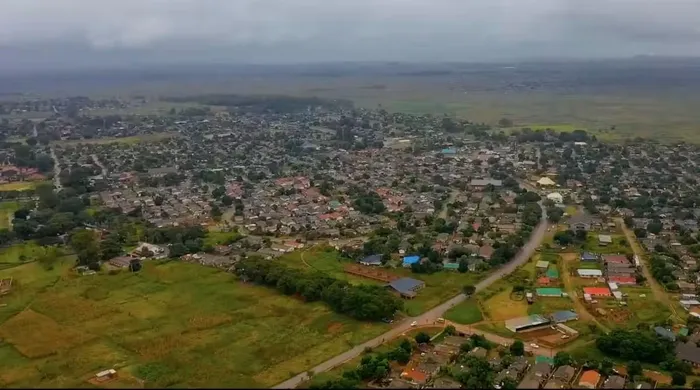
Informal settlements in parts of Harare’s Dzivarasekwa were gradually formalised.
Image: Screengrab/YouTube/Lloyd Mhungu Eaglefocus Images
Informal settlements in parts of Harare’s Dzivarasekwa were gradually formalised.
Image: Screengrab/YouTube/Lloyd Mhungu Eaglefocus Images
Cities as layered memory
At the opposite end of the spectrum lies the idea of cities as palimpsest. Historic districts, archaeological remains, street patterns, and even place names all contribute to a layered memory. Urban designers often draw on the history of a site.
But the palimpsest approach also has limits. Preserving historical layers does not necessarily guarantee meaningful engagement with the past. Sometimes heritage becomes a form of nostalgia – replicating historical styles without understanding their social or cultural significance.
French philosopher Paul Ricoeur helps clarify this by distinguishing between repetition memory and reconstruction memory.
Repetition memory reproduces the past, often superficially. In Sydney, efforts to revitalise Indigenous neighbourhoods between 2005 and 2019 ended up repeating patterns of colonial land displacement.
Meanwhile, in Rio de Janeiro, redevelopment of the waterfront for the 2014 Football World Cup and 2016 Olympics removed Afro-Brazilian cultural heritage, replacing it with a globalised urban vision.
More broadly, across cities in Africa, Asia and Latin America, speculative real-estate projects and investment-driven urban development have turned land into a commodity, fuelling gentrification and pushing local communities to the margins.
Reconstruction memory, by contrast, uses fragments of the past to interpret and reinvent them for the present. In Warsaw in Poland after the Second World War, the Old Town was rebuilt not as an exact replica but as a carefully interpreted reconstruction using historical paintings, archaeological evidence, and surviving fragments, while accommodating modern needs.
Similarly, Hiroshima’s post-1945 reconstruction preserved certain ruins, such as the Genbaku Dome, while redesigning the surrounding urban fabric into a functional modern city and memorial landscape.
Moving beyond preservation vs demolition
Rather than choosing between total preservation and total erasure, urban design needs to recognise the dynamic relationship between memory and transformation.
We propose thinking about cities through what philosophers call a negative dialectic – a relationship in which opposing forces, erasure and memory, continually reshape one another. We argue that urban clearance does not create a neutral blank slate; it produces new forms of space shaped by political and economic power. Historical memory is not fixed; it is continually reconstructed through interpretation and design.
Understanding cities in this way opens the door to new design strategies. Instead of replicating historical forms or ignoring them entirely, designers can work with fragments, traces, and spatial relationships to generate new urban forms.
For example, in the historic centre of Lugano in Switzerland, traditional public markets along medieval streets and lake-edge promenades have long shaped the city’s social life and spatial patterns. Today, these markets interact with contemporary cafés, restaurants and pedestrian routes, linking old street networks with new uses in a layered urban fabric.
This kind of layering shows how urban form can evolve by reintegrating historical traces into present-day life, rather than freezing them as static relics. But urban transformation today is largely driven by rapid development and less visible forces.
This makes it essential to rethink how memory, preservation and design methods work together. It requires a shift in design practice away from established paradigms and toward more flexible, context-sensitive strategies.
Designers have tools to respond to rapidly changing urban environments in ways that remain meaningful to communities, including cognitive mapping, layered analysis, and network thinking.
Designing cities in a rapidly changing world
The future of cities will likely involve even more rapid transformation. Urban sprawl, technological change, and shifting economic systems are already reshaping urban environments, challenging established planning models. For urban designers, this means working where historical precedents are incomplete or unstable.
Cities react to destruction and change in different ways. Some take a tabula rasa approach, wiping out communities and rebuilding from scratch, sometimes referencing the past in form or style. This happened in Warsaw’s Old Town, rebuilt to resemble the prewar city even though the original residents were gone. Brasília in Brazil was also planned entirely from scratch, clearing old settlements to create a modernist vision.
Others take a more layered, incremental approach, working with what already exists and allowing communities to adapt over time. In Harare’s Dzivarasekwa Extension, informal settlements were gradually formalised. Housing, services and land tenure were improved while streets and social networks were preserved. Some cities mix both strategies, as Hiroshima did.
The challenge today is to design urban spaces that acknowledge history while remaining open to new possibilities. For us, the city is neither a blank slate nor a finished story, but something constantly rewritten through memory and change.