
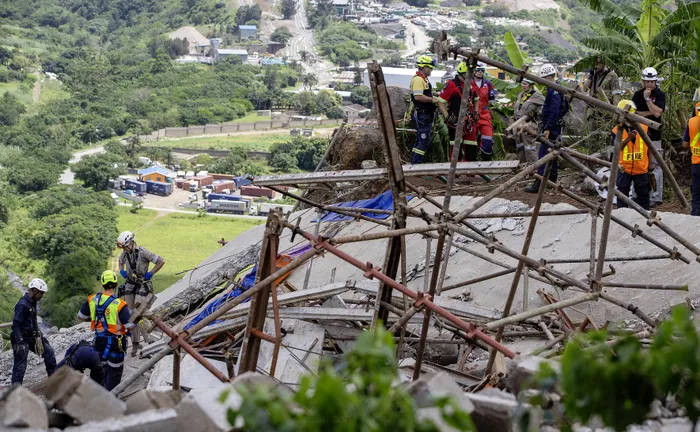
The Building Industry Bargaining Council says procurement processes remain a critical vulnerability, particularly where due diligence and contractor vetting are weak or inconsistently applied.
Image: Leon Lestrade/ Independent Newspapers
THE Building Industry Bargaining Council (BIBC) has warned that non-compliance remains widespread in South Africa’s building sector after 52 construction companies were blacklisted from doing work for government.
Many of the companies have been barred until 2029 following findings of poor performance, fraud, contractual failures and other offences, including falsified B-BBEE certificates and invoicing for work not done.
Danie Hattingh, spokesperson for business at the BIBC, said the blacklist points to a broader pattern in the industry.
“What we are seeing is a pattern where non-compliance in one area is almost always mirrored across others. It is rarely isolated to non-compliance with the BIBC only,” he said.
The BIBC said it cross-referenced publicly available data and identified 68 construction-related companies linked to the blacklist. Of those, only 12 were registered with the council, and all 12 were non-compliant when the BIBC conducted its assessment.
“This directly supports our contention that non-compliance with one regulation strongly indicates non-compliance elsewhere,” Hattingh said.
“Whether it is labour obligations, tax compliance, or contractual delivery, the same patterns repeat.”
Hattingh said the consequences were significant, with poor compliance and non-compliance contributing to substandard work, project delays, site failures and safety risks. He said it also created unfair competition by allowing contractors who exploit labour to undercut compliant firms.
He said the problem was compounded by a system that could allow repeat offenders to re-enter the market.
According to Hattingh, some non-compliant contractors deregister, rename or establish new entities to avoid detection, at times using associates or family members as directors.
“The trend towards ‘fronting’ companies is widespread and complex,” he said. “Even if a new entity has no record of non-compliance, it can still be the same operators, making it difficult for clients and procurement officials to know who they are really dealing with.”
The BIBC said procurement processes remained a critical lever for change, but weak or inconsistently applied tender requirements could allow non-compliant contractors to slip through the cracks.
“The role of ‘givers of work’ — government, municipalities, SOEs and private clients — is central,” Hattingh said. “From tender design to contract monitoring, procurement decisions either strengthen compliance or undermine it.”
The council’s warning comes as scrutiny of construction oversight has intensified following recent building collapses.
This week marks two years since the building collapse in George in which 34 people died and 28 others were injured. In March, nine construction workers were killed in Ormonde, south of Johannesburg, when part of a building under construction collapsed.
Marking the second anniversary of the George disaster earlier this week, Public Works and Infrastructure Minister Dean Macpherson called on the National Prosecuting Authority to take the matter forward.
“With SAPS having completed its investigation, the responsibility now rests with the National Prosecuting Authority to take the necessary prosecutorial decisions and, where warranted, bring those responsible to court for this avoidable tragedy,” he said.