
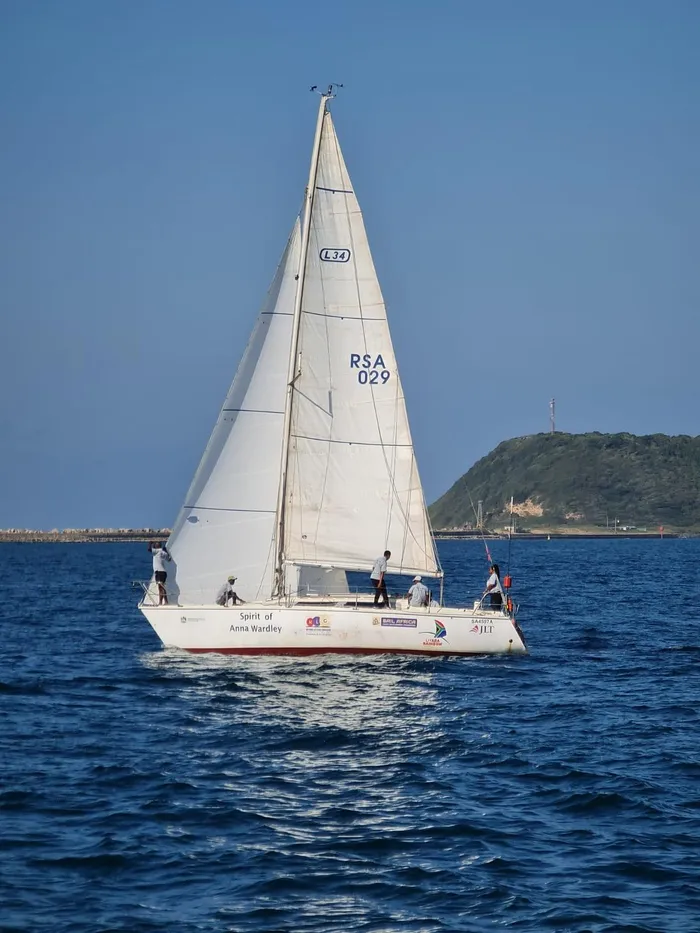
The Sail Africa team gears up for the prestigious Vasco da Gama Ocean Race, in May 2026, onboard the Spirit of Anna Wardley
Image: Supplied
DURBAN’s reputation as a leading sailing and watersports city is under growing pressure as sewage pollution, foul smells and deteriorating water quality in the bay drive away boat owners and water users.
It comes as one of the country’s oldest and most iconic sailing events, the Vasco da Gama Yacht Race from Durban to East London, gets underway this weekend under mounting concern over conditions in the harbour.
The situation has become so severe that the traditional Saturday send-off dinner, usually held in a marquee overlooking the water, has been moved indoors because of the smell.
Nine vessels will compete in the 250-nautical-mile race, which has been running for more than half a century. A tenth entry from Cape Town withdrew due to technical problems.
Sailor John Tudehope and his yacht Adios are among the entrants, marking his ninth participation in the event.
His senses were immediately assaulted by the stench of sewage on arrival this week.
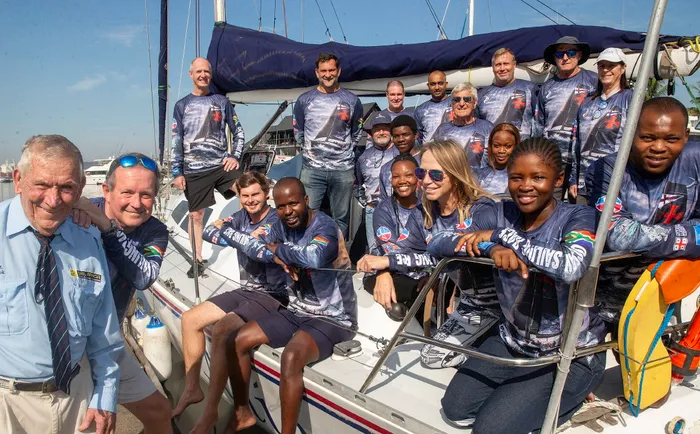
There maybe a big stink, but sailors are made of hardier stuff. Participants in this year's Vasco da Gama Ocean Race gathered at the Royal Natal Yacht Club yesterday for South Africa's oldest ocean race. The 260-nautical-mile journey down to East London begins tomorrow. The demanding event is famous for its rough seas, strong currents, and challenging gale-force weather.
Image: Leon Lestrade / Independent Newspapers.
“As we came around the NSRI, it hit us and that's far away from the Yacht Club. That was 100% an effluent smell, and then coming into the marina, of course, it was just at another level. And bear in mind, we've been out at sea for three days and so our senses were really clear. It was like driving a car into a wall,” he said.
Tudehope said pollution in the harbour is not new, but he had never experienced it at this level.
“This year it's got to be said to be the worst ever,” he said.
Tudehope said he could see waste entering the harbour system near the marina. “You can see proper faeces and everything coming out of there. Tampons, baby nappies, goodness knows what else,” he said.
According to Tudehope, around 100 international yachts enter Durban harbour each year, particularly between October and February, with a further 30 or more arriving during the rest of the year. He warned that reputational damage could spread quickly through global sailing networks.
“Several years ago, we got hammered in Port Elizabeth because of our ore dust problem and we're still reeling. Just one person complained, and then that person put it on a public platform.”
Near the marina, Tudehope also saw filth spilling out of a stormwater drain pipe, including faecal matter, tampons and nappies.
“The smell is on another level, you can't exaggerate it. Nobody wants to come here and I’d be too embarrassed to bring anyone here.”
He said the sailing community was also worried that the pollution would affect Sail Africa, an NGO which teaches Durban township children how to sail.
“Their parents are going to come in and say we can't have our kids getting exposed to this sort of stuff,” he said.
Tudehope said they had already seen a sharp decline in dinghy sailing.
“The normal weekend sail training here on dinghies and the dinghy regattas, that's been cut down by at least 70 to 80%,” he said.
Another concern was the growing rodent problem in the harbour precinct and on boats.
“You don't walk around barefoot because they will take your toes off,” he said, adding that “even the cats are scared of them.”
Concerns over the harbour’s condition are being echoed by yacht clubs and watersports users, who say deteriorating water quality is affecting participation and confidence in Durban as a sailing destination.
Barry Boorman, Commodore of the Royal Natal Yacht Club, which hosts the annual Vasco da Gama Yacht Race, said the club has experienced a sharp decline in activity and mounting financial pressure, while still being required to pay full rental costs.
Even though business had plummeted by almost 40%, the club still had to pay its full rental without compensation from the municipality.
“People have just generally stopped sailing,” he said.
Boorman said that dinghy sailing is particularly vulnerable during pollution incidents.
“All our small boats that are lower on the water are mostly sailed by kids,” he said.
While sailors were accustomed to intermittent pollution events, he said conditions were currently severe and that he had first-hand experience of health problems linked to contaminated water exposure.
“We had a bad spill about two years ago and my son actually ended up in hospital. At one stage we thought we might lose him,” he said.
While tidal movement can temporarily mask the smell, particularly during high tide, it does not resolve the underlying problem, Boorman said.
“The good thing about the harbour is it flushes, it's like a toilet,” he said.
Thomas Funk, Commodore of the Point Yacht Club, said the financial impact of pollution is already being felt across the harbour precinct, with restaurants, sailing activity, businesses and tourism all affected.
“People have just decided to up and go and not be members of the club. We've had many guys take their yachts away and move to Cape Town,” he said.
He said the entire harbour is affected, with water in places turning red or dark brown.
“It is some chemical or some sewage that has been flowing in there that is killing all the wildlife,” he said.
Sailors had become increasingly cautious about getting close to the water, he said.
“For the past month we've been very careful to even go close to the water because of the extent of the pollution. We had one guy who had a cut on his foot and he went sailing and he almost had his leg amputated because of the infection that followed,” said Funk.
Funk said he had been raising concerns with municipal engineering teams for more than a year, with email correspondence dating back to April last year.
“Suddenly, it's not just the harbour, it's actually going out to sea and contaminating it there.”
“I don't know if the mayor has personally come down, but I've certainly raised it with the engineering team since I've got emails going back since April last year, where I've been demanding action and answers,” said Funk.
Earlier this week, eThekwini Municipality apologised for the ongoing sewage overflows linked to a breakdown at the nearby Mahatma Gandhi pump station.
Ednick Msweli, the municipality’s executive head of technical services, said the pump station began experiencing failures around 4 May after excessive rags and foreign objects damaged screening systems and clogged pumps.
Since then, teams of engineers and technicians have been working “around the clock” to restore pumping capacity and stabilise operations.
Msweli said additional technical complications emerged during repair and recommissioning work, noting the scale of the infrastructure involved.
The facility, he said, is “one of the biggest pump stations in Africa”.
At the time of the failure, the system was already operating under strain, with only two of its four designed pumps functional. One additional pump was undergoing emergency repairs and had not yet been fully commissioned.
Msweli said a replacement pump was installed on 10 May, but further failures occurred shortly afterwards.
He said the municipality then took what he described as an “extraordinary decision” on 11 May to accelerate the commissioning of another pump that was still under execution, despite technical risks, in an attempt to reduce the impact on the public.
Further repair work is ongoing, with additional equipment and specialist components being sourced to improve reliability and stability at the station.
The municipality said long-term planning now focuses on ensuring sufficient redundancy at the facility, where at least two pumps need to operate simultaneously to prevent future system failures.