
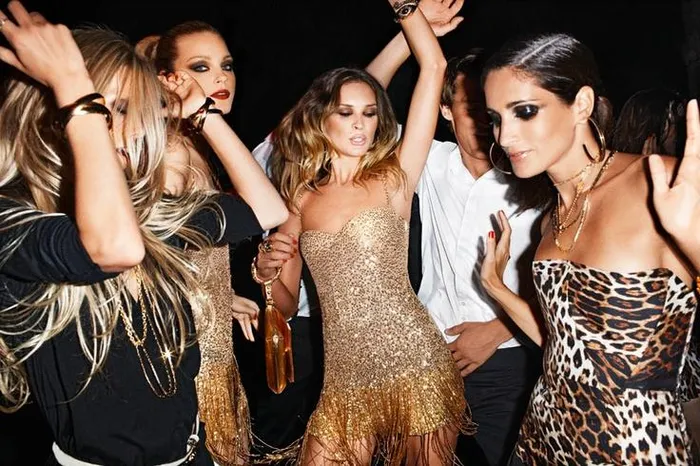
The fear of embarrassment, of being filmed without permission or projected onto massive screens is driving people off the dancefloor. But they are finding other places to cut loose.
Image: Instagram/@erisonwasson
Amber Ferguson
Maria Diaz will be the first to tell you that she’s a hype person. If she’s out on the town with her friends, she will happily dance with a stranger. If no one else is moving, she’ll try to get the club going. “We don’t care if people are not,” said 29-year-old Los Angeleno. “That’s what we came out there to do.”
But sometimes a club is impossible. No one is dancing. People look around aimlessly. Or worse, they stare at their phones. Diaz will simply grab her friends and head to a different spot. No matter what, they always end up dancing.
A dance club with no dancing is a sorry sight - and an increasingly common one for a lot of people.
Dancing now comes with social consequences. There’s the fear of embarrassment, of being filmed without permission or projected onto massive screens. (We all remember the Coldplay incident last summer.) Bust one awkward move, and you might end up on TikTok or Instagram tomorrow. Add to that a lingering discomfort with close physical proximity and a younger generation that doesn’t have universally known dances, and you get more crowds that just bounce their heads and sway.
In December, the Wall Street Journal suggested that the ubiquity of phone cameras has grown a generation of wallflowers, in an article titled “Suddenly everyone is scared to dance at concerts and clubs.” It noted a viral video of actor Austin Butler hovering awkwardly at a Bad Bunny concert in August. Vox published a story in April describing the “puzzling act” of not dancing in places designed for dancing.
And rapper Tyler, the Creator took to Instagram in July in angst, stating dancing, “a natural form of expression,” has now become “a ghost.”
So is dancing dead, at least in public?
The Washington Post decided to investigate. We spoke to DJs, dance experts, real estate agents who make dancing home-tour videos, aspiring professional dancers and club owners to get their take.
Spoiler: Dancing is far from dead. But has it downsized? Migrated? Is it complicated? Yes, yes and yes.
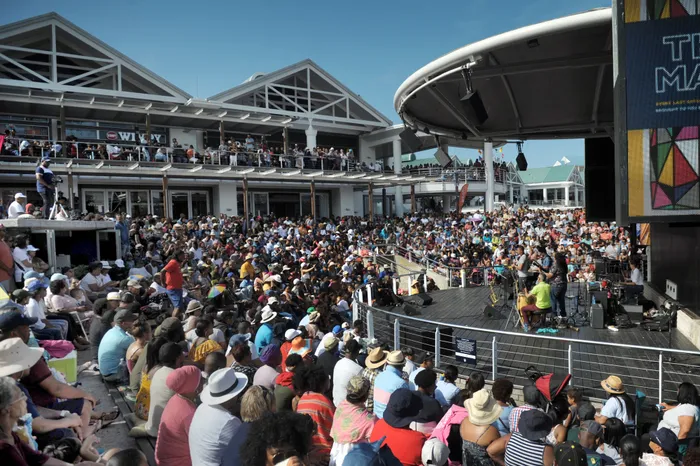
Stiek uit People would rather line up at concerts and in clubs, looking at the stage and DJs - and not dancing.
Image: Armand Hough / African News Agency (ANA)
If you’re seeing less dancing these days, Julie Malnig says you’re probably looking in the wrong places. The New York University dance and theater professor argues that social dance has moved out of mega clubs because of rising rents. She notes there’s no more disco or “Saturday Night Fever” to get people excited to go out.
Public dancing now tends to happen in more intimate spaces such as church basements, social halls, block parties, even dance studios hosting open social nights, Malnig said. These events can be driven by immigrant communities and specific dance traditions, such as salsa, merengue, bachata, cumbia or bhangra.
Some DJs note a lack of trendy dance-centric songs, such as the 1990s-era “Macarena,” or “Cha Cha Slide” at the turn of the 21st century. Afshin Mottaghi, a managing partner at the Washington club Flash, says that the entire club clientele can change in tandem with the popularity of specific DJs.
“With my friends, we never used to look at where the DJ was,” said Mottaghi, whose club has had a loose no-phones-on-the-dance-floor policy since it opened in 2012. “You’d dance with your friends or in a circle or with a group or with another individual. Whereas now everybody lines up like a rock concert, looking at the stage and not dancing.”
Simon Moore, who has worked as DJ Kilo Vibes in the D.C. area since 1999, noted that people’s attitudes toward dancing shift as they get older. School dances are much the same as they ever were. “I don’t see kids afraid of being recorded. At proms and homecomings, they’re definitely dancing. Sometimes there’s not even enough space on the floor,” he said.
But once people hit 21, the vibes shift. “The way clubs are built now, they’re designed for sections, not dance floors,” Moore said. “The lifeblood of clubs isn’t people having fun - it’s alcohol sales … so dancing isn’t the priority.”
Hope Burley in Baltimore, who goes by the moniker Queen HD the Dj, blames contemporary music. She regularly performs at Sky Zone, an indoor trampoline park for kids. A few years ago, before the coronavirus pandemic, she would jokingly call it “Club Sky Zone” because kids were always dancing. Now “they’ll do a TikTok dance real quick for five or 10 seconds, and then they’re done and go back to looking on their phones. They don’t even talk to each other,” she said.
“Back in the day, we had intentional dance music. Now there’s not really music made to make you want to dance,” Burley said. “A lot of today’s music is for vibing in your car, not for getting up and cutting up on the floor.”
Personally, she wants to see more line dances, more songs that include dance instructions in their lyrics. And she noted that danceable songs from the early-to-mid-2000s have become popular on the trampolines. “The kids always request things like Soulja Boy songs,” Burley said.
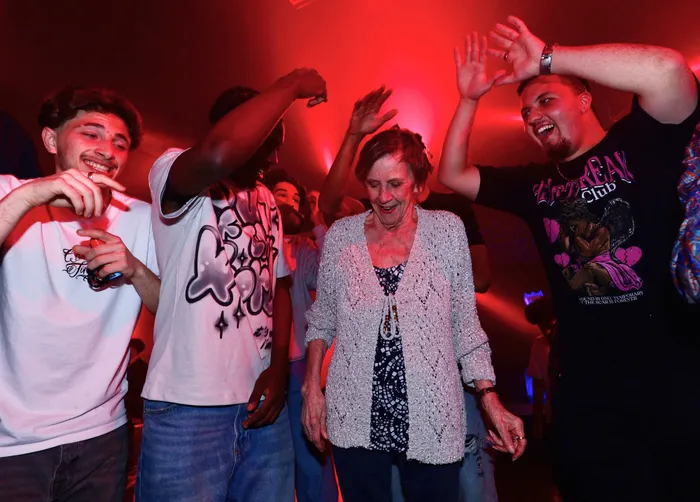
Jeanine Donnen, 79, dances with youths at the Lift Brussels nightclub. Non-profit organisation "Papy Booom" organises unusual activities for the elderly in Brussels, Belgium.
Image: Yves Herman/Reuters
If there’s less dancing in clubs, maybe its moved along with everything else onto screens. People such as Charli D’Amelio and Addison Rae became household names for Gen Z with their viral TikTok dances. Teachers post themselves busting moves in their classrooms. Doctors groove in the operating room on TikTok. There’s a whole online subgenre for auto mechanics hilariously posting their attempts to do trending dance routines. And coffee baristas, probably hyped on caffeine, get jazzy behind the counter.
In one of the newest trends, real estate agents are turning listings into full-blown dance videos, where closets, dishwashers and fireplaces become their props.
On Instagram and YouTube, home listings are increasingly marketed through choreographed tours. Chloe Tucker Caine, a New York agent featured on Netflix’s “Owning Manhattan,” belts original lyrics about in-unit washer-dryers, twirls through walk-in closets and struts across living rooms, with high kicks to show off high ceilings in bedrooms. These mini musicals involve directors, choreographers and sometimes backup dancers she hires, and each one takes about 10 days to produce.
She’s had multiple musical listings sell.
“People are so oversaturated with standard listing tours,” Tucker Caine said. “This catches them off guard, and they actually watch.”
Denver agent Edmond Harvey’s videos are intentionally goofy. A drone camera trails him as he drops it low to spotlight a dishwasher, two-steps past fireplaces, bounces around bathrooms and lip-synchs his original, real-estate-themed lyrics. Harvey told The Post he spends four to eight hours filming and editing his dances, which get rave reviews in online comments and have enticed many a prospective home buyer.
“They watch the whole thing,” Harvey said.
Karlie Balkey used to dance as a high school student in the mid-2000s. Then like many of her peers, she stopped when she got to college.
Years later, the 33-year-old cancer researcher watched Netflix’s hit show “America’s Sweethearts: Dallas Cowboys Cheerleaders” and was reminded how much she missed dancing.
In January last year, she decided to go for it. Balkey is now training to audition as a cheerleader for her home team, the Tampa Bay Buccaneers.
“People think that once you turn 18, dance is basically done if you don’t turn professional, and that’s not true,” Balkey said. “This isn’t about one audition, it’s about proving to myself that I can come back to dance.”
To prepare for the audition happening this spring, she attends four classes per week, and works with a technique coach and NFL-pro-style dance coach. She said there’s always a wait list at the central-Florida dance studio she attends.
NFL cheerleaders are expected to have a high level of flexibility and technical skills. Balkey said she’s not as flexible as when she was young, but she almost has her splits to the ground.
Her journey underlines what dance scholars have long observed: Enthusiasm for dance tends to rise when culture gives people permission to try. Malnig, the NYU scholar, points to moments when shows such as “So You Think You Can Dance” and “Dancing With the Stars” dominated TV, and led to an uptick in people taking dance classes and dance enthusiasm in general.
In other words, how and where people choose to dance has undoubtedly changed in a world dominated by phones and screens. The art of joyful movement has never stopped evolving, after all. Dance floors may be passé, but dancing is very much alive.