
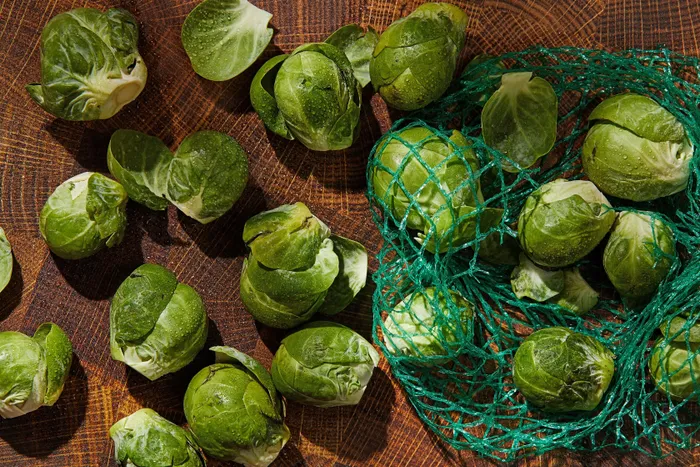
Brussels sprouts taste far better when cooked correctly
Image: Tom McCorkle/For The Washington Post
Aaron Hutcherson
Earthy and slightly bitter, Brussels sprouts resemble miniature cabbages. If your first thought at the mention of the vegetable is, “Eww, gross!” I imagine it’s only because the last time you tried them was decades ago and/or they were cooked into oblivion.
In the 1990s, Dutch scientists began work to find older varieties of Brussels sprouts that were less bitter by cross-pollinating them with more modern, higher-yield ones to produce new plants with the best of both worlds. Now Brussels sprouts are everywhere, including restaurant menus, dinner tables and even the snack aisle.
If you’ve only purchased them in bags or cartons, you might be surprised to know that Brussels grow along thick, almost two-foot-tall stalks, which is how you can sometimes find them at farmers markets. “In North America, they’re generally available year-round, though they’re at their peak from early fall to early spring, and they’re sweeter after spending a frost on the stalk,” my colleague Daniela Galarza wrote in her primer on the vegetable. Once harvested, the Brussels sprouts’ flavor starts to intensify during storage, so it’s best to use them as soon as possible - here’s how.
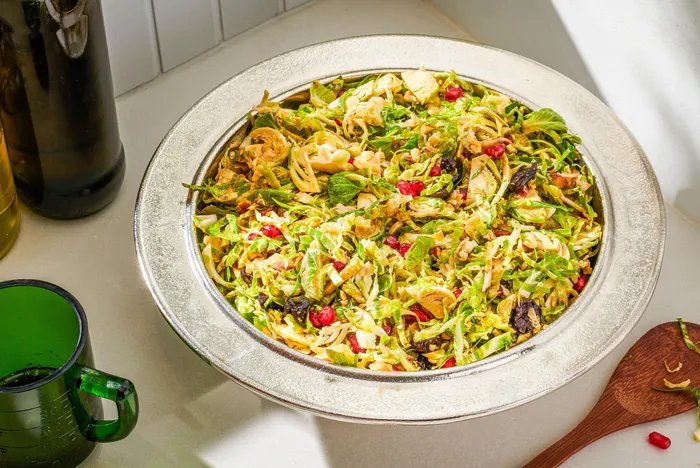
Shaved Brussels Sprouts and Apple Salad.
Image: Rey Lopez/For The Washington Post
Like all cruciferous vegetables, overcooking is the culprit behind sulfurous odors and unpleasant tastes. So the easiest solution is to not cook Brussels sprouts at all. When used raw, you want to thinly slice or shave the vegetable as it is very hard and dense otherwise. Toss them with apples, almonds, dried cherries and a Dijon-spiked vinaigrette in Shaved Brussels Sprouts and Apple Salad (above) from assistant recipes editor Olga Massov. Another idea is to combine the sprouts with riced cauliflower, orange segments and a buttermilk-poppy-seed dressing, as Nourish columnist Ellie Krieger does in her Brussels Sprouts and Cauliflower Slaw With Oranges. The bonus of using raw Brussels sprouts in salads compared to most lettuces and salad greens is that they can be dressed in advance without becoming soggy.
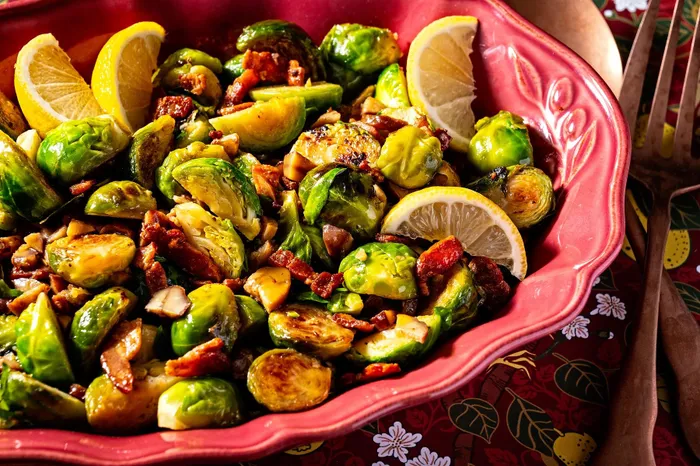
One-Pan Brussels Sprouts With Bacon and Chestnuts.
Image: Scott Suchman/For The Washington Post
For more tender vegetables, you can blanch or steam Brussels sprouts. When cut in half, steaming is the better option to keep the vegetable from becoming waterlogged and diluting the flavor of the final dish, as in Steamed Brussels Sprouts With Garlic and Pancetta and Brussels Sprouts With Cranberry Balsamic Dressing. For a more high-end - albeit time-consuming - presentation, you can separate each sprout into individual leaves and briefly blanch them until tender before dressing, as in Brussels Sprouts Salad (above), with dried apricots, Serrano ham, apple and grapes.
If you want tender Brussels sprouts that also have some browning - and thus more nutty, savory flavor - braising is the easiest route. A common pairing for the vegetable is pork, which you can find in One-Pan Brussels Sprouts With Bacon and Chestnuts (above) and Brussels Sprouts and Potatoes With Salt Pork. For a vegetarian alternative, season the vegetable with Spanish smoked paprika (pimentón) and then add some beans for a one-pot meal, as in Smoky White Beans and Brussels Sprouts.
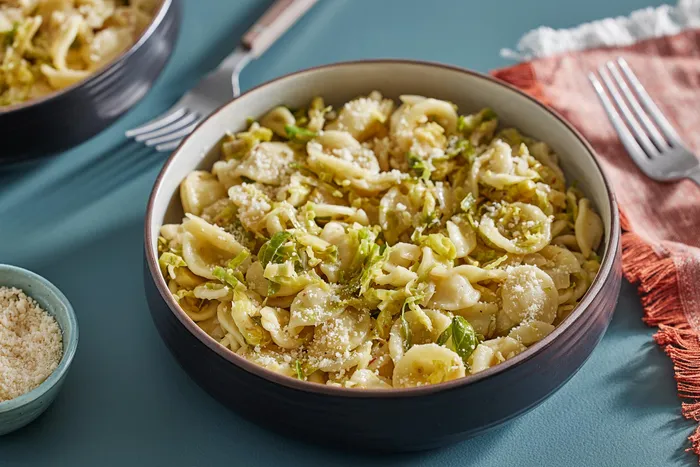
Orecchiette With Shredded Brussels Sprouts.
Image: Tom McCorkle/For The Washington Post
If you don’t want to deal with the additional liquid of braising, take halved or quartered Brussels sprouts, sear them in a skillet until browned, then cover with a lid so the vegetables steam in their own moisture. This is the technique utilized in Pan-Fried Brussels Sprouts With Pickled Raisins from chef Bryan Voltaggio’s “Home: Recipes to Cook With Family and Friends.” If you want to incorporate the vegetable into soups, pasta, casseroles and other dishes, briefly cook thinly sliced or shredded Brussels sprouts in a bit of oil just until they wilt and slump but haven’t taken on any color, as in Orecchiette With Shredded Brussels Sprouts (above) and Brussels Sprouts, Rice and Corn Soup.
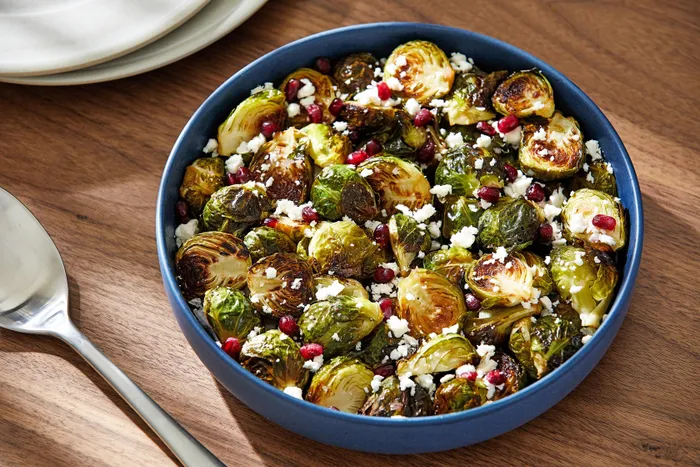
Roasted Brussels Sprouts With Pomegranate, Feta and Roasted Shallot Dressing.
Image: Tom McCorkle/For The Washington Post
More than any of the other techniques, my go-to method for cooking Brussels sprouts is to roast them in a hot oven or pop them in an air fryer, both of which yield beautifully browned and crisp vegetables. You can roast halved or quartered Brussels, as in Brussels Sprouts With Pomegranate, Feta and Roasted Shallot Dressing (above), or you can roast just the leaves, as in Roasted Brussels Sprout Leaves With Pecorino. They can even be included in sheet pan meals, as demonstrated by Sheet Pan Roast Chicken With Hasselback Potatoes and Brussels Sprouts. For faster results, throw them in the air fryer. In my Air Fryer Brussels Sprouts With Honey-Lemon Vinaigrette, you need to cook the vegetable for only about 15 minutes.