
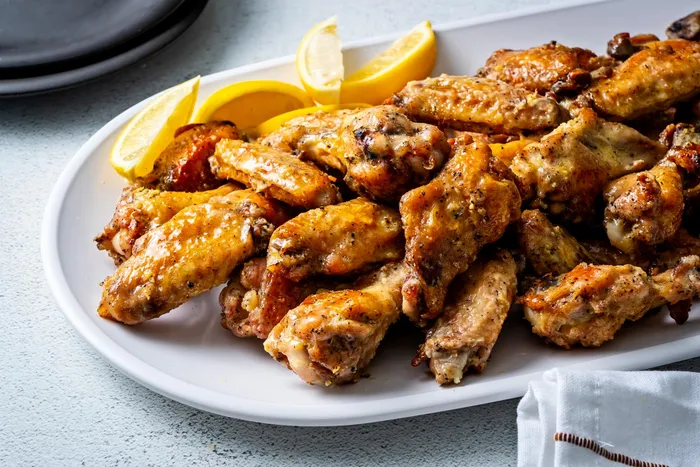
Lemon Pepper Chicken Wings.
Image: Scott Suchman/For The Washington Post; food styling by Marie Ostrosky
Aaron Hutcherson
Served whole or cut into sections; deep- or shallow-fried (battered or naked), air-fried, baked, or grilled; flavored with any of myriad sauces or spice blends - chicken wings have range.
Ask any connoisseur of this poultry part about their ideal wing, and you’ll get an assortment of answers as to the “right” way to prepare them. Whether you want tips to enhance your own tried-and-true method or are looking to join the wing club for the first time, here are four indoor cooking methods, along with a bevy of sauces and seasonings that you can mix and match, to put you on the road to wing heaven.
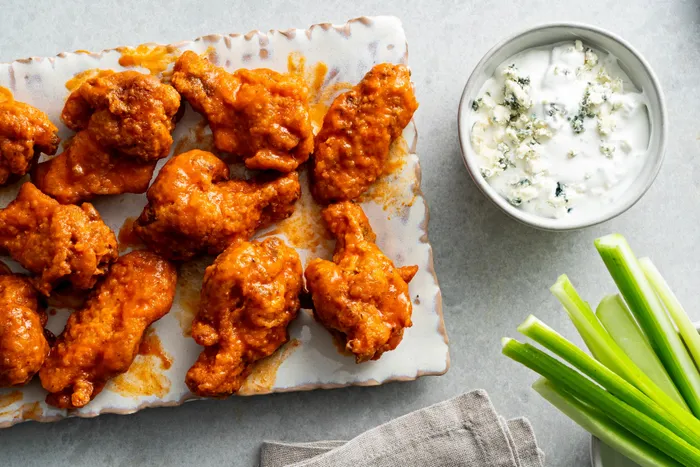
Buffalo Wings.
Image: Scott Suchman/For The Washington Post; food styling by Marie Ostrosky
The wing process begins with purchasing. If possible, buy air-chilled chicken because there is less moisture, which means crispier skin and better flavor. Regardless of the type of chicken you get, always pat it with paper towels to get it as dry as possible before seasoning and cooking.
Whole wings versus sections. The wing recipes here call for them to be separated into sections - flats and drumettes - which you can buy prepared or cut yourself. (It’s up to you if you want to leave the tip attached to the flat or save it for another use, such as stock.) Alternatively, you can leave the wings whole.
Other parts of the chicken. Drumsticks and thighs are options for those who can’t procure wings. Just keep in mind that these cuts may take longer to cook because they are larger and consist of dark meat.
Vegetarian and vegan alternatives. For the non-meat-eaters of the world, you can experiment with cauliflower florets, tofu or plant-based nuggets instead.
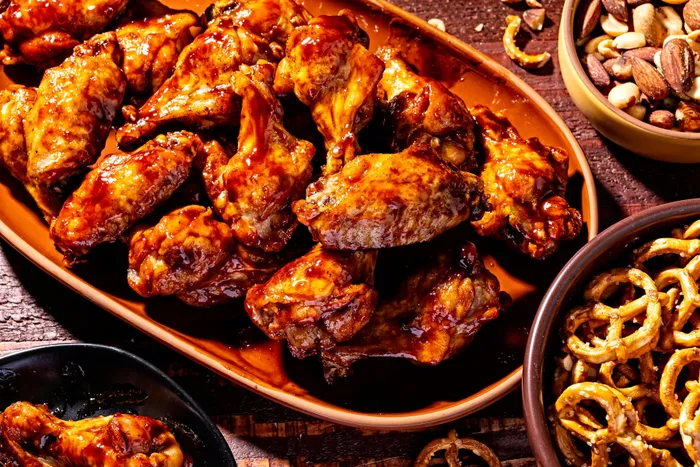
Honey Barbecue Chicken Wings.
Image: Scott Suchman/For The Washington Post; food styling by Marie Ostrosky
This decision depends on the amount of time and effort you want to dedicate to the process and the desired level of crispiness. All of the following methods have their pros and cons.
Bake: Low in effort but requiring an investment in time, baking can give you crispy wings with the help of a little science and baking powder. The technique, which we’ve written about before, was popularized by J. Kenji López-Alt in an article for Serious Eats. He later recommended adding cornstarch into the mix for even more crispiness, which you are certainly welcome to do, but I was pleasantly surprised by the results I achieved without it. However, if crispiness is truly what you’re after, let the wings rest in the refrigerator overnight before baking for maximum crunch. Recommended recipe: Lemon Pepper Chicken Wings.
Deep-fry: Though perhaps considered blasphemous when it comes to wings, if you’re going to deep-fry chicken, it should be breaded or battered. A coating of potato starch (or cornstarch, if that’s all you have) and two trips to the hot oil are the keys to creating the crispiest wings I’ve ever made. Make sure to let them rest for at least five minutes between frying sessions to get rid of as much moisture as possible so you end up with crunchy, craggy skin that will hold up much better when sauced than chicken that has been fried only once. The main downside to this method is the effort required to fry all of the wings and deal with the leftover oil. Recommended recipe: Buffalo Wings.
Shallow-fry: If you don’t want to deal with a vat of oil, you can shallow-fry chicken instead. The benefit here is crispiness and speed, requiring only about 10 minutes for each batch. When frying wings without breading, it’s especially important that the chicken is as dry as possible to limit splattering. (Here are tips for dealing with the smell associated with frying.) Recommended recipe: Honey Barbecue Chicken Wings.
Air fry: I am an air fryer convert, having fallen in love with the countertop appliance for its combination of ease, convenience and results. There are a couple of different routes you can take to air-fry wings. One method, adapted from Tanya Harris’s My Forking Life blog, calls for a pure starch (cornstarch in this instance) to help create a crisp exterior. Or similar to the recommended baking instructions, toss the wings with baking powder and seasonings before cooking. This has become my go-to method, resulting in some of the easiest and best-textured wings I’ve ever made. Don’t just take my word for it. As one reader commented on my Old Bay wings: “I love these so much I had to start keeping my air fryer on the countertop.” Recommended recipe: Air Fryer Old Bay Chicken Wings.
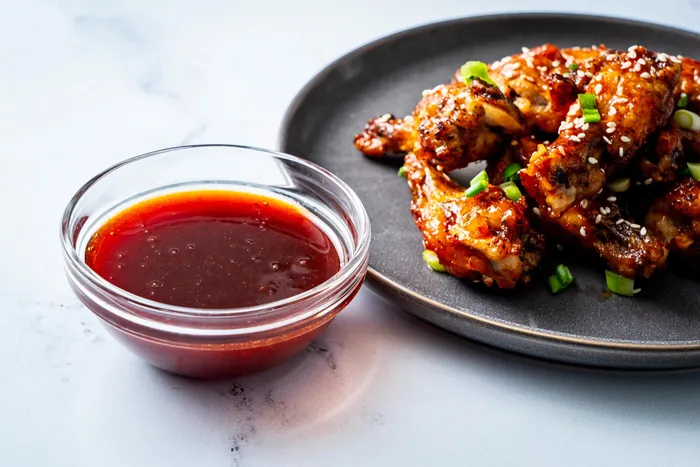
Gochujang-Honey Wing Sauce.
Image: Scott Suchman/For The Washington Post; food styling by Marie Ostrosky
This is where things get interesting. Sauces can be full of spice, sticky and sweet, bright and acidic, or some combination thereof. In terms of seasonings, salt, pepper and garlic powder are my go-tos when I plan to toss the wings in sauce after cooking. But if you prefer less mess and no sauce, a homemade or store-bought spice blend can still add loads of flavor.
Here are a few sauce options to get you started.
Buffalo sauce: A classic for a reason. Sure, you could grab a bottle from the store, but it’s just as simple to make at home by mixing Cajun pepper sauce and butter (which is often a component of wing sauces). Making Buffalo sauce from scratch comes with the bonus that you can adjust it to your liking by adding some honey or molasses to balance the heat, or by seasoning it with your favorite spices.
Honey barbecue sauce: Barbecue sauces are a good option for anyone looking for a sweeter wing, and this version with honey certainly does the trick. A related alternative is D.C.’s famous mumbo sauce, which can come in a range of flavor profiles depending on the cook’s preferences.
Lemon pepper sauce: This four-ingredient butter sauce would go great on any protein. Black pepper is the standard, but a blend of peppercorns (black, white, pink and/or green) adds intrigue. Regardless of what pepper you choose, grind it yourself for maximum flavor, and feel free to increase the amount called for in the recipe for extra kick.
Gochujang-honey sauce: This Korean-style sauce stars gochujang, a fermented pepper paste that’s fairly mild, savory and subtly sweet. (It’s a favorite condiment of mine.) Honey and brown sugar help bring the sauce squarely into the sweet category, while soy sauce, garlic and ginger provide added complexity and dimension. Wings tossed in this sauce will leave you with sticky fingers that you’ll be more than happy to lick clean.
However you choose to cook and flavor your chicken wings, just make sure to serve them hot and fresh for maximum enjoyment. A bowl of ranch or blue cheese dressing on the side for dipping is always welcome, and a plate of celery sticks or carrots makes it a meal.