
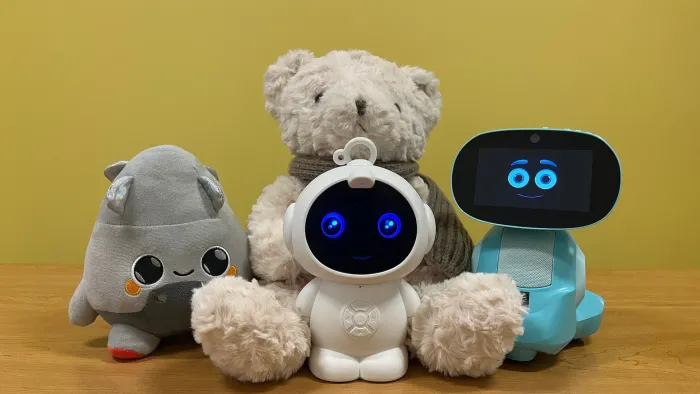
Discover how Africa's toy industry is not just about play but also a significant economic force, shaped by children's desires and modern consumer trends.
Image: Rory Erlich/The Public Interest Network via AP
There are few forces on earth more persuasive than a five-year old in the toy aisle.
Economists can model inflation.
Central banks can manipulate interest rates.
Governments can debate industrial policy for years. But none of them possess the raw negotiating power of a child standing in a supermarket declaring that life itself will cease to have meaning unless they receive a glow in the dark dinosaur that also shoots foam darts.
I was reminded of this recently while shopping for a gift for a children’s birthday party.
What began as a quick retail errand rapidly turned into a lesson in modern consumer psychology.
Within minutes, I realised something profound: the toy industry is not really selling toys anymore. It is selling aspiration, identity, belonging, status, nostalgia and digital relevance, often all packaged inside a brightly coloured box with “collect all 12” written on the side.
Welcome to the economics of play, a global industry shaped by children’s imagination, fast-moving trends and the everyday realities of family life.
The numbers are staggering.
According to the Toy Association’s economic impact report, in the United States, the toy industry generates roughly $155 billion in annual economic impact, supporting more than 661,000 jobs across manufacturing, logistics, retail, licensing and entertainment ecosystems.
What appears to be innocent childhood play is, in reality, one of the most sophisticated consumer industries on earth.
Modern children are not passive recipients of toys selected by sensible adults at Christmas.
They are highly informed consumers operating inside a relentless digital marketing ecosystem.
YouTube, TikTok, streaming platforms and gaming culture have fundamentally transformed how demand is created.
Today’s kids watch other children become millionaires by unboxing toys online.
The rise of child influencers like Ryan Kaji of Ryan’s World demonstrates how entertainment, advertising and retail have collapsed into one seamless commercial ecosystem. Children no longer simply consume products; they consume curated lifestyles built around products.
The genius of the modern toy industry lies in understanding that children do not merely buy objects.
They buy narratives. A plastic figurine is no longer just a figurine; it is part of an interconnected universe involving online content, gaming culture, collectibles, social belonging and digital storytelling.
Yet for all the jokes, this industry matters economically and socially in ways that are often overlooked, not least because it continues to grow even in periods of economic uncertainty. Brazil’s toy sector alone was projected to generate more than R11 billion in 2025.
Africa is no exception to these global shifts. South Africa’s toy market, while smaller than its North American or European counterparts, sits at the intersection of several powerful forces shaping the future of consumer spending: rapid urbanisation, a growing youth population, expanding digital access and the rise of e-commerce.
Yet the local toy economy extends far beyond polished shelves in suburban shopping malls.
Walk through any taxi rank, township retail corridor or informal market and an entirely different play economy emerges in plain sight.
Footballs hang beside fresh produce stalls. Battery powered toy cars blink under makeshift awnings.
Dolls, puzzles, colouring books and low-cost educational toys are sold alongside household essentials at prices designed for economic reality rather than aspirational marketing campaigns. In many communities, informal traders remain the most important distributors of play.
This is precisely why Africa’s toy market represents far more than a niche retail category. It is an economic opportunity hiding in plain sight.
The continent’s youthful demographic profile effectively makes it one of the world’s largest long-term growth markets for children’s products, education and entertainment.
As household incomes slowly rise and internet access expands, demand for toys, games and educational products is expected to grow significantly.
The rapid growth of ecommerce is accelerating this shift, with platforms such as Takealot and other mobile-driven marketplaces reshaping access to toys and educational products across income levels and geographic boundaries.
But the real opportunity for Africa does not lie in simply importing more global brands or replicating Western toy trends.
It lies in building distinctly African play ecosystems rooted in local culture, storytelling and identity.
There is enormous, untapped potential in African intellectual property, folklore, animation, superheroes and culturally relevant educational toys.
African children deserve products reflecting their own languages, environments and experiences, not only imported characters from Hollywood franchises and foreign streaming platforms.
The challenge now is whether African businesses, policymakers and investors are prepared to treat the economics of play as a serious sector worthy of innovation, investment and strategic attention, rather than simply a retail afterthought.
Because in the end, the toys children play with do more than entertain them; they shape imagination, identity and how the next generation sees both itself and the world around it.
Boitshoko Shoke, Research and Impact Manager at 22 On Sloane and the GEC+Africa Content Lead.

Boitshoko Shoke, Research and Impact Manager at 22 On Sloane and the GEC+Africa Content Lead
Image: Supplied.
Follow Business Report on Facebook, X and on LinkedIn for the latest Business and tech news.