
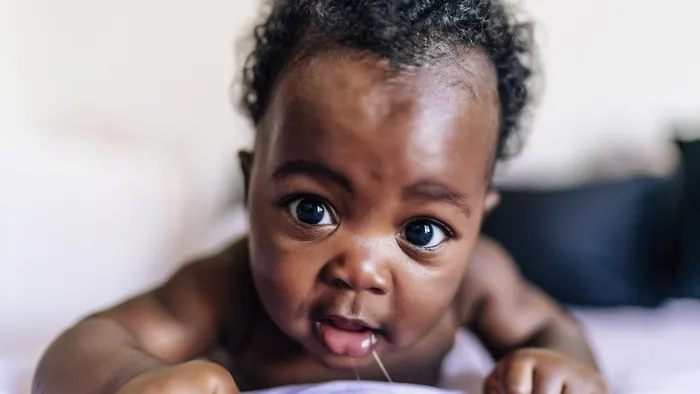
Top names for babies in 2024 included Lethabo, Lubanzi and Nkazimulo for boys’ charts, while Onalerona, Zanokuhle and Melokuhle were most popular for girls.
Image: Freepik
People are having fewer babies in South Africa, leading to a decline in the birth rate.
Between 2023 and 2024, there was a drop of more than 60,000 births. This declining trend has been steady since 2021, reflecting changes in fertility and family planning choices.
Statistics South Africa’s latest Recorded Live Births (RLB) data shows in 2024, the stats show that just under 864,000 babies were registered.
The vast majority – at over 787,000 – were newborns, with almost 76,000 late registrations from previous years.
More than eight in 10 babies (83%) were registered on time, but young mothers aged 10–14 and older mothers aged 50–54 still battle circumstances to register promptly.
For young mothers, factors such as social stigma, limited access to healthcare facilities, lack of support, and incomplete documentation can delay registration.
Older mothers may face bureaucratic hurdles, health complications, or the challenge of navigating systems that are geared toward younger parents.
In both cases, these delays highlight how social, economic, and logistical barriers can prevent children from getting timely legal recognition.
This is even when the parents are committed to registering their births.
March was the busiest month, with more than 71 000 births, closely followed by May and April.
Mothers are having children later, with the median age rising to 28.3, which is the highest since 2005.Mothers aged 20–34 account for nearly 70% of all births, while KwaZulu-Natal leads the country in births to teenagers under 18.
Meanwhile, South African parents are sending a clear message through their babies’ names: happiness, hope and cultural pride matter.
RLB data shows Lethabo, Lubanzi and Nkazimulo topping the boys’ charts for names in 2024, while Onalerona, Zanokuhle and Melokuhle were most popular for girls.
Each name carries meaning: Lethabo is “joy”, Lubanzi is “wide or expansive” and Nkazimulo is “glory or splendour”.
Among girls, Onalerona means “He (God) is with us”, Zanokuhle means “bring what is good”, and Melokuhle – a unisex favourite—means “stand for good” or “uphold what is beautiful”.
Gender-neutral names like Lethabo, Nkanyezi and Lesedi show parents care more about meaning than convention.
Second names also tell a story: Junior was the most popular for boys, Precious for girls.
IOL