
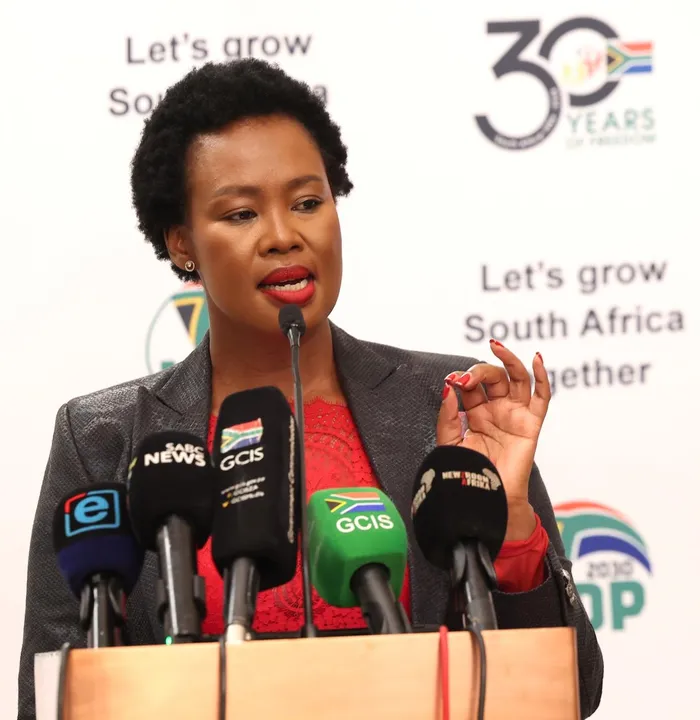
The government’s proposed Business Licensing Bill, aimed at regulating a broad range of commercial activities, is facing a mounting backlash
Image: GCIS
The government’s proposed Business Licensing Bill, aimed at regulating a broad range of commercial activities, is facing mounting backlash.
The draft legislation, gazetted by the Department of Small Business Development, proposes sweeping licensing requirements that critics say could stifle entrepreneurship, overburden municipalities, and hinder job creation.
The bill proposes that every business, from small startups to larger enterprises, must register with local municipalities and obtain a licence valid for five years. Inspectors would have broad powers to demand proof of a licence at any time, issue fines, or confiscate goods if businesses are found in violation. The bill is currently open for public comment.
The Western Cape provincial government has slammed the bill, saying it is vague, confusing, and unworkable. Premier Alan Winde warned that the legislation would add an unnecessary layer of bureaucracy.
"The legislation proposed by the National Department of Small Business Development is vague, confusing, and unworkable, and fails to establish a uniform national framework for business licensing. The Bill introduces an additional layer of regulation that will increase red tape, duplicate existing compliance processes, and delay business start-up times".
Winde added that legislation like this does nothing to support small business growth and job creation.
“Legislation like this does nothing to support small business growth and job creation. The latest QLFS showed that 77,000 jobs were created in the WC - this is because the WCG is driving programmes that directly support business growth. We don’t want this compromised by cumbersome national legislation. We oppose this Bill and ask that it be withdrawn and reconsidered.”
The Centre for Development and Enterprise (CDE) has also strongly criticised the Bill.
“Instead of freeing up the economy, the government is proposing a licensing regime of extraordinary scope. It potentially expands government control over almost every type of business and creates wide-ranging powers for inspectors to search premises, seize goods and impose penalties. This is a licence for corruption, not a pathway to growth.”
IOL Business
mthobisi.nozulela@iol.co.za