
Experts urge caution before buying, especially Buy Now, Pay Later offerings.
Image: Freepik
As festive season promotions intensify nationwide, the National Financial Ombud (NFO) South Africa has urged consumers to be cautious with Buy Now Pay Later (BNPL) offers.
Marketed as simple, convenient and interest free, BNPL arrangements carry hidden risks, the ombud warned.
In a country where many households are already heavily indebted, these schemes can deepen financial strain, the NFO warned.
DebtBusters’ third quarter 2025 Debt Index shows consumers entering debt counselling are paying 70 cents of every R1 they earn just to service debt.
That’s the highest level since 2017.
Those earning R35,000 a month use 78% of their income on debt repayments. For the most vulnerable, earning R5,000 or less, that jumps to 92%.
According to the NFO, because BNPL products are not covered by the National Credit Act (NCA), key protections – affordability checks, clear cost disclosures and formal dispute-resolution mechanisms – do not apply.
Despite this regulatory gap, BNPL is spreading fast, often leaving consumers exposed, NFO said.
TransUnion’s third quarter Consumer Pulse Study found that Gen Z (born between 1997 and 2012) and Millennials (1981 to 1996) are the age groups most likely to use BNPL services.
Nerosha Maseti, Lead Ombud for Banking and Credit within the NFO, warns that the rapid growth of BNPL paired with weak guardrails is a serious concern.
“Buy Now Pay Later may appear harmless or even helpful, but in reality, it operates as a form of unregulated short-term credit.
Elaine van Wyk, group chief marketing and sales officer at IMM Graduate School, has said that consumers should pause before deciding to buy something for 24 hours before clicking on the “buy now” button.
“To resist urgency, consumer psychologists recommend the ‘pause rule’. This strategy encourages waiting 24 hours before buying. The delay reduces emotional reactions and supports rational decision-making,” said van Wyk.
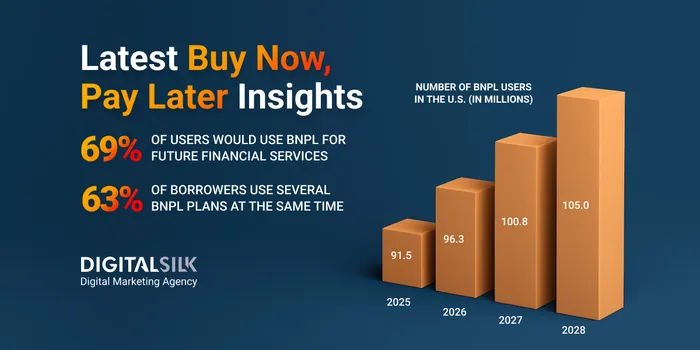
Buy Now, Pay Later is an increasingly popular payment solution.
Image: Digital Silk
Niresh Gopichand, Atlas finance risk director, advised consumers to ensure they use BNPL offers responsibly and calculate how much interest or fees they’ll pay in the long run.
In addition, Patricia Temba, executive head of FNB Retail Collections, noted that consumers could battle to pay these instalments after the festive season excitement ends.
“When payments are missed, fees escalate. Budgets collapse. What starts as a convenient purchase can turn into a serious financial setback, particularly because consumers do not benefit from the usual protections provided under the NCA,” said Maseti.
Maseti added that BNPL often piles on top of existing financial commitments, intensifying debt-pressure.
“BNPL doesn’t make items cheaper; it simply postpones payment. In reality, it creates a fresh debt obligation at a time when many households are already battling loan repayments, store accounts, and monthly bills. Without affordability checks, the danger of slipping into over indebtedness rises sharply,” said Maseti.
MicroFinance South Africa previously warned that the unchecked rise of BNPL credit services is exposing millions of South Africans to unsustainable debt, hidden costs, and financial exploitation, and is urging regulators to act swiftly.
Maseti stated that many consumers assume BNPL is not real debt because it is easy to access.
“In practice, it can significantly undermine their ability to keep up with essential credit obligations such as mortgage payments, vehicle finance, and personal loans. We are concerned about the potential for BNPL to become a systemic contributor to rising over-indebtedness,” a worried Maseti said.
Because BNPL does not fall under the NCA, the responsibility for assessing affordability rests entirely with consumers, said the NFO.
Before entering such arrangements, the NFO urged shoppers to consider whether they can repay instalments on time next year and whether new obligations will compromise existing commitments.
Tips for consumers this festive season:
IOL Business