
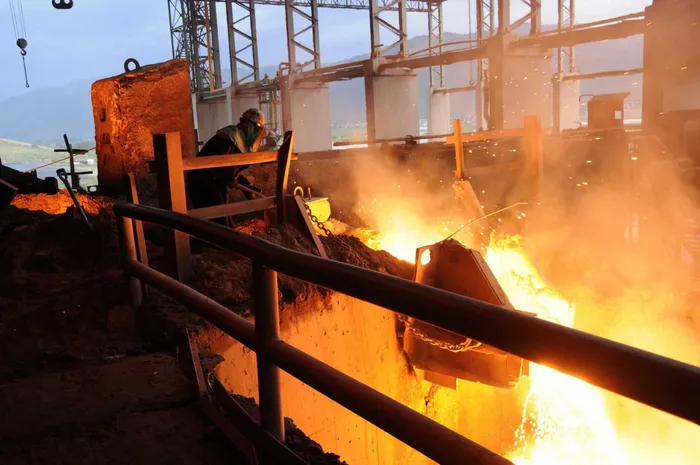
The Minerals Council South Africa and the Ferro Alloy Producers Association (FAPA) have united in rejecting a proposed export tax
Image: Supplied
The Minerals Council South Africa and the Ferro Alloy Producers Association (FAPA) have united in rejecting a proposed export tax on chrome ore, calling instead for urgent government action to provide globally competitive electricity tariffs.
Several smelters, including Glencore and Samancor, plan to close plants and cut jobs due to high electricity costs. Glencore-Merafe employs about 3,000 people, while Samancor may cut up to 2,500 jobs.
In a joint statement to the media, the industry warned that high electricity costs, not ore supply or prices, are the main cause of idled smelters and stressed that trade measures alone would not revive the sector.
"Any interventions in addition to an electricity tariff adjustment must be balanced, equitable and supportive of the competitiveness of both chrome mining and ferrochrome beneficiation".
"Both groups are clear that the price and availability of chrome ore is not the cause of South Africa’s ferrochrome smelter closures or suspensions. Instead, the more than 900% increase in electricity tariffs since 2008 has rendered domestic smelters uncompetitive and unprofitable"
They added that without a direct intervention to address the electricity cost burden, no trade measures, including a chrome ore export tax or quotas, will restore meaningful viability to the country’s ferroalloy smelters.
"Without an intervention that directly addresses the electricity cost burden, no trade measures, including a chrome ore export tax or quotas, will restore meaningful viability to the country’s ferroalloy smelters".
"Both miners and smelters, therefore, reject recently mooted calls for an export tax or restrictions, as these would harm chrome ore producers without materially assisting smelter recovery".
The statement also noted that smelters such as Glencore and Samancor have proposed solutions that do not require government subsidies and are exploring renewable energy options to reduce reliance on Eskom over the long term.
"Smelter operators are exploring the acquisition of renewable energy as a longer-term solution. While this will take time to implement, it will reduce reliance on Eskom and position South Africa’s ferroalloy producers to minimise exposure to Carbon Border Adjustment Mechanism (CBAM) penalties".
IOL Business
mthobisi.nozulela@iol.co.za