
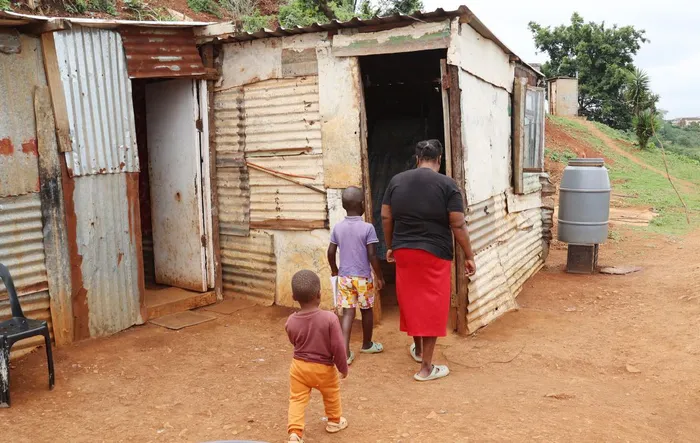
South African households are under mounting pressure as the rising cost of fuel, food, and rent continues to outpace incomes
Image: Tumi Pakkies Independent Newspaper
South African households are under mounting pressure as the rising cost of fuel, food, and rent continues to outpace incomes and steadily erode everyday choices.
What is emerging is not only a cost-of-living crisis, but a growing question of what “freedom” means when basic survival has become a daily calculation.
According to the latest Cost of Living Report by the Competition Commission, essential goods and services, including electricity, food staples, and transport-related costs, continue to place sustained pressure on household budgets, particularly for lower-income families already struggling to keep up with rising expenses.
In Durban, 75-year-old Busani Bhengu says daily life has become difficult, adding that despite the end of apartheid 32 years ago, he feels Black South Africans are still not free.
“A black person is not free. If you want to see what this freedom has brought us, go to where I come from, and you will see the suffering. “People even go to the mall on foot because they cannot afford the bus fare of R17 or R20 for a taxi," he said.
He added that unemployment and rising living costs have left many people with little choice but to rely on limited government support.
“Most are unemployed and go to the mall just to pass the time. The R370 grant is not enough to live on,” he said.
"Things are really tough. People will have to consider going back to the old ways of planting their own food.”
Small business owner Jabulie Zondi, who runs a fast-food outlet in Durban’s CBD, says she is already feeling the ripple effects of rising fuel prices, from supplier costs to daily transport expenses.
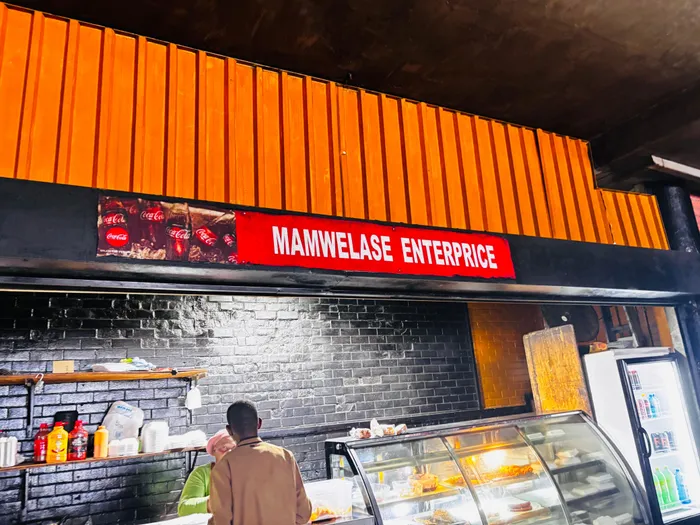
Small business owner Jabulie Zondi, who runs a fast-food outlet in Durban’s CBD, says she is already feeling the ripple effects of rising fuel prices
Image: Mthobisi Nozulela | IOL
The fuel increases are linked to higher international oil prices, driven by global tensions, as well as a weaker rand, which makes imported fuel more expensive.
“The increase in fuel prices is going to be really difficult for us. When I go to order my stock, prices are likely to rise because of higher petrol costs. On top of that, commuting to work by taxi will probably become more expensive,” she said.
Mfanafuthi, Mzobe from uMlazi, said he was currently unemployed and struggling, saying the government has failed to provide meaningful change.
“Every day is a struggle. You wake up not knowing how you are going to survive or what you are going to eat. There is no real change for people like us. Life is still hard, even after so many years. When you have no income, even small things become a problem, transport, food, everything"
Economist DR Simiso Msomi, from the University of KwaZulu-Natal (UKZN), says the pressure on households is unlikely to ease soon, as global fuel markets continue to push up the cost of living
"The cost of living is going to continue to rise because of what is happening in the Gulf, as you know, oil is a factor of production in fact on all sector in all sectors of the economy, and therefore the cost of production will increase" Msomi said.
"We may expect the central bank to try to stabilise the prices by increasing the interest rates, leading to a pinch on people's disposable income".
He added that wages are not rising fast enough to match the cost of living, which deepens the pressure on households already struggling to keep up.
"Wages are not keeping up with the cost of living. What drives wages is production. We may see that falling globally and also in South Africa, and as a result, we might see prices continue to rise.
"If production falls, that means firms will generate less profit than they would under normal circumstances; therefore, the wages will rise slowly, which will make the cost of living remain high and is unlikely to change, particularly in the South African context, where we have trade unions".
Dr Elias Ndou, an economist at the University of South Africa (UNISA), said South African households are under growing strain as rising fuel and food prices force families to redirect already limited incomes towards basic survival needs.
He says this is placing a sharp squeeze on household budgets, particularly among low-income earners.
“There is a very big squeeze on customers’ budgets now,” he said. “People now have to spend money on planned expenses like transport and food.”
Dr Ndou says the impact is most severe for grant-dependent households, where even small price increases quickly erode purchasing power.
“Purchasing power has come much lower than what was there even with grant increases, people are still under pressure because food prices are much higher,” he said.
mthobisi.nozulela@iol.co.za
IOL Business