

The Benguela Current is a cold ocean current flowing northwards along the west coast of southern Africa.
Image: Diego Delso
South Africa has called for greater accountability and stronger monitoring of commitments under the Benguela Current Convention, a regional agreement governing one of the world’s most productive marine ecosystems.
Forestry, Fisheries and the Environment Minister Willie Aucamp made the remarks during the seventh ministerial conference of the convention in Luanda, Angola.
Aucamp said the convention’s Strategic Action Programme should place greater emphasis on “monitoring and evaluation of progress to ensure collective accountability”.
The Benguela Current Convention brings together South Africa, Namibia and Angola to cooperate on the management of the Benguela Current Large Marine Ecosystem.
The convention has been described as the first intergovernmental commission based on the “Large Marine Ecosystem” model of ocean governance because the three countries manage the ecosystem as a shared environmental and economic system rather than treating their waters separately.
The Benguela Current is a cold ocean current flowing northwards along the west coast of southern Africa. Nutrient-rich upwelling linked to the current supports large fish populations and extensive marine biodiversity, making the region one of the world’s most productive ocean ecosystems.
One of the biggest recurring concerns in the region is illegal, unreported and unregulated fishing. Oil spills, offshore drilling, climate change and overfishing are also major shared regional risks.
Under the convention, member states cooperate on matters including fisheries management, marine environmental protection, scientific research, pollution control and sustainable resource use.
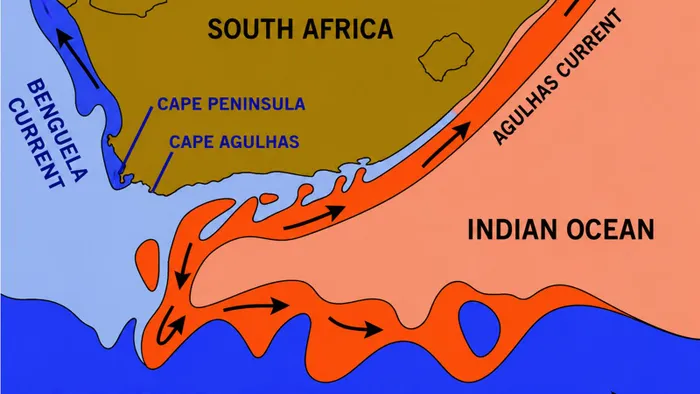
The Benguela Current is a cold ocean current flowing northwards along the west coast of southern Africa.
Image: Wikimedia Commons
The department said ministers and senior officials at the conference discussed marine environmental protection, scientific cooperation, sustainable resource management and strategies aimed at addressing challenges affecting coastal and marine ecosystems in the region.
Aucamp also reaffirmed South Africa’s commitment to the convention and said South Africa, Namibia and Angola shared responsibility for ensuring the region’s marine resources benefited local populations while protecting the ecosystem for future generations.
The department said South Africa emphasised strengthening scientific cooperation through joint research and shared resources, securing sustainable financing for the commission, building regional capacity and intensifying efforts to combat illegal, unreported and unregulated fishing.
“It is particularly important that our predecessors highlighted a need to promote inclusive participation of youth and women in the oceans sector, enhance regional oil spill preparedness and response, and develop mechanisms through which the region’s marine wealth can sustainably support the long-term work of the Convention,” Aucamp said.
According to the department, the Benguela Current Convention remains an important mechanism for regional cooperation on ocean governance, biodiversity conservation, sustainable fisheries, climate resilience and the blue economy.
“South Africa stands ready to work with Angola and Namibia in our shared responsibility to advance the full implementation of the Convention,” Aucamp said.
IOL BUSINESS