
Economic growth is still well below the level needed to absorb people entering the workforce every year.
Image: Courtney Africa | Independent Newspapers
South Africa’s economy grew again in the third quarter, keeping a fragile recovery alive – but the rate of growth remains too modest to bring down unemployment.
In a deep dive into the numbers, Statistics South Africa said economic activity expanded for the fourth quarter in a row.
The latest increase, of 0.5% quarter-on-quarter, was small and comes after another modest rise in the previous quarter.
The direction is positive, yet the pace is still well below the level needed to absorb people entering the workforce every year.
Annabel Bishop, Investec’s chief economist, has said that growth of around 3% is needed for meaningful job creation. Unemployment, while moving in the right direction, is still high at 31.9%.
There have, however, been suggestions that the informal sector, where kasi entrepreneurs don’t consider themselves employed and therefore are counted as unemployed, yet are, in a sense, employed.
In the formal economy, the strongest momentum came from drive-side sectors: mining, agriculture, forestry and fishing, and consumer-facing trade.
Anchor Capital commented that this gain extends a run not seen since before 2018. “The broader implication is that South Africa’s growth pulse is gradually strengthening,” it said.
While economic growth remains relatively modest compared to historical norms and emerging markets, recent steady quarterly gains suggest that the economy is becoming more resilient.
This improvement is supported by declining inflation, reduced interest rates, and the initial stages of an investment rebound.
“If sustained, this trajectory could help lift confidence, support job creation, and provide a firmer foundation for fiscal consolidation efforts heading into 2026,” said Anchor Capital.
Mining carried the quarter. More platinum group metals left shafts and plants, supported by manganese, coal, chromium and copper.
There were dips in iron ore, diamonds, nickel and gold, but the overall effect was still positive.
Agriculture delivered again, marking its fourth straight quarter of growth as fields, orchards and livestock farms had a solid season.
Trade – from big wholesalers to corner retailers, accommodation and food – also chalked up yet another gain, showing that consumers are still spending on travel, eating out and making small purchases.
General government activity grew as more jobs were added across national and provincial departments and in public institutions.
Transport, storage and communications benefited from a rebound in air travel and support services around logistics and information flows.
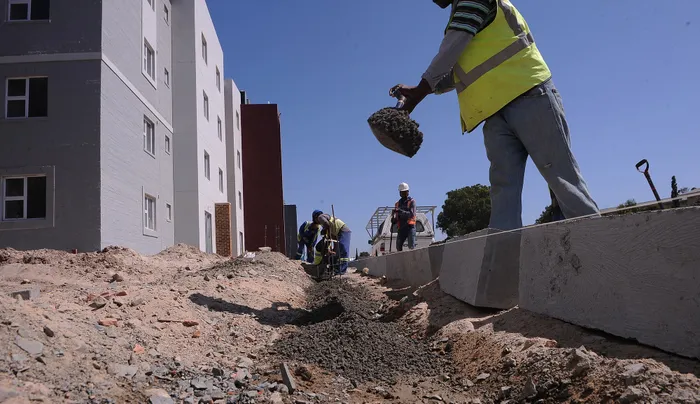
Construction, which had been on the ropes, finally turned positive. It was a small improvement, but it came off three quarters of decline, with non-residential buildings and civil works doing the heavy lifting.
Only one sector went backwards: electricity, gas and water. Lower power output and usage, together with lacklustre water consumption, dragged the industry down.
Household spending rose again, the sixth straight increase, helped by new car sales and higher transport-related purchases. People were more cautious on clothing, footwear and general goods.
Investment also bounced back after three quarters of weakness.
Companies spent more on transport equipment and technology, including ICT hardware and software, signalling confidence in future demand.
Exports grew, especially in vegetables and minerals. Imports rose faster, driven by machinery, electrical equipment, textiles and fats and oils.
IOL BUSINESS