
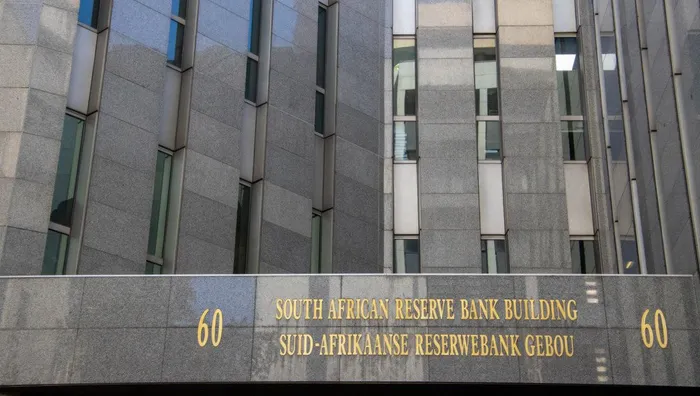
The South African Reserve Bank says South Africa has yet to feel the economic shock of the war in the Middle East.
Image: Nicola Mawson | IOL
The war in the Middle East has jolted financial markets but has yet to show up in South Africa’s underlying economic data, the South African Reserve Bank (SARB) said.
In its March 2026 Quarterly Bulletin, the central bank said the conflict, which broke out on 28 February, abruptly interrupted a period of strong market performance, with the rand weakening and share prices falling as global risk aversion increased.
SARB said that rising oil prices are likely to push domestic fuel costs higher, clouding the outlook for the economy.
Oil prices, as of late morning, had dropped below $99 after having held above $100 for days on end.
“The buoyant performance of global and domestic financial markets over the past year was abruptly interrupted following the outbreak of the war in the Middle East on 28 February 2026,” the bank said.
This comes as it warns that “the impact of the war has not yet become apparent in real economic activity”.
Global economic conditions have been seen in a move from riskier assets with a subsequent decline in the rand. The local currency has been falling against the dollar, although it was below R17 this morning, with Trading Economics stating that it was trading at R16.85.
This figure is an improvement on the recent lows when it dropped below R17. “Still, the currency depreciated almost 7% against the greenback this month in the wake of the Middle East conflict, as investors flocked to safe-haven assets amid rising global uncertainty,” it said.
Against this warning comes the backdrop of an economy that expanded by 0.4% in the fourth quarter of 2025, extending the longest stretch of growth since 2018, while annual growth more than doubled to 1.1% from 0.5% in 2024.
But beneath that improvement, the picture remains uneven.
Growth was driven largely by the services side of the economy, where finance, trade and other sectors benefited from improved sentiment and rising asset prices.
In contrast, the productive sectors continued to struggle.
Mining output, for instance, declined in the quarter as production of coal, platinum group metals, gold and diamonds slowed, reflecting operational constraints and softer demand, SARB said.
At the same time, manufacturing activity continued to be weighed down by weak investment, rising energy costs and subdued demand, with most subsectors recording declines.
However, today’s Purchasing Manager’s Index climbed 1.6 index points month-on-month, despite the war. The index, compiled by Absa in conjunction with the Bureau of Economic Research, “suggests that the sector has not yet experienced a significant impact from the war in the Middle East on activity”.
However, costs had already increased ahead of the large fuel price increase that takes effect today
Construction has yet to recover, extending a near decade-long contraction as infrastructure investment and private sector activity remain subdued.
Agriculture stood out as a relative bright spot over the year, supported by favourable rainfall and strong crop output, although the sector continued to face logistical bottlenecks and disease outbreaks, it said.
This sector has been largely responsible for economic output recently.
IOL BUSINESS