
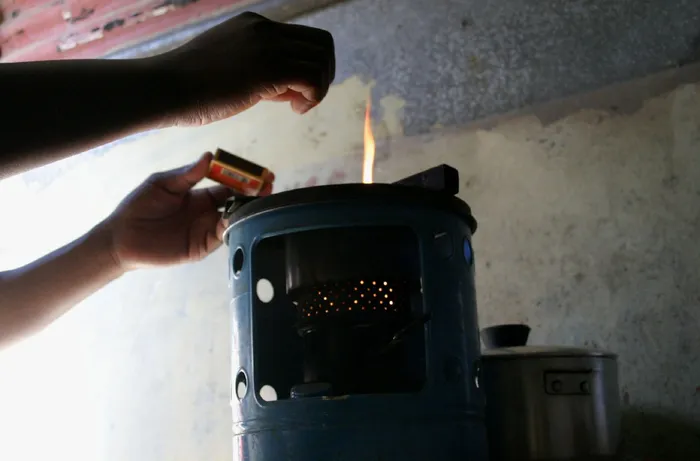
SA's poorest households face a harsh reality as the price of paraffin, a vital energy source, surges.
Image: Dumisani Sibeko / Independent Media
Things that most people take for granted, such as switching on a light or cooking a meal, have become prohibitively expensive for South Africa’s poorest households following severe paraffin price announcements that came into effect last week.
While motorists and transport operators benefited from a R3 per litre temporary tax reprieve that softened the blow of this month's petrol and diesel price hikes, customers of illuminating paraffin bore the full brunt of an R11.67 per litre increase on April 1, pushing the national maximum retail price to R31.47 per litre.
The Department of Mineral and Petroleum Resources (DMPR) said that paraffin did not receive any relief measures, as, unlike petrol and diesel, it is not subject to the General Fuel Levy (GFL).
However, there have been widespread calls for government to take decisive action to soften the blow on South Africa’s poorest households, with measures such as subsidies.
Martlé Keyter, CEO of the Motor Industry Staff Association (MISA), said families already struggling to survive will be forced into harsher conditions, with limited alternatives available to them.
“Winter is around the corner. Paraffin is the primary source of energy for millions of South Africans who use it for cooking, heating and lighting. It is a basic necessity for the poorest of the poor. The doubling of its price threatens to deepen energy poverty, exacerbate food insecurity and strip vulnerable households of their dignity.”
The organisation is calling for a broader relief package that could include practical measures such as targeted subsidies as well as price stabilisation mechanisms to prevent extreme fluctuations.
“The price hikes created a global humanitarian crisis. Our government must act decisively to shield the poorest households from the devastating impact of unaffordable energy. MISA reaffirms its commitment to advocating for fair and just policies that protect workers, families and the most vulnerable members of society,” Keyter added.
Thapelo Mohapi, general secretary of Abahlali BaseMjondolo (Movement of the Shacks) expressed concerns about child nutrition during the winter holiday period.
"Winter is coming, and families will struggle to keep children warm and cook food. When schools are closed, children won’t get the nutrition they need, and households will face rising food costs alongside unregulated paraffin prices," Mohapi said.
"The government does not care about the poor; that’s why they have not given relief for paraffin, as it is used by the poor mostly. They care more about the middle class who own cars," Mohapi added.
Bertha Dlamini, founding president of African Women in Energy and Power (AWEaP), said longstanding policy gaps were hitting the poor hardest.
"Energy inequality is structural. Low-income households pay a poverty premium for paraffin because distribution is fragmented, competition is limited, and price regulation is weak. Fuel levy relief helps middle-class commuters, but paraffin-dependent households remain exposed to volatile global oil prices."
Not only should government consider measures such as subsidies, but transparent monitoring of paraffin prices and the rollout of LPG and electric cooking support programmes could go a long way to relieving pressure on the poorest of the poor, she said.
IOL Business