
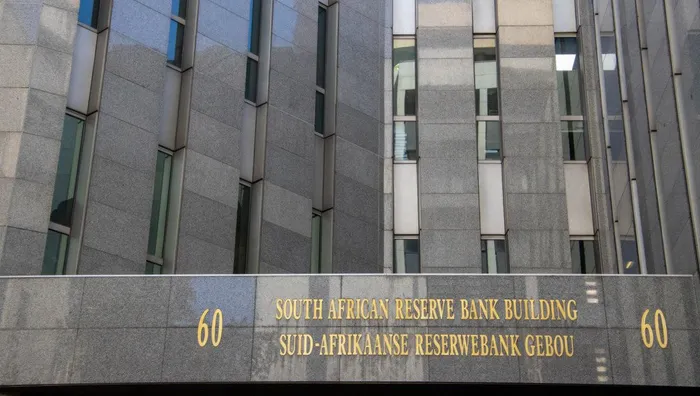
South Africa’s fragile economic recovery is coming under renewed pressure.
Image: Nicola Mawson | IOL
South Africa’s fragile economic recovery is coming under renewed pressure, with Reserve Bank governor Lesetja Kganyago warning that a combination of higher global uncertainty and weaker household spending is expected to slow growth over the next two years.
While the South African Reserve Bank’s decision to raise interest rates dominated headlines on Thursday, the central bank also delivered a warning that the economy’s recent momentum is fading as geopolitical tensions, higher oil prices and rising inflation weigh on households and businesses.
The Reserve Bank lowered its economic growth forecasts to 1.2% for 2026 and 1.7% for 2027, citing weaker consumer spending and softer investment as households and businesses contend with higher costs and increased uncertainty.
“Before this shock hit, the economy seemed to be gaining momentum, with the incoming data mostly positive,” Kganyago said. “Now, however, we face a painful combination of higher global uncertainty and reduced disposable income.
Lerato Ntuli, economist at Anchor Capital, said the downgrade reflected mounting pressure on consumers and businesses. “The downgrade reflects weaker disposable income due to rising inflation and elevated global uncertainty, which are expected to weigh on household consumption and investment.”
The Reserve Bank’s assessment suggests the economy has shifted from a period of improving confidence to one where external risks are once again clouding the outlook.
Investec economist Lara Hodes said South Africa had been on a favourable growth trajectory before the latest conflict in the Middle East altered the economic landscape.
“However, risks to growth are now assessed to the downside and the SARB has revised downwards its GDP forecasts for this year and next.”
The downgrade comes after several years in which South Africa struggled to regain sustained momentum following the COVID-19 pandemic, despite easing inflation, improvements in energy supply and stronger investor confidence, said Thys van Zyl, chief executive of Everest Advisory Services.
Van Zly said, “there is now a risk that the country could miss an opportunity to fully benefit from the recovery in the JSE, the stabilisation of inflation and a sustainable lower-interest-rate cycle”.
Van Zyl said the coming months would likely prove decisive for the economy given upcoming municipal elections.
“The past two years presented an opportunity for South Africa to rebuild its economic foundation through stronger growth, improved infrastructure, energy reform and greater investor confidence. The question now starting to emerge is whether that opportunity was fully utilised.”
Van Zyl added that tensions in the Middle East and rising oil prices remained among the biggest risks facing both the global and domestic economy.
“The world remains extremely sensitive to energy prices and supply risks. As long as geopolitical tensions persist, central banks around the world will remain under pressure to manage inflation aggressively.”
Samuel Seeff, chairman of the Seeff Property Group, said the weaker growth outlook comes at a difficult time for South Africa’s labour market and broader economy.
“Economic stability and growth must be prioritised and facilitated wherever possible. The first-quarter job losses (taking unemployment to a disastrous 32.7%) and fading economic optimism which has already seen the GDP growth outlook downgraded to around 1.2% from an initial 1.6%, must be a priority at this stage.”
IOL BUSINESS