
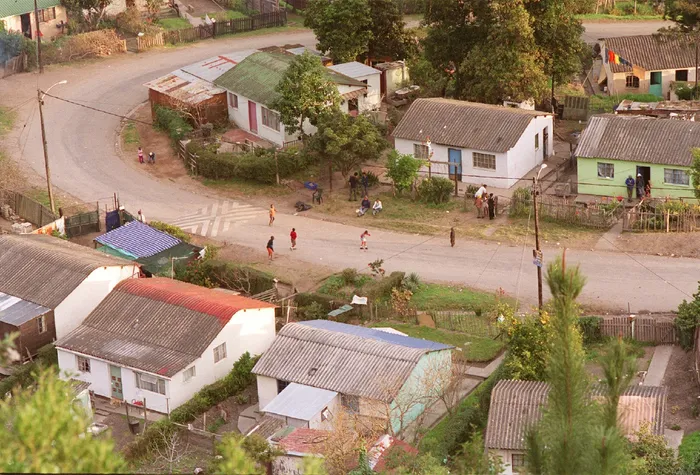
In some townships and underserved communities, customers are consuming more than 1TB of data per month at an effective cost of less than 50 cents per GB, showing how usage changes when connectivity becomes affordable enough to use properly.
Image: John Yeld
There is a shift in where South Africa’s fibre growth is coming from, with demand increasingly extending beyond traditional metro fibre suburbs into smaller towns, peri-urban areas, and underserved communities.
“This milestone shows that demand for quality fibre is not limited to the country’s established fibre markets,” says Van Zyl Botha, CEO of Herotel.
“South Africans want reliable, affordable connectivity that they can use, and that demand is visible in the communities where we build every day.”
According to the most recent Africa Analysis FTTH Quarter Tracking report, Herotel has become South Africa’s largest fibre-to-the-home (FTTH) internet service provider in terms of connected homes.
The industry tracking data places Herotel at 284,850 connected FTTH homes, ahead of other major retail ISPs in the South African market.
The ranking includes connected homes across month-to-month and prepaid FTTH services, and excludes Herotel’s fixed wireless customer base, which stands at 52 094.
According to South Africa's Digital Infrastructure Investment Study 2025, South Africa has made substantial progress in expanding connectivity over the past decade. The study said mobile broadband networks now cover most of the population, and fibre networks have expanded rapidly in metropolitan areas.
However, it says a significant connectivity gap remains.
“While urban areas increasingly benefit from high-capacity fibre networks and emerging 5G services, many rural and peri-urban communities continue to rely primarily on mobile connectivity and remain underserved by high-speed fixed broadband.
"Affordability constraints and limited digital capabilities also prevent many households from fully participating in the digital economy,” reads the report.
The fibre internet provider in SA says its growth has been driven by a direct-access network model that combines ownership of fibre and wireless infrastructure with local deployment and support teams.
Unlike providers that rely primarily on third-party networks, Herotel says it builds, owns, and operates its own fibre and wireless infrastructure, giving it greater control over rollout, performance, pricing, and customer experience.
This model has helped Herotel scale rapidly across the country, and today, only six years since its first project, more than 350,000 active customers across over 550 towns, cities, and suburbs are connected, with more than 612 000 homes ready for connection.
A major part of this growth has come from serving areas where conventional fibre rollout models are often harder to justify commercially. Herotel’s mixed use of aerial and trenchless fibre deployment has helped reduce rollout complexity, while its prepaid fibre model has made high-volume home internet more accessible to households that prefer flexible spending options over long-term contracts.
In some townships and underserved communities, customers are consuming more than 1TB of data per month at an effective cost of less than 50 cents per GB, showing how usage changes when connectivity becomes affordable enough to use properly.
“This is not only about passing homes with fibre. The real test is whether people can afford to stay connected and use that connection for school, work, business, communication, and entertainment without constantly managing data limits,” says Botha.
The fibre internet provider says it has already expanded into underserved areas like Jouberton, Kanana and Siyabuswa, where fibre connectivity did not previously exist, and is targeting an additional 750 000 homes in other township communities.
The company says its local presence remains central to its operating model. With more than 90 offices nationwide, Herotel says it positions its teams close to the communities it serves, supporting local rollout, installation, and customer service.
The company says it is targeting an additional 750 000 homes in underserved areas, aiming to expand its total footprint to more than 1.1 million homes and reach approximately 6 million people.
The CEO says the ranking confirms the strength of Herotel’s strategy, but also points to the scale of work still ahead.
“South Africa’s digital divide is no longer only about whether people have some form of internet access. It is about whether that access is reliable, affordable, and useful enough to support real participation in the digital economy. That is the gap Herotel is focused on closing,” Botha says.
High-speed fibre coverage has expanded extensively across Ballito's estate network and residential suburbs, said Lloyd Rees, the principal agent at Lloyds Real Estate, recently.
He said for remote workers, who represent a growing proportion of semigrant buyers, reliable fibre connectivity is non-negotiable.
“Estates and developments that can confirm full fibre coverage are increasingly attractive to this buyer segment. It is worth verifying coverage in any property you're seriously considering, particularly in newer developments on the fringes of established suburbs.”
Independent Media Property