
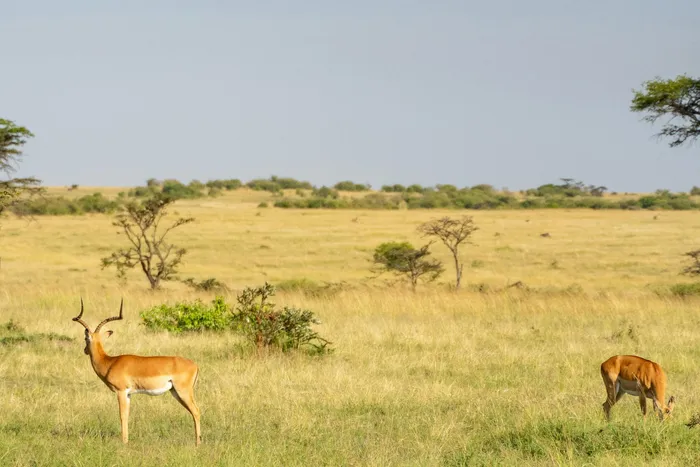
Researchers warn that sub-Saharan Africa has already lost 24% of its biodiversity, with large mammals hit hardest, as a major new study calls for urgent action beyond protected areas.
Image: Ken Mwaura/ Pexels
Sub-Saharan Africa has lost nearly a quarter of its biodiversity since pre-industrial times and scientists say the picture is far worse for large mammals.
A major African-led study released on Tuesday reveals that “sub-Saharan Africa has already lost 24% of its biodiversity since pre-industrial times”. Researchers say this means the region’s plants and animals “have declined by nearly a quarter”.
Large mammals have taken the hardest hit. Some species have lost more than 75% of their historical abundance as croplands expand and unsustainable harvesting grows.
The study, published in Nature, draws on insights from 200 experts across the continent from ecologists and rangers to museum curators and tour guides. It is the most detailed assessment of biodiversity intactness yet produced for sub-Saharan Africa.
“Many global biodiversity assessments do not represent African conditions well because they rely on sparse local measurements and draw insights from more data-rich regions of the world, where contexts are very different,” said lead author Dr Hayley Clements of Stellenbosch University’s Centre for Sustainability Transitions.
“By working directly with the people who study and manage African ecosystems, we were able to capture a much more realistic picture of where biodiversity is declining, where it is being sustained, and why.”
The team used a structured expert-elicitation process to build a continent-wide Biodiversity Intactness Index map, a first-of-its-kind tool rooted in in-country ecological expertise.
The findings show stark contrasts. Disturbance-tolerant plants have declined by as little as 10%, but elephants, lions and several antelope species have plummeted by over 75%.
Central African countries fare best thanks to their remaining humid forests. West Africa is the most degraded, with forests and savannas heavily damaged by overharvesting and agricultural expansion.
The study also delivers a major reality check: over 80% of remaining wild plants and animals live outside protected areas in working lands where more than 500 million people live.
“This fundamentally shifts where and how we think about biodiversity conservation in Africa,” says Clements.
“Protected areas remain vital, especially for Africa’s large mammals, but alone they are insufficient to curb biodiversity loss. Sustainable management of shared working landscapes is key to maintaining biodiversity and supporting livelihoods.”
Examples already exist, she says, including “sustainable pastoralism practices, community-led wildlife conservancies, and biodiversity-positive farming approaches”.
Cropland expansion is among the biggest pressures. Nigeria and Rwanda, the countries with the highest cropland coverage show the lowest biodiversity intactness. Intensive farming reduces habitat diversity and increases chemical pressures on species. Traditional smallholder practices, by contrast, support higher levels of biodiversity.
With cropland set to double and cereal demand expected to triple by 2050, the authors warn that biodiversity-positive farming practices will be essential.
Rangelands are another flashpoint. Lower-intensity pastoralism supports more biodiversity than intensive livestock systems, but increasing restrictions on herd mobility threaten that balance.
The researchers say the new index fills a critical information gap for African governments, offering a tool for land-use planning, biodiversity reporting and policy.
“This study showcases the depth of ecological expertise across Africa. By grounding biodiversity measurement in local expertise, we now have a more credible evidence base to support development strategies that sustain both nature and people,” said Professor Oonsie Biggs, co-author and Co-Director of the Centre for Sustainability Transitions.
Cape Argus