
Leila Samodien
Justice Writer
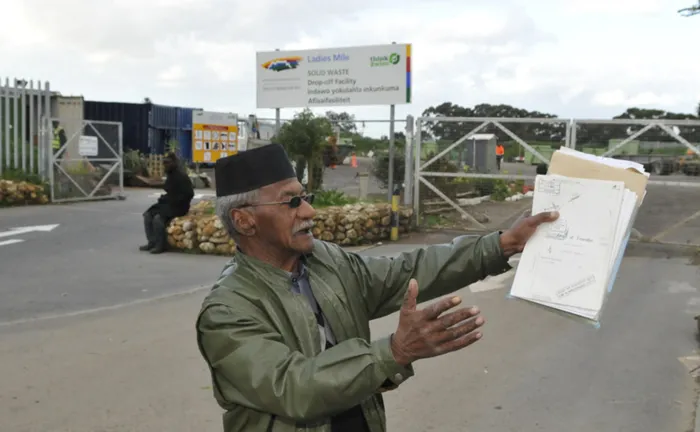
IT could be up to two years before Gamat Kassiem Kherekar, who successfully reclaimed a piece of property in Ladies Mile, Constantia, gets his land back, from which he was forcibly removed in terms of the apartheid Group Areas Act when the area was declared for whites only.
This is according to a judgment which was handed down in the Western Cape High Court yesterday.
The judgment was in relation to an application by Meadowridge resident Anthony Sayers, whose home is next to the land, which is now a refuse dump site.
Sayers sought a court ruling ordering the City of Cape Town to tear down a shed that it had put up on the land.
According to Judge Andre le Grange’s judgment, the shed – built to ease the noise of a wood-chipping machine – obstructed the views in his garden of Table Mountain and Newlands Forest.
The land, which was released in October, forms part of six parcels that were released as part of the Ladies Mile land claim.
The judgment cites an affidavit by City of Cape Town collections and solid waste manager Trevor Carroll, who said there was still a process that needed to be completed before the land could be subdivided and transferred to its new owners.
This included an environmental impact assessment and rehabilitation of the land.
“According to Carroll, it is anticipated that the tender process, the rehabilitation of portion six, the subdivision of erf 4742 and the transfer of the subdivided erven to the individual beneficiaries could take between 18 and 24 months,” the judgment read.
During this time, the facility would be decommissioned, which would take 15 months.
Kherekar said he was still unsure of how long it would be until he got his title deed.
“I started this claim 17 years ago and after all these years, I still don’t have the land.”
Patrick Thembani, project co-ordinator for the Land Claims Commission in the Western Cape, said a government approval process still needed to be followed, as well as a consultation process, in which a consultant would advise the claimants as to the best use for the land.
Judge le Grange dismissed Sayers’s application, with each party responsible for their own legal costs.
“In this instance, the result favours the city, but ultimately the facility must be closed as a result of the successful land restitution claim,” his judgment said.
“Once this process has been completed (Sayers’s) complaints will in effect be addressed.”
leila.samodien@inl.co.za