
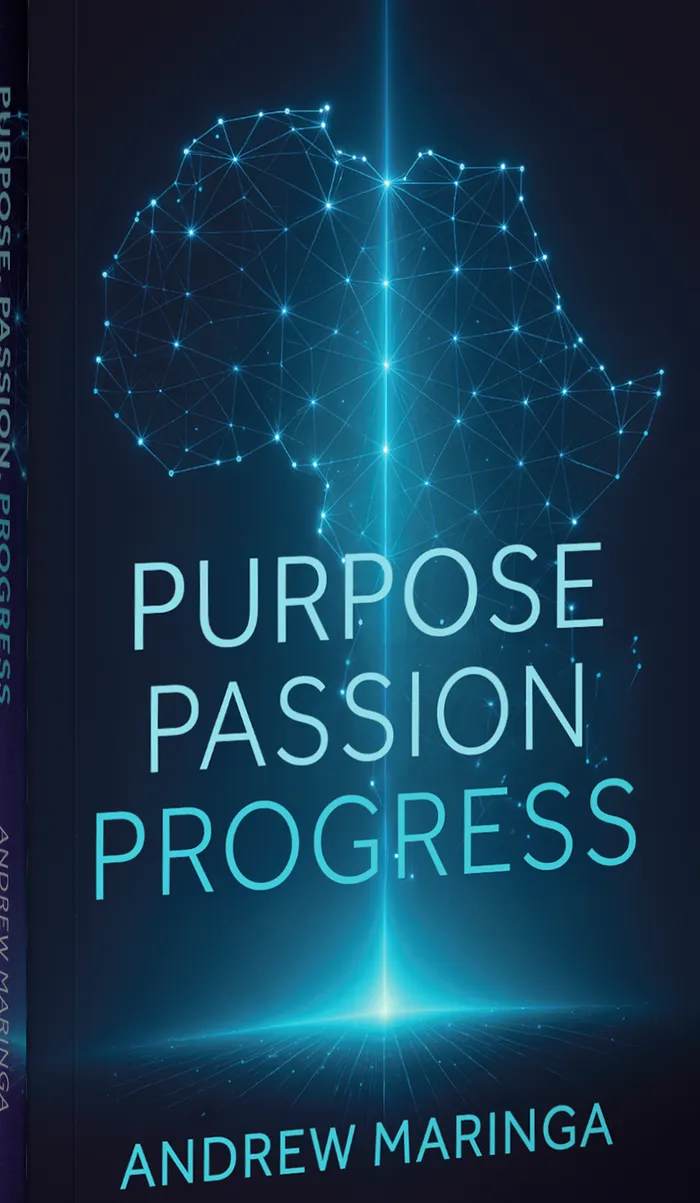
This book confronts what it means to lead with purpose in environments defined by volatility and constant change. It insists on values‑driven direction, resilience under pressure, and ethical choices that cannot be postponed. Purpose is not optional; it is the measure of influence, not titles or accolades, but the effect we leave in the lives of others.
Image: Supplied.
I read a line in Andrew Maringa’s book that struck me as its strongest claim: purpose‑driven leadership is not a luxury but a necessity.
It pushes duty beyond ambition. This is not something we can afford to treat as optional, decorative, or confined to boardrooms. Homes, communities, workplaces and public life all need decisions grounded in principles rather than ego.
True influence is measured not by titles or accolades but by the effect we leave in the lives of others. How do we inspire confidence, foster growth and commit to building legacies that endure?
Forms of Leadership
What I appreciate is that the message can be applied across different forms.
In everyday life, these forms show up in ordinary roles. A parent leads through example. A teacher shapes confidence. A manager sets a fair tone. A community member speaks up when remaining silent would be easier.
How do these forms manifest in your life? How can you embody them in daily interactions?
This is why the text feels larger than business or entrepreneurship; it is really about how people carry accountability wherever they are.
Ethics as Compass
The moral dimension gives the idea its depth. In a world where image, speed and power often get rewarded, values‑based direction asks harder questions:
This makes clarity more than a motivational phrase; it becomes a compass.
It also connects powerfully to real‑world issues like the Iran talks and the wider need for diplomacy. Negotiations between nations are not just political events; they are tests of integrity on a global scale. Those in charge have to weigh security, trust, accountability and human consequences. Values‑driven responsibility in that context means choosing restraint and long‑term peace over short‑term posturing.
Trust and Accountability
A second issue is the erosion of confidence in public and organisational life. People lose faith when those in charge act without principles, whether in government, business or community.
When I look at today’s headlines, the urgency sharpens. In South Africa, service delivery failures and corruption scandals show how fragile institutions become when authority is treated as a title rather than trust. In the United States, Donald Trump surviving a second attempt on his life is not just about one man; it is a mirror of how political influence has become polarised and dangerous. Integrity asks what principles are being compromised when violence becomes part of political expression.
Globally, Meta is cutting 8,000 jobs, reminding us that choices carry through lives. Layoffs are not just numbers; they are families, communities and futures disrupted. This approach means asking how we balance innovation with accountability. How do those in charge ensure efficiency does not come at the cost of dignity?
Everyday Leadership
What keeps this work relevant is that it does not confine responsibility to boardrooms. Ordinary acts matter as much as decisions made in parliaments or corporate headquarters. In times of disruption, these everyday choices — how we speak, how we act, how we build confidence — are what hold communities together.
Guidance is not a title. It is the effect you leave. It is the way you live your principles in small, consistent acts. Personal accountability shapes our interactions and influences those around us. It creates a ripple effect that can inspire others to act in their own lives.
This is why the author’s approach feels both practical and human; it is about duty carried in daily life, not just strategy written in boardrooms.
Practical Takeaways
Closing Reflection
Presence carries more weight than position ever can. It is the way we show up in our homes, our workplaces, our communities and in the choices that ripple outward. In a world unsettled by disruption and distrust, the call to act with integrity is not abstract; it is immediate.
Each of us has the chance to live our way into clarity, to make decisions that build confidence rather than erode it, and to leave an impact that endures beyond titles.
Purpose, Passion, Progress is published by Tracy McDonald Publishers.