

Nandi Madida is redefining the narrative of the modern African mother through "The Motherhood Network", creating a sanctuary where transparency meets empowerment.
Image: Instagram.
Singer and media personality Nandi Madida has ventured into her most personal project to date: "The Motherhood Network".
Recently recognised as one of Apple Podcasts’ Best of 2025, the platform has rapidly transformed from a podcast into a vital sanctuary for parents across the continent.
At its core, the podcast is built on the idea that for a society to thrive, its mothers must first be healed.
The inception of the podcast was born from a quiet observation of a loud need. Madida found that her private interactions with other women were often defined by shared questions and a search for guidance.
"It was imperative for mothers to be seen," says Madida.
"I noticed a lot of mothers would come up to me with questions, and I am in no way an expert. I saw a gap in the market for all the mothers that related to me, and I just thought that I'd use the resources I've been blessed with to shed light on different topics of motherhood."
Madida believes motherhood is the heartbeat of South Africa's future.
To her, a mother is much more than someone who manages a home. She feels that when a mother is healthy, educated and supported, the whole nation becomes stronger.
"In South Africa, mothers are the primary caregivers," she notes.
"So if you heal mothers, if you ensure they are empowered, educated, feel safe, then they can thrive, and we can have a better society and a better future."
This philosophy has turned the podcast into a tool for growth: "I've interviewed some incredible minds. I always feel a platform like this is great, where people can benchmark the best. I do the same; I benchmark from every single mother that I interviewed because I learn something incredible from all of them, and it's helped me in my parenting journey as well.
"My son, from day one, has been very hands-on with this podcast; he's even learnt a lot, so it's just great."
Madida is also working to change what it means to be a "modern African mother".
For a long time, people thought being an African mother meant only hard work and sacrifice, often ignoring the woman’s own happiness.
Madida says she wants to change that by showing that mothers deserve to be soft, too.
"I'm very particular about African mothers being put in a positive light. We see the negativity around motherhood, particularly in this country and on the continent and without being unrealistic, it is important that fellow mothers see other mothers doing incredible things as well.
"Also just normalising and giving time to oneself to better themselves and therefore bettering their kids and not feeling guilty about it."
She speaks candidly about the generational burdens that have historically weighed down South African women.
"The modern African mother is an incredible human being. We need to celebrate that softness. Yes, we have a strength, but we also are allowed to take care of oneself and I do want to normalise that.
"We've seen so many of our mothers bear the burden of our society and never get to enjoy their lives. For me, it is imperative that we get to enjoy our lives, bring joy to our lives, to our families and just enjoy a good life whilst being mothers."
Her advocacy takes a deeply personal turn when discussing neurodivergence. By sharing her own experiences, she is dismantling the stigma surrounding ADHD and autism.
"I've always advocated for neurodivergence. I myself am neurodivergent, and so stepping into this role of being an advocate for gifted children has really given me a sense of focus as to how important it is to speak of such children.
"What does it look like? What can we do to help our community to normalise a different way of thinking?"
She recognises that for many, the journey of raising a neurodivergent child is a lonely and expensive one.
"A lot of parents feel alone and don't have support. It's also a very expensive road, and not everyone is going to have a therapist to go to; not everyone is going to have the help they need, and I think that's why I was even more motivated to have such a platform.
"A responsibility of being a media person is to share advice from the experts and then as a mother, but I think if I could just tap into that one person or anyone who may not be able to access such medical advice, to be able to share that on my platform and empower them in that way and for them to feel like they are not alone."
This sense of responsibility extends to the "TMN Book Club", an initiative aimed at the heart of South Africa’s literacy challenges.
"I love the book club. I'm a big advocate when it comes to literacy, especially when it comes to mothers, because us being the primary caregivers, we then inspire kids to do the same. When we get our mothers to read, then our kids will follow suit.
"South Africa has a big issue with literacy, maths and comprehension as a whole. People are being misread, misquoted, and it's a reflection on our education system, and that's a legacy not only from apartheid but poor governance as well.
"I'm just trying to play my little part in trying to heal that and motivate our mothers to have their own book clubs in their communities."
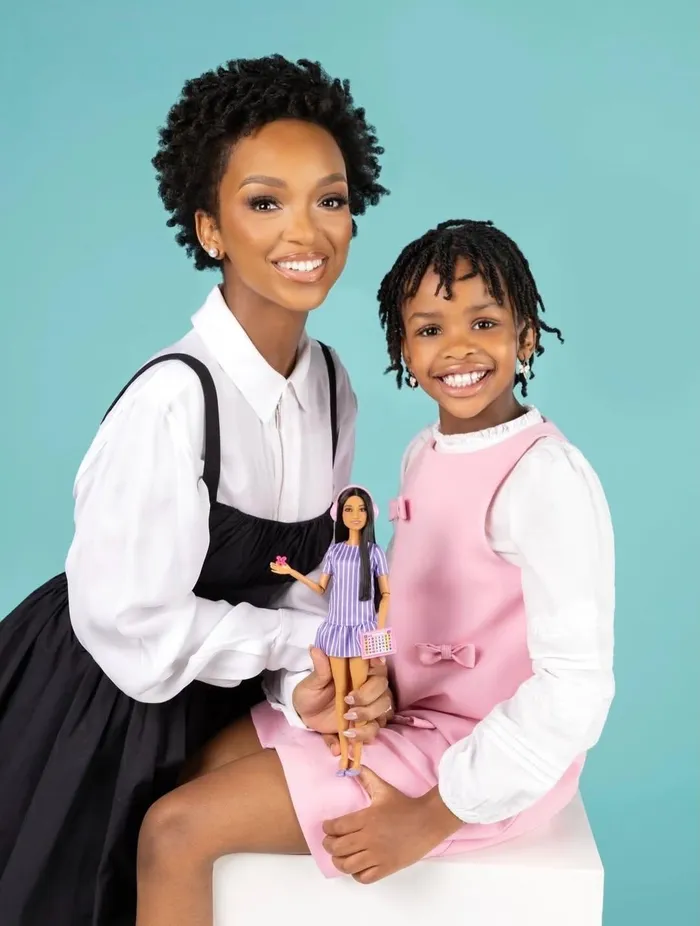
Nandi Madida with her daughter Nefertiti Madida.
Image: Instagram.
Despite the weight of these topics, Madida manages to keep the tone of her podcast intimate and warm.
Much of this comes from her own grounded nature and her willingness to be a student of her own children.
"My kids have taught me patience. I know a lot of parents say that, but it's true. One thing I am proud of as a mother is that I've always accepted my kids as they are and celebrated them as well. We always have to work on ourselves, whether it's healing, understanding yourself or forgiving yourself as well.
"Also, be willing to take constructive criticism from your kids. Motherhood is such a humbling experience and one that I love and cherish so much."
Through "The Motherhood Network", Madida has created a digital community where mothers can find the manual they were never given, all while being reminded that they are allowed to be soft, successful and happy.
As Madida puts it: "The team and I want to leave a mother feeling like her life has changed; and feels good about herself and feels like she can take on the world."