
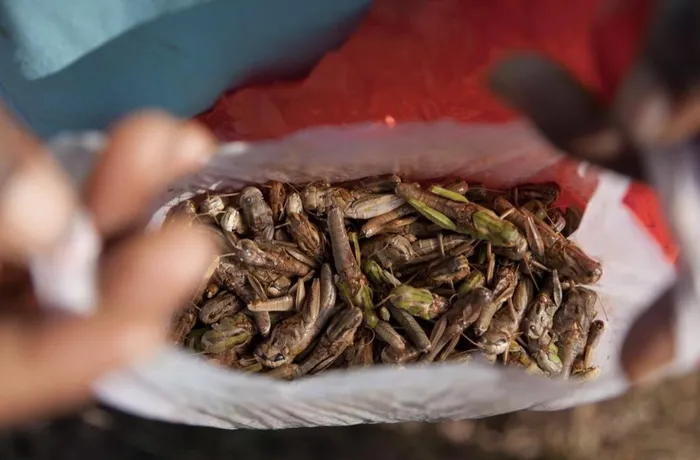
As the world battles food insecurity, discover how South Africa's own Mopani worms are emerging as a superfood solution, bridging tradition and sustainability in the future of food.
Image: TikTok
World Edible Insect Day, celebrated on Thursday, October 23, is a global reminder that the future of food might just crawl.
As the planet faces population growth and rising food insecurity, insects are emerging as a sustainable and nutrient-dense solution.
And here in South Africa, Matomani, founded by Wendy Vesela-Ntimbani, is leading this movement by transforming the humble Mopani worm into a modern superfood.
While cattle require about 10 kilograms of feed to produce one kilogram of beef, Mopani worms need only three kilograms of Mopani leaves, making them one of the most efficient protein sources on earth.
Below are the pros:
Across the globe, more than 1,900 species of edible insects are consumed by roughly two billion people, a practice known as entomophagy.
From Thailand’s crispy crickets to Mexico’s famous chapulines (grasshoppers), insects have long been part of traditional diets. Even in Africa, the idea isn’t new. In countries like the Democratic Republic of the Congo, caterpillars are an essential source of nourishment during the rainy season.
In South Africa, Mopani worms, known locally as masonja, have fed communities for generations, providing sustenance during harsh seasons when meat was scarce.
But now, thanks to innovation and a growing awareness of climate change, food insecurity, and rising protein costs, these traditional foods are being reimagined for the modern world.
Globally, the edible insect market is projected to reach over US $556 million by 2025, according to a report by Meticulous Research, with estimates predicting it could grow beyond US $4 billion by 2035.
The European Union has already approved several insect species, including crickets and mealworms, for human consumption, outlining strict safety and quality standards. Meanwhile, in North America, health stores are stocking cricket-based protein powders and snack bars.
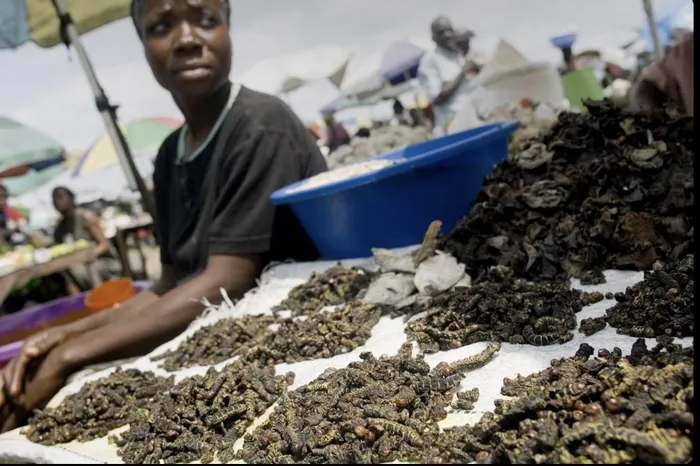
Globally, more than 1,900 species of edible insects are consumed by approximately two billion people, a practice known as entomophagy
Image: Pixabay
A study published in Food Chemistry found that Mopani worms contain around 60% protein by weight, nearly triple that of beef. They’re also packed with iron, calcium, phosphorus, and omega-3 fatty acids, making them a true superfood.
For Wendy Vesela-Ntimbani, the founder and CEO of Matomani, Mopani worms represent both her heritage and her hope for the future. Raised in a small Limpopo village, she grew up harvesting masonja with her parents.
Those childhood memories would later inspire her to turn an age-old tradition into a thriving business rooted in sustainability and community empowerment.
“Entomophagy is more relevant than ever as we face global food insecurity and rising costs of animal protein,” says Vesela-Ntimbani. “Our goal is to connect Mopani-harvesting communities with health-conscious consumers across the world.”
Through Matomani, Vesela-Ntimbani has built a brand that blends indigenous knowledge with modern nutrition science.
Her products, ranging from dried Mopani caterpillars to protein powder, energy bars, and high-protein biscuits, are making it easier for South Africans to add sustainable protein to their diets.
Each product is organic, ethically sourced, and traceable, with every purchase supporting job creation and skills development in Limpopo’s rural communities.
Why Mopani worms are the protein of the future
Beyond their impressive nutritional profile, Mopani worms offer a model for sustainable agriculture.
It takes just three kilograms of Mopani leaves to produce one kilogram of caterpillars, compared to the ten kilograms of feed needed to produce the same amount of beef.
The worms require no synthetic chemicals or antibiotics; they thrive naturally in the wild, and they can be harvested seasonally without harming the ecosystem.
According to the Food and Agriculture Organisation (FAO), insect farming could help mitigate climate change by reducing land degradation, conserving water and cutting greenhouse gas emissions by up to 99% compared to beef production.
For a water-scarce country like South Africa, this presents a massive opportunity to create climate-resilient food systems that are both local and nutritious.
Mopani caterpillars are all-natural, free from chemicals, pesticides and hormones, Vesela-Ntimbani explains.
"We care deeply about the people behind our products. For us, sustainability means improving lives as much as protecting the planet," she said.
With products like Mopani protein bars now making their way into health stores and gyms, the brand is bridging the gap between ancient nutrition and modern wellness trends.
The bars, made from finely crushed Mopani powder, are high in fibre, omega-3s, amino acids and essential minerals, a convenient, eco-friendly alternative for fitness lovers, athletes and busy professionals.
What’s needed now is an open mind and a willingness to see beyond the “ick” factor.