
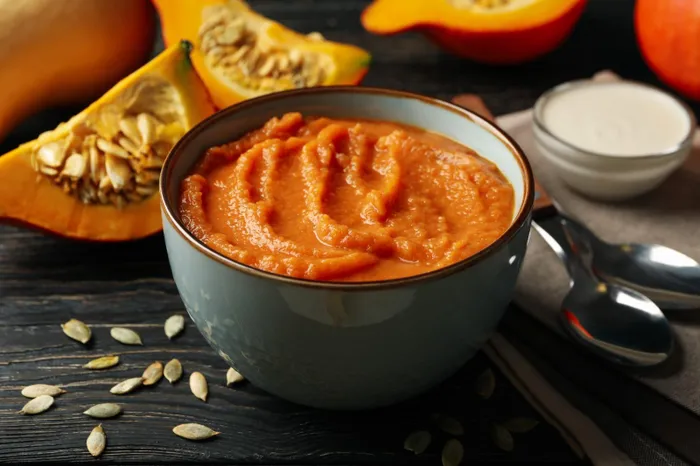
WHOLESOME: Pumpkin and Red Lentil Purée
Image: Supplied
As temperatures drop across Cape Town, with its grey skies, cold fronts and damp air. The search for comfort begins in the kitchen and for a lot of us that usually lies within family dishes.
Among them is “Pumpkin Pap,” better known as ‘Thopi’ in XiVhenda, ‘Kgadu’ in Sepedi and ‘Isijungi’ in IsiZulu. A simple pumpkin and maize meal dish across cultures that brings both comfort and cultural depth to the table.
In one family, the dish holds a deeper history. It goes back to a great grandfather’s time, when simple ingredients were used to create meals that could both nourish and comfort.
Pumpkin pap was often shared as both a meal and a winter dessert, eaten around the fire as stories were told.
Pumpkin; 600g, peeled and cubed.
Maize Meal: 1-2 cups of maize meal to thicken.
Sugar: ½ to 1 cup of sugar for sweetness.
Water.
A pinch of salt to balance the taste.
Pumpkin pap is a soft sweet dish made from just maize meal and pumpkin. Simple and filling, known across cultures. The dish is usually prepared without any strict measurements with instinct being the main guidance.
Traditional pumpkin pap is made by placing 1 medium pumpkin, peeled and cut into small pieces, into a large pot with 2 cups of water and 1 teaspoon of salt. The pumpkin is cooked over medium heat for about 20 minutes until it is very soft, then it is mashed with a wooden spoon inside the pot. Once mashed, 2 cups of maize meal are slowly sprinkled into the pumpkin while stirring continuously to prevent lumps from forming.
The heat is reduced to low, the pot is covered with a lid, and the pap is cooked for another 25–30 minutes, stirring every 5 minutes so it does not burn or stick to the bottom. If the pap becomes too thick, a small amount of hot water is added. When finished, the pap should be thick, smooth, and slightly sweet from the pumpkin
Originally cooked on the fire in a three-legged pot better known as ‘Potjie,’ it is cooked until it’s soft, letting out a sweetness, before the maize meal is slowly added in while stirring to create the thick texture. It was more about precision and about the feeling.
A meal closely tied to the winter, served hot, bringing warmth during the colder months and often shared among family members, around the fire or indoors. Its simplicity reflects a way of cooking that is both practical and deeply rooted in culture.
A recipe that has travelled from generation to generation, from sharing it around a fire in the rural to now sharing it within the urban kitchens. While setting changes, the meaning remains the same.
As the winter sets in, dishes like “Pumpkin Pap” offer a different kind of comfort that connects memory, culture and home to people. A little reminder that most meaningful meals are often the simplest.
IOL