
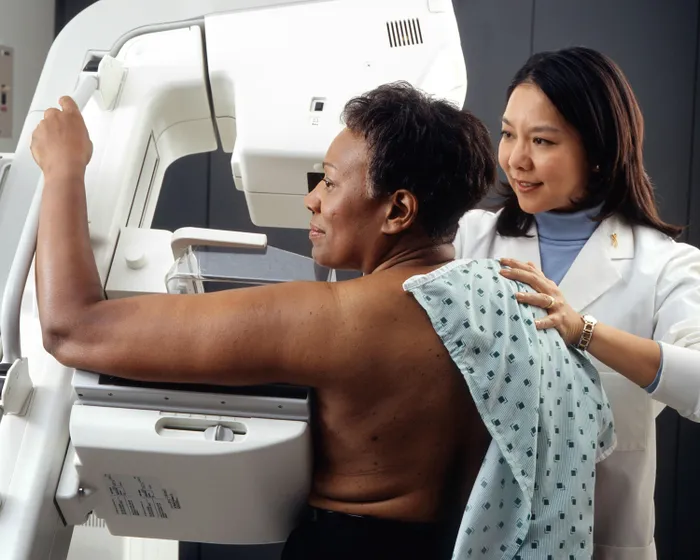
Many South African women experience anxiety about mammograms. We highlight less painful breast cancer screening options that can help women make informed health decisions.
Image: Unsplash
Like many South African women, I dread the idea of booking a mammogram and it brings a mix of anxiety, dread and discomfort.
Anyone who has had one knows what to expect: your breast is compressed between two plates with pressure that can reach up to 20kg.
While doctors argue this is necessary for a clearer X-ray image, the reality is that the process can be painful, traumatic, and for some women, enough reason to avoid screening altogether.
When breast cancer is already a leading threat to women’s health, fear of pain should never be the barrier that stops early detection.
While mammograms remain the most widely used method, they are far from perfect - and importantly, they are not the only option.
South African women do have alternatives, each with its own strengths and limitations. Understanding these alternative options can empower women to make informed decisions about their health.
A mammogram uses low-energy X-rays to create images of the breast. Compression spreads the tissue so abnormalities can be detected more easily. But there are concerns:
The good news is that several other screening tools can complement or, in certain situations, replace mammograms.
Other breast cancer screening options in South Africa
How it works: Ultrasound uses sound waves to create images of the breast. No compression, no radiation.
Pros:
Cons:
Best for: Women with dense breast tissue, younger women, and those needing extra investigation after a clinical exam.
How it works: A trained doctor or nurse performs a physical and visual exam to check for lumps, thickening, or changes.
Pros:
Cons:
Best for: Routine check-ups and early physical detection.
How it works: MRI uses magnets and radio waves to produce highly detailed images of breast tissue - no compression required.
Pros:
Cons:
Best for: Women at high risk, such as those with BRCA1/2 gene mutations or strong family history.
Early detection saves lives - that is consistent across all screening methods. For women over 50, the risk of breast cancer rises significantly, and screening becomes even more important.
Age
Breast density
Family history and genetics
Mammograms continue to play an important role in screening, but they shouldn’t be the only option offered to women - especially when pain, trauma, or dense breast tissue can make them ineffective or distressing.
If you’re unsure which screening method suits you, speak to your doctor or breast clinic.
The most important step is simply this: don’t delay screening because you’re afraid of discomfort. There are gentler choices available.
IOL Lifestyle