

New study links pesticide exposure to impaired brain development in South African children.
Image: Kindel Media /Pexels
In South Africa, agriculture represents more than an industry; it serves as a vital foundation for society.
From the fertile valleys of the Western Cape to small family farms in rural areas, food production is a unifying element across communities.
We shop for what looks fresh, affordable and safe.
What we don’t often think about is the unseen world behind the harvest, the chemicals protecting our crops, and how they may be quietly shaping the health of the children growing up in farming regions.
A new study led by scientists from the Centre for Environmental and Occupational Health Research at the University of Cape Town (UCT) and the Swiss Tropical and Public Health Institute at the University of Basel is now forcing that conversation into the light.
The findings suggest that routine, low-level exposure to agricultural pesticides may be affecting children’s brain development, with potential long-term effects on their cognitive skills and emotional well-being.
Published in Environmental Research and forming part of the long-running Child Health Agricultural Pesticide Study in South Africa (CapSA), the research serves as one of the clearest warnings yet: children living in farming communities may be paying a hidden price for the country’s agricultural success.
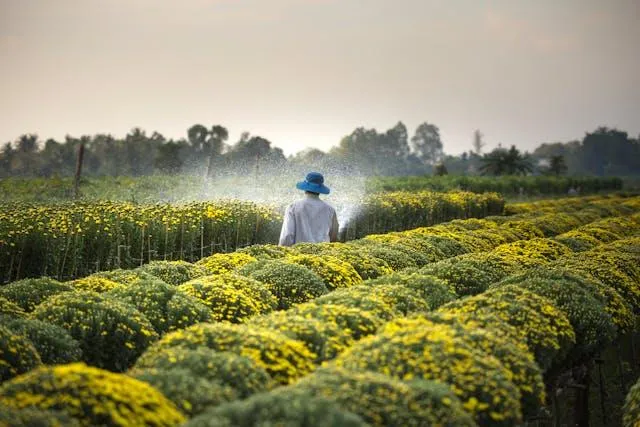
New research has alarmingly revealed a connection between common agricultural pesticides and potential brain development issues in children.
Image: Quang Nguyen Vinh/pexels
Researchers assessed 445 schoolchildren aged nine to 16 from seven schools across three highly farmed Western Cape regions: the Hex River Valley (table grapes), Grabouw (pome fruit) and Piketberg (fruit orchards and wheat). Data was collected between 2017 and 2019.
UCT PhD candidate Paola Viglietti, the study’s first author, said that 12 of the 13 pesticides tested were detected in the children, including commonly used chemicals like chlorpyrifos, pyrethroids, hydroxy-tebuconazole, mancozeb and 2,4-D. Most of these were found in over 98% of participants.
The concerning part is not just the presence of these chemicals, but the brain functions they seem to affect. Higher average levels of chlorpyrifos, profenfos and pyrethroids were linked to reduced cognitive flexibility and poorer inhibitory control skills that help children focus, follow instructions and regulate behaviour.
These findings echo global research, including studies published in The Lancet Neurology and by the U.S. National Institutes of Health, which have repeatedly linked chronic pesticide exposure to disruptions in executive functioning, attention, working memory and emotional regulation.
Why is this cause for concern? Children in agricultural communities are exposed to risks in ways that many urban families never consider. Their exposure comes from:
Viglietti explains that childhood and adolescence are periods of “intense brain maturation, synaptic pruning and neural reorganisation”, precisely when even low-dose toxins can cause long-term harm.
Executive functioning, largely governed by the prefrontal cortex (which continues to develop into early adulthood), is especially sensitive. These skills shape:
If these systems are disrupted early, the effects can echo throughout a child’s life.
South Africa’s Pesticide Challenge
South Africa has the highest pesticide application rates in Sub-Saharan Africa, with more than 3,000 registered formulations, many of which are known neurotoxicants or endocrine disruptors.
A 2017 Western Cape study found that farms growing stone fruit, grapes and wheat used up to 96 active ingredients, including 47 fungicides, 31 insecticides and 18 herbicides.
In many rural communities, weak regulatory enforcement and limited protective infrastructure mean children are often exposed even when they are nowhere near the fields.
Most global research on pesticide neurotoxicity comes from high-income countries. African farming communities, despite facing some of the world’s highest exposure burdens, are largely absent from datasets.
Professors Aqiel Dalvie (UCT) and Martin Röösli (University of Basel), who co-lead the South African–Swiss Bilateral SARChI Chair in Global Environmental Health, emphasise that pesticide exposure is a modifiable risk factor, meaning change is possible and necessary.