

Harnessing the science and psychology of feeling younger promises not just longer lives, but richer ones. Ultimately, the vibrancy of our spirit and the richness of our experiences matter far more than the chronological number we reach.
Image: RDNE Stock project /pexels
When we are teenagers, the allure of growing up is undeniable. The older girls seem so sophisticated, independent, and, quite frankly, cool. However, as we step into adulthood, it is often the younger generation that exudes that same charm.
It is an ironic twist of fate, but as we mature, we learn to appreciate the wisdom that comes with age.
Still, there’s a peculiar trend I’ve noticed among friends, and even strangers: lying about their age. Not in the malicious, manipulative sense, but in a playful, almost instinctive way.
For many, it’s as harmless as exaggerating how often they go to the gym or shaving a few pounds off their weight. And let’s be honest, how often have you heard someone say, “It’s nobody’s business how old I am!”?
But what if I told you that lying about your age might actually be good for you, not just socially, but scientifically?
Let’s explore the nuance of this phenomenon and why feeling younger can have profound benefits for your health, happiness, and longevity.
The age you feel vs the age you are
Psychologists refer to the age you feel as your “subjective age”. It’s a fascinating concept, one that helps you navigate the existential unease of time passing.
Dr Dayna Touron, an ageing specialist and Dean of Arts & Sciences at the University of Louisville, explains in an essay to Goop that subjective age is fluid.
“In middle age, most of us start to think of ourselves as 20% younger than we are,” she says. This mental reframe often flips after our teens, when we longed to be older, to a place in adulthood where we cling to the vibrancy of youth.
Research from the University of Exeter in 2023 found that women in midlife often feel slightly older than their male counterparts due to societal pressures and negative stereotypes surrounding ageing.
Beauty standards that idealise smooth skin and shiny hair can trap women in a loop of self-criticism, making it harder to feel young. Yet, paradoxically, Touron notes that feeling younger has measurable benefits: it can reduce stress, improve functional health, and even extend your lifespan.
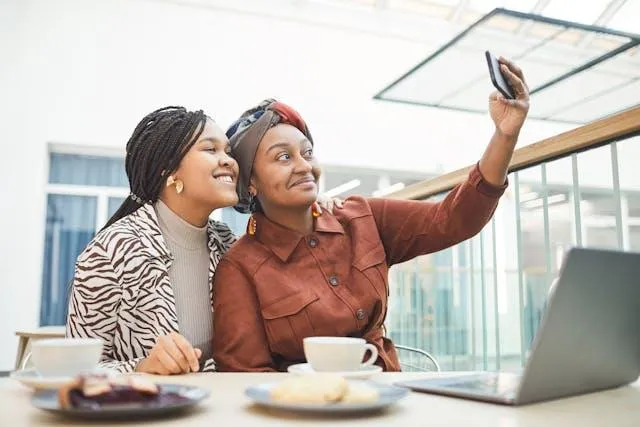
As Max Marchione, founder of the digital longevity clinic Superpower, asserts, psychology can have a profound influence on biology.
Image: Werner Pfennig/pexels
The science of feeling younger
A groundbreaking 2014 study by University College London (UCL) published in JAMA Internal Medicine revealed something remarkable: how young you feel may directly impact how long you live.
Researchers followed 6,500 participants over eight years and found that 12% of those who felt younger than their age died during the study, compared to 24% of those who felt older. In other words, feeling younger cuts the risk of death nearly in half.
But why? Lead researchers suggest that people who feel younger are more likely to engage in positive health behaviours like exercising, eating healthily, and maintaining a sense of curiosity about life.
They’re also more resilient, with a stronger sense of mastery and purpose. Psychology impacts biology. People who act and look younger tend to have younger biological ages.
Why do we lie about our age?
Lying about age isn’t just vanity, it’s a survival tool in a youth-obsessed world. For many, it’s a way to shield themselves from ageism, whether in the workplace, dating, or social scenarios.
A 2023 report by New Zealand Seniors found that 71% of respondents believe ageism is prevalent in workplaces, and 64% have experienced or anticipate age-related discrimination in hiring.
In many cultures, youth represents opportunity, vitality, and relevance. Lying about age can feel like reclaiming some of that power.
For others, it’s deeply personal, a reflection of how they see themselves. Psychologists note that subjective age allows us to reconcile our inner vitality with external realities. It’s not about denying ageing; it’s about reframing it.
The pitfalls of age-denying lies
While a younger self-image can boost confidence and health, there’s a fine line between embracing youthfulness and denying reality.
Maintaining a false age identity can lead to dissonance, a disconnect between your true self and the persona you project. This can create stress, guilt, or even alienation from those who share your life stage.
Moreover, constantly striving to appear younger can prevent you from appreciating the beauty and wisdom that come with ageing. The truth is, there’s immense power in owning your years, every experience, every wrinkle, every story
Imagine a world where turning 50, 60, or even 70 is met with the same excitement as your 21st birthday, a world where age is seen as a privilege, not a liability.
Strategies for ageing with grace (and a little fun)