
Health officials in KwaZulu-Natal stress the importance of malaria prevention for travellers.
Image: Pixabay
KwaZulu-Natal has recorded four malaria-related deaths since the beginning of January, a stark increase after going the entire financial year (April to December) without a single fatality.
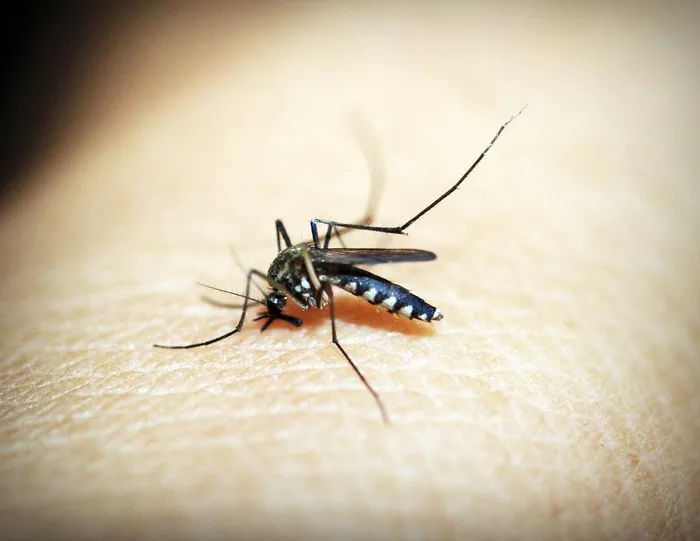
Babongile Mhlongo, Environmental Health, Communicable Diseases Control director in KZN, said malaria is transmitted through the bite of certain female mosquitoes. The mosquito must first bite an infected person and then bite you to pass on the infection.
Mhlongo explained that in KZN, some mosquitoes can transmit malaria. When looking at regions like uMkhanyakude, Zululand, and King Cetshwayo, although they have managed to conquer them in King Cetshwayo, they cannot say that mosquitoes will never be there because the environment allows mosquitoes to thrive.
“In KZN, we monitor it weekly, and we have not exceeded the threshold that we set. We should not exceed three cases per week. KZN has not reached or exceeded the threshold. But we saw that there were floods, uMkhanyakude had floods, and other provinces, and in Mozambique, because many of our cases come from Mozambique.”
Mhlongo noted that they observed something they had not previously focused on. Although local transmission — meaning cases carried by the KZN mosquito — is typically concentrated in those three districts, they are now seeing cases in areas like Ilembe and eThekwini. Furthermore, deaths have occurred in both eThekwini and Ilembe, indicating that these individuals arrived very sick.
“What alarms us is that since the financial year began in April and continued until December, we have never recorded a malaria death in KZN. Since January, we have recorded four deaths, three of which are from Ilembe. But all those people have a travel history, meaning when we investigated, we found that they had visited Mozambique, and the one from eThekwini had visited the DR Congo,” Mhlongo said.
These are imported cases. They have seen no local cases originating in KZN or South Africa.
Mhlongo advised that individuals planning to travel, especially to malaria-prone regions, such as Mozambique, should take prophylaxis (pills).
“You must start it two days before you travel to that country, and when you return, you will need to come back for more. So, because we have imported cases, we urge people to visit the clinic for prophylaxis. They often arrive late, already in critical condition, leaving us with limited options,” Mhlongo said.
She explained that malaria presents in two forms: mild/uncomplicated and complicated. Mild symptoms resemble a bad flu, including a persistent headache, vomiting, fever (hot/cold), and joint aches. Complicated malaria often causes jaundice in children, leading to the inability to eat, walk, or sit. Some cases involve cerebral malaria, resulting in loss of mental state.
“These are the signs we must understand, because if it’s like the flu, let us go to the clinic to get a proper diagnosis.”
Mhlongo said they also use rapid diagnostic testing (RDT), which provides an immediate diagnosis.
“We ask people to go to the clinic and not rely on Dr Google. We ask them to go to the clinic,” Mhlongo added.
KZN Health MEC Nomagugu Simelane reiterated Mhlongo’s sentiments on travel.
“If we are going to travel to countries with malaria, let us go and seek the treatment or the medication to drink before we go, because many people or many cases that we are finding are no longer because we have malaria in KwaZulu-Natal or in South Africa. We are finding them because people have travelled to foreign countries and then returned,” Simelane said.
“We know, however, that there are those with whom we share the border. Some visit across the border a lot, families are here, and others have families in those countries. We also ask them to take care. And as soon as they identify these symptoms, they should go to the clinic.”
thobeka.ngema@inl.co.za