
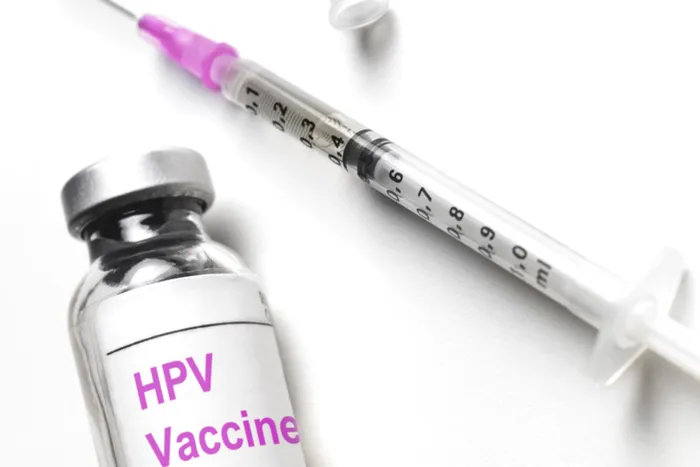
The National Department of Health has launched an HPV vaccination drive aimed at protecting girls from cervical cancer.
Image: File
The Western Cape Department of Health and Wellness has commenced a vital initiative that seeks to protect the health of future generations. The Human Papillomavirus (HPV) vaccination drive is not just another school event; it is a significant step in safeguarding girls aged 9 and older from developing cervical cancer later in life.
Without a signed consent form, the Western Cape Department of Health and Wellness stated it is unable to vaccinate children.
But how does the process unfold, and what should parents and students expect? Sr Cheryl Barnardo breaks down the day step by step to ensure a smooth experience for everyone involved.
“They come with their form, we check the form with them, to make sure it is the correct child. These are their consent forms,” Barnardo explained.
“Afterwards, we give them information because we know they might be anxious. So we want to calm them a bit before the vaccination.
“But in the meantime, someone else will also talk to the other girls, then you come here to the sister who will give the injection on the specific arm, then the girl goes to one of the other nurses. She will ask the girl to move her arms for 2-3 minutes, and then continue to observe for maybe 10-15 minutes.”
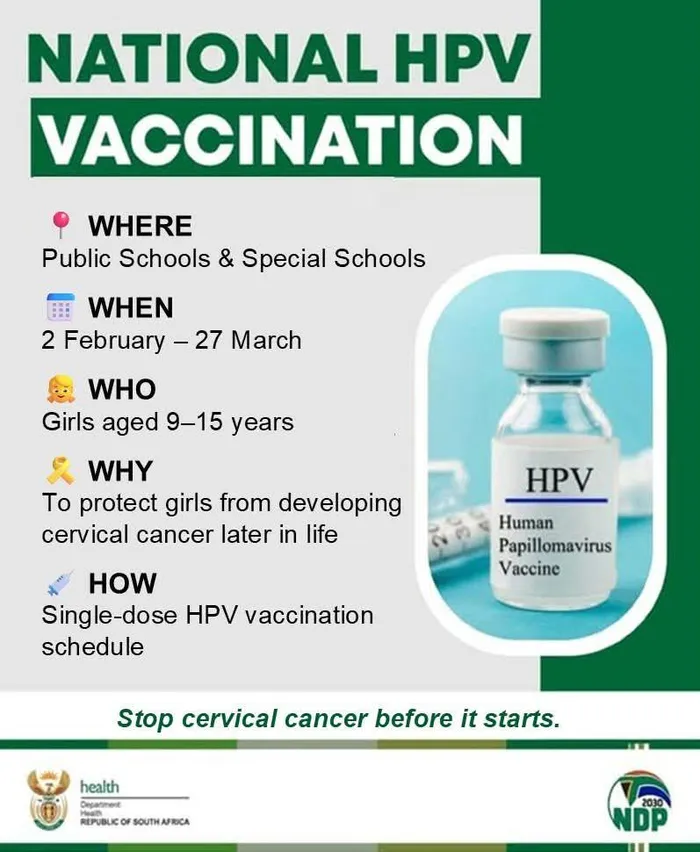
A poster detailing the national HPV vaccination drive.
Image: Facebook/ National Department of Health
During his State of the Nation Address on Thursday, President Cyril Ramaphosa noted work being done to end cervical cancer in the country by “mobilising society to ensure that every young girl between the ages of 9 and 15 receives the HPV vaccine.”
Earlier this month, the National Department of Health said that since its introduction in 2014, the HPV Vaccination Programme has administered over 7.2 million doses, benefitting more than 3.6 million girls. Initially targeting public schools, the programme has now been expanded to ensure comprehensive coverage, reaching all girls in both public and private schools, including special independent schools. This expansion aims to leave no one behind.
The department appealed to parents, caregivers and legal guardians to prioritise the health and future of their children by signing the consent forms issued by the schools to enable them to receive this life-saving and free vaccination. Adding that trained healthcare teams, including nurses, will visit schools to administer the HPV vaccine as part of the Integrated School Health Programme.
The department added that the HPV vaccine is safe and most effective when provided from age nine or before girls become sexually active. It was approved by the South African Health Products Regulatory Authority in 2008 for its efficacy and safety. Millions of girls in South Africa have received the HPV vaccine without any serious side effects.
thobeka.ngema@inl.co.za