
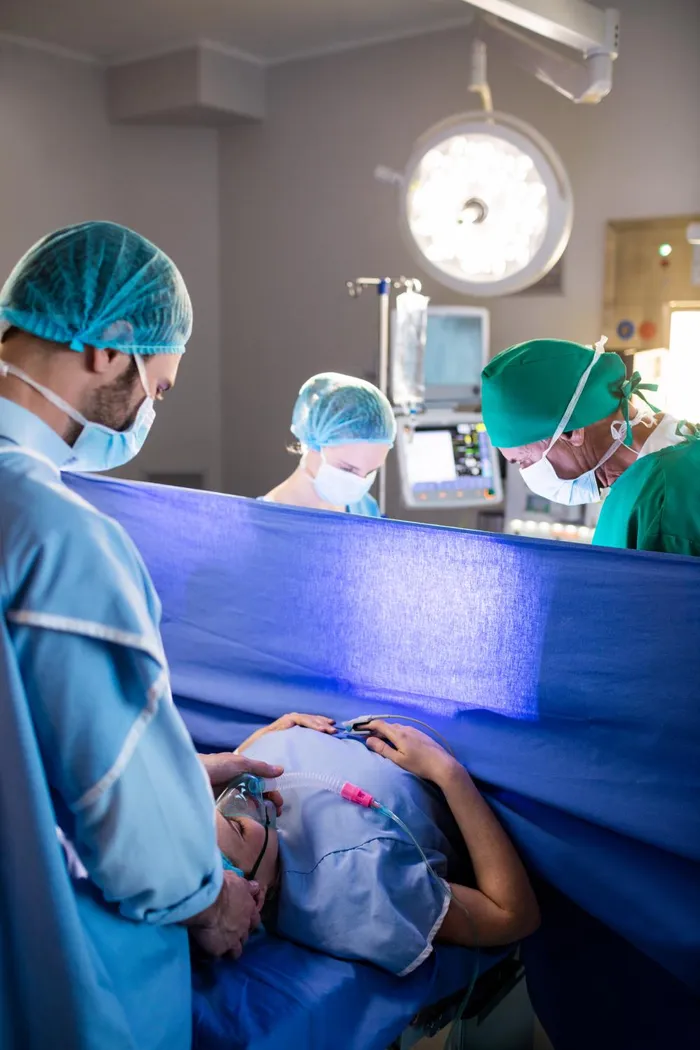
A Caesarean section is already a major abdominal procedure.
Image: Freepik
The idea of tackling childbirth and cosmetic surgery in one operation may sound efficient, but medical experts say it’s a dangerous shortcut.
As “mommy makeover” procedures continue to trend, some patients are asking whether cosmetic surgeries such as tummy tucks, liposuction or breast augmentation can be performed at the same time as a Caesarean section.
Surgeons, however, are strongly cautioning against the practice.
Professor Chrysis Sofianos, a triple-board certified plastic surgeon and Academic Head of the Division of Plastic and Reconstructive Surgery at the University of the Witwatersrand, says combining these procedures can significantly increase health risks for new mothers.
According to Sofianos, his practice has seen a growing number of patients asking whether body-contouring procedures can be done while they are already in theatre for a C-section.
While it may seem practical, he says the idea reflects a misunderstanding of how the body recovers after childbirth.
“Our practice is seeing a growing number of patients ask whether body-contouring surgery can be performed while they are already in theatre for a C-section. But this reflects a dangerous misunderstanding of surgical safety and postpartum physiology,” he explains.
“While the idea may appear efficient or financially attractive, pairing medically necessary obstetric surgery with elective cosmetic procedures significantly increases operative risk at a time when the patient is physiologically vulnerable.”
A Caesarean section is already a major abdominal procedure, and Sofianos stresses that adding cosmetic surgery increases the physical stress placed on the body.
“However, the more important question is whether they should. And the simple answer is no,” he says.
“A C-section is already a major abdominal operation. Introducing additional surgical trauma before the body has recovered would introduce excessive strain and substantially raise the risk of complications.”
Pregnancy and the weeks after delivery also place the body in what doctors describe as a hypercoagulable state, meaning the blood is more likely to clot.
This already increases the risk of dangerous blood clots after birth.
Extending surgical time and adding procedures such as a tummy tuck or liposuction may further increase the chances of complications.
Beyond the operating theatre, recovery can become significantly more challenging.
Healing after a C-section alone can be physically and emotionally demanding, particularly while adjusting to life with a newborn.
Adding cosmetic surgery into the mix can make the recovery period far more complex.
“Recovery after a C-section already places significant physical, emotional, and psychological demands on a new mother,” Sofianos says.
“A more intensive recovery process may further require extended postoperative care, closer medical oversight, and additional support at home, all of which can add to the existing financial burden.”
Some patients believe combining surgeries will reduce costs by consolidating hospital, theatre and anaesthetic fees.
But Sofianos says this assumption is often incorrect.
Longer procedures require more monitoring and carry a greater chance of complications, which can ultimately increase medical costs rather than reduce them.
More importantly, he stresses that financial considerations should never outweigh patient safety.
There is also the question of results.
The body goes through significant changes during pregnancy and the postpartum period, and it can take months for tissues, weight and hormones to stabilise.
Because of this, performing cosmetic surgery too soon may not deliver the long-term results patients expect.
Sofianos advises that procedures such as tummy tucks should only be considered once the body has properly healed after childbirth, often around six months later, depending on individual recovery.
“Medically and ethically, I do not believe combined C-section and ‘mommy makeover’ surgeries should ever be considered,” he says.
“No responsible surgeon should minimise the compounded risks associated with performing such procedures. Ultimately, safe, staged care remains the gold standard for medical care, or allowing the body to recover fully before elective cosmetic surgery is undertaken.”