
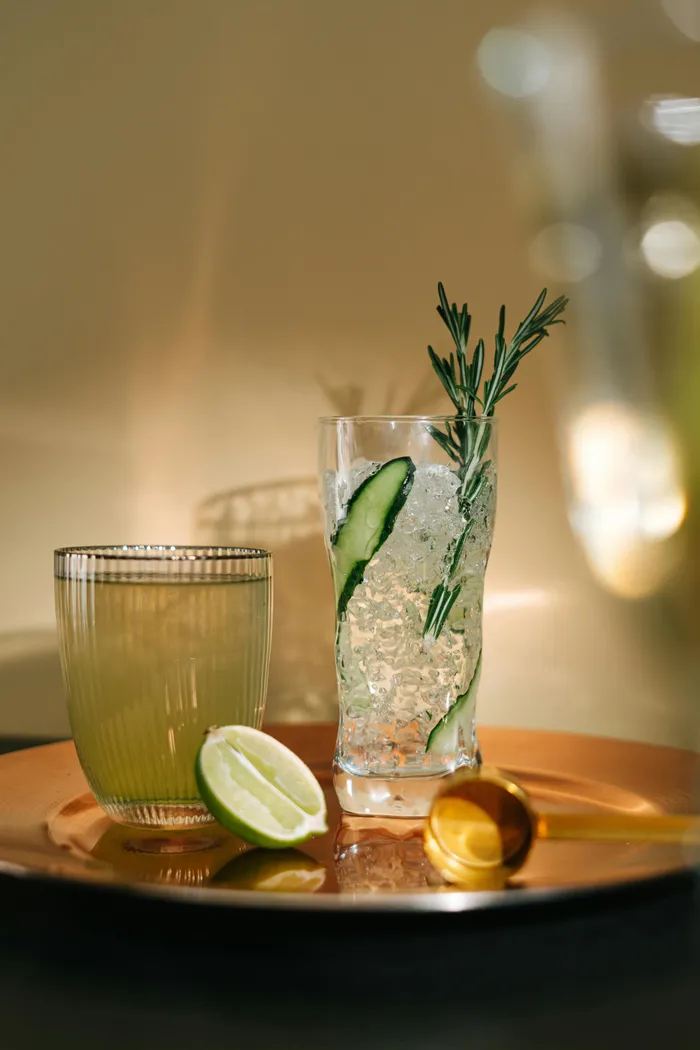
Mzansi is embracing a new trend of mindful, healthy socialising, opting for non-alcoholic drinks over alcoholic drinks.
Image: Pexels.
For decades, the South African social calendar has been anchored by a cold beer or a glass of Pinotage.
Whether it’s a Sunday braai, a mid-week football match or the legendary "Ke Dezemba Boss" vibes, alcohol has been the default guest. But a quiet revolution is bubbling under the surface, and it’s not alcoholic.
New data from 2026 shows that South Africa has unexpectedly emerged as a global leader in the sober-curious movement. We aren’t just cutting back; we are doing so at double the global average.
If you’ve noticed more people ordering mocktails or reaching for 0.0% beers, you’re seeing a massive cultural shift in real-time.
Here is how South Africa is redefining what it means to have a good time.
According to recent research by Worldpanel by Numerator, South Africans are currently the world’s frontrunners in alcohol moderation. While about 17% of people globally say they plan to drink less, in South Africa, that number jumps to 30%.
The real drivers are Gen Z and Millennials. One in five South Africans under the age of 35 is now treating alcohol as an occasional indulgence rather than a social requirement.
For this group, the status symbol has shifted. It’s no longer about who can stay out the latest; it’s about who can wake up at 6am for a sunrise hike or a padel match without a headache.
Why the sudden change of heart? It turns out, it’s about more than just avoiding a hangover.
About 38% of South Africans report struggling with mental or physical health, a rate higher than the global average. This has led many to identify alcohol as a primary trigger for "hangxiety" (that post-drinking spike in anxiety) and brain fog.
A staggering 74% of households now prioritise hydration, water, electrolyte drinks and functional sparkling infusions over alcoholic options.
We are still spending money on ourselves, but we’re moving our liquor budget toward intrinsic health. Instead of a bottle of whiskey, South Africans are buying high-quality fresh produce, gym memberships and functional supplements.
Being sober-curious doesn't necessarily mean "quitting" forever. It’s about being mindful. South Africans are getting tactical with how they drink, using three main methods:
The spacer method: This is the new gold standard for social events. You have one alcoholic drink, followed by a sophisticated non-alcoholic alternative. You keep the glass in your hand and the social vibe alive, but you stay sharp.
The dry spell: Participation in Sober October and Dry January has hit record highs. In fact, 58% of internet-enabled South Africans took a complete break from alcohol at some point in the last six months.
High-value drinking: Instead of drinking "just because it’s Tuesday", consumers are saving their alcohol intake for high-value events like weddings or milestone birthdays. The casual weeknight glass of wine is increasingly being replaced by herbal teas or magnesium-infused drinks.
If wellness is the reward drawing us toward sobriety, then the economy and new laws are the pressure forcing us there.
The 2026 Budget Speech introduced a 3.4% increase in excise duties on alcohol. For the middle class, drinking has become an expensive luxury tax that many are no longer willing to pay. Furthermore, the proposed zero-tolerance drunk driving legislation has created a significant legal risk for those considering "one for the road".
Choosing a non-alcoholic beer isn't just a health choice anymore; it’s a smart financial and legal move.
Despite this massive shift, South Africa remains a land of extremes. We are currently facing what experts call the high-dry paradox.
On one hand, we are global leaders in quitting or cutting back. On the other hand, the South Africans who do drink are still some of the heaviest drinkers in the world, averaging 30 litres per person annually, ranking 5th globally.
This has created a polarised landscape: a deep-seated culture of binge drinking on one side, and a rapidly growing, health-conscious middle class on the other.
The beverage industry is pivoting fast. The non-alcoholic market in South Africa is projected to grow by 7.5% every year through 2033.
Even during the last "Dezemba" season, traditionally the wettest month of the year, data showed that mocktails, alcohol-free craft beers and even tinned non-alcoholic wines became mainstream.
The sober-curious movement is doing something that decades of public health warnings couldn't: it’s making moderation aspirational.
By rebranding sobriety as a tool for better sleep, better skin, and more money in the bank, South Africans are bridging the gap between our heavy hitter history and a healthier, more present future.