
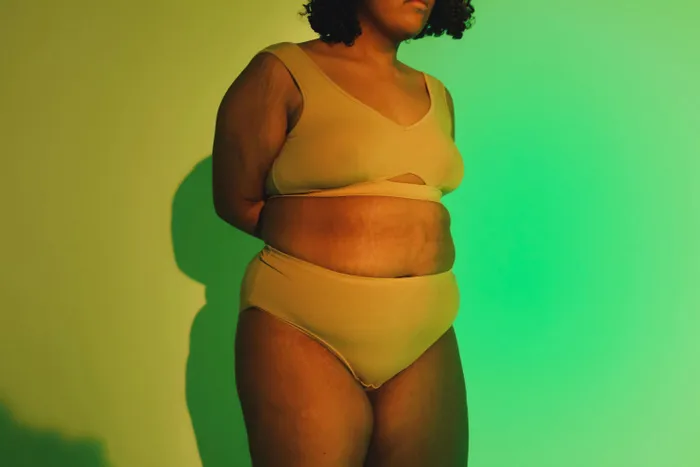
A woman's body doesn't simply bounce back after giving birth.
Image: Polina Tankilevitch / Pexels
“A woman’s body is a temple of life, a vessel of profound strength that endures and transcends the physical to bring forth the future.” — Maya Angelou
We know how to worship women when they are pregnant. We praise their glow. We marvel at their strength. We call them powerful, divine, miraculous.
But somewhere between the delivery room and the months that follow, that reverence fades.
The same body that was once celebrated becomes quietly scrutinised.
The softness, the scars, the lingering weight, the visible evidence of creation itself, are no longer seen as proof of strength. They are treated as flaws.
It is one of the most unsettling contradictions of modern life: we celebrate birth, but we reject the body that made it possible.
Recently, Rihanna was photographed in Los Angeles doing something beautifully ordinary, buying groceries and toys with her young son.
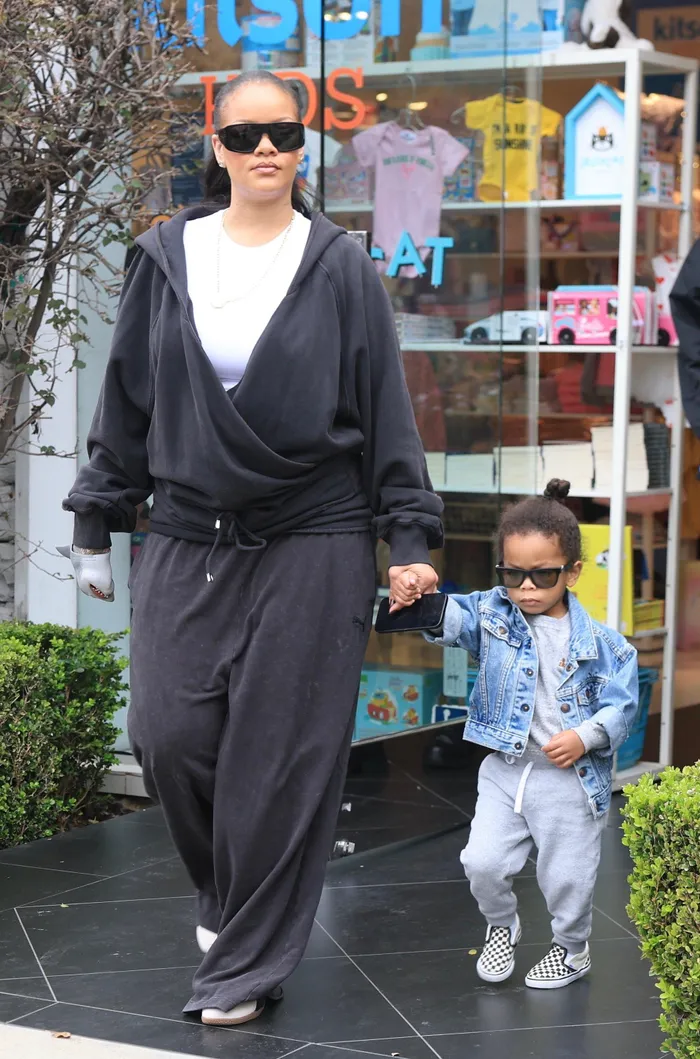
Rihanna with her son Riot.
Image: X
It was not a staged campaign or a red carpet moment. It was simply a mother living her life.
She had given birth to her third child only months earlier.
Her body, like any body that has carried and delivered life, was still its own evolving landscape.
And yet, instead of recognising the quiet dignity of that moment, some people chose cruelty.
On X, strangers dissected her appearance with shocking ease.
One comment read, “I can see why people leave their partners after birth.”
Another compared images of her younger self to her present body, using the contrast as a warning, as if motherhood were a form of deterioration rather than transformation.
It forces uncomfortable questions into the open.
When did we decide that a woman’s value was tied to her ability to erase evidence of childbirth?
When did we begin expecting mothers to return to their pre-pregnancy bodies as though nothing had happened?
And why do we speak about women’s bodies after birth as if they are problems to be corrected?
Because that is what this really is. Correction. Erasure. Punishment for change.
The truth is far simpler, and far more human.
It is normal for a woman’s body to change after birth.
It is normal for her stomach to remain soft. Normal for her skin to stretch. Normal for her face to carry fullness. Normal for her body to look different from what it did before.
These are not failures. They are evidence. They are the physical record of endurance.
Pregnancy is not a cosmetic event. It is a biological upheaval.
Organs shift. Skin stretches beyond its previous limits. Muscles separate. Hormones surge and collapse.
The body does not simply snap back because society demands it.
And yet, we have built a culture that expects women to perform a kind of physical amnesia, as if motherhood should leave no visible trace.
The phrase “bounce back” itself reveals the problem.
It suggests that the post-birth body is something temporary, something wrong, something that must be undone. It frames recovery as a race, and transformation as damage.
For some women, returning to their pre-pregnancy shape happens quickly.
But for many, it does not. And for others, it never will.
Not because they are lazy or undisciplined, but because their bodies have been permanently reshaped by creation.
There is also a reality that is rarely discussed openly: recovery is not only physical. It is emotional. It is hormonal. It is exhausting.
It unfolds in the middle of sleepless nights, feeding schedules, and the overwhelming responsibility of keeping a new human alive.
As a mother of three who has delivered all my children via caesarean section, I understand this intimately. A C-section is not just a birth. It is major surgery.
It leaves scars that ache long after the stitches dissolve. It weakens muscles that once felt strong.
It forces you to relearn your own body while simultaneously caring for someone entirely dependent on you.
And still, the world expects you to look untouched.
It is no surprise, then, that “mommy makeover” procedures have become so popular.
They are marketed not as optional enhancements, but as solutions. Fixes. Corrections. The language itself implies that the post-birth body is broken.
What message does that send to women? Is the body which carried life somehow insufficient? That the marks of motherhood are defects rather than badges of survival?
It is deeply disturbing that we have reached a point where women feel pressured to apologise for looking like mothers.
We have normalised admiration for pregnant bodies, but we have not normalised acceptance of post-pregnancy ones. We celebrate the miracle, but we reject the aftermath.
And perhaps what is most painful is how casually this rejection happens.
It lives in offhand comments. In comparison photos. In jokes disguised as observations.
In the quiet understanding that a woman’s worth, in the eyes of many, is still tied to how closely she resembles her younger self.
But motherhood is not meant to preserve youth. It is meant to create life.
The post-birth body is not something lesser. It is something greater. It is proof of resilience. Proof of endurance.
Proof that the body expanded beyond itself to make space for another human being.
There should be no shame in that. There should be no expectation of erasure.
There should be no apology required for looking like someone who has lived, carried, and given life.
It should not be radical to say this, and yet it is: there is nothing wrong with the post-birth body.
It does not need fixing. It does not need hiding. It does not need to “bounce back.”
It only needs the one thing society has been slow to offer: respect.
It is time to normalise what has always been normal.
* Gerry Cupido is a journalist at IOL
** The views expressed are not necessarily those of Independent Media.