
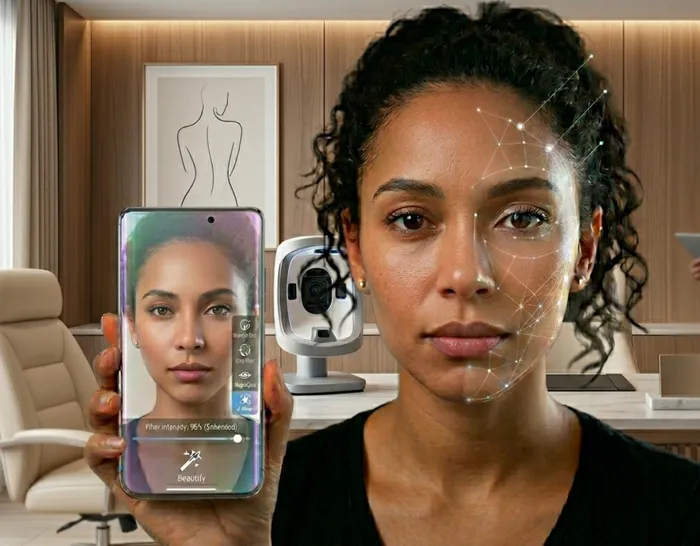
AI beauty apps are often misunderstood and can lead to risky expectations.
Image: AI / Gemini
It’s never been easier to tweak your face. A few taps on an AI-powered app and suddenly your jaw is sharper, your nose slimmer, your skin glassy smooth.
In a world where editing your appearance is instant and effortless, it’s no surprise that more people are starting to wonder what could be done in real life, too.
At the same time, the conversation around cosmetic procedures has shifted.
What used to be whispered about is now openly discussed. Subtle tweaks, small refinements and “maintenance” procedures are becoming the norm rather than the exception.
But according to one leading South African surgeon, there’s a growing gap between what people see on their screens and what’s actually possible in theatre.
Professor Chrysis Sofianos, a triple board-certified plastic surgeon and Academic Head of Plastic and Restorative Surgery at the University of the Witwatersrand, says AI beauty apps are often misunderstood and can lead to risky expectations.
“It’s an image. A surface-level visual estimate based on patterns, not rigorous scientific modelling,” he explains.
“In some cases, it’s simply a marketing tool used to sell a product or service. While the entertainment value of such apps is clear, it should not translate to realistic expectations of what can be achieved.”
In recent months, Sofianos says more patients are arriving with AI-generated images of themselves, often showing dramatic changes to noses, jawlines or breasts.
The problem is that some of these edits go beyond what is surgically possible or safe.
That disconnect matters. Cosmetic procedures, even the more subtle ones, are still medical interventions that depend on anatomy, healing and a surgeon’s judgement.
They are not copy-and-paste transformations.
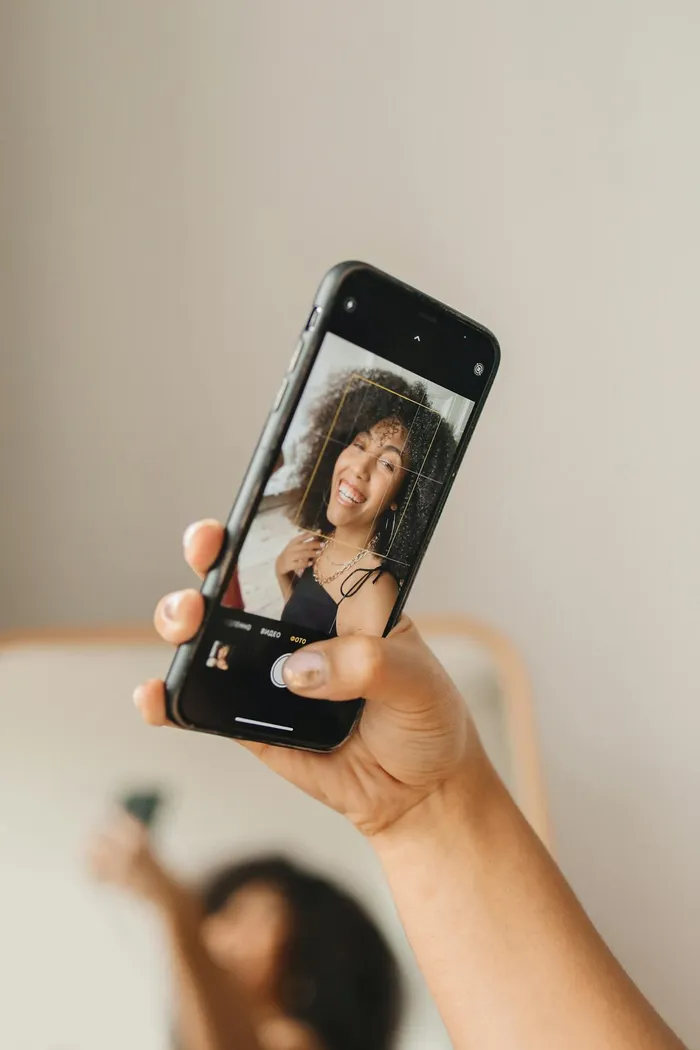
Some of the edits go beyond what is surgically possible or safe.
Image: Polina Tankilevitch / Pexels
Both AI and the aesthetics industry are growing rapidly in South Africa. That brings innovation, but also confusion.
AI is already being used in clinical settings to help doctors plan procedures and explain options more clearly.
With the right tools and expertise, it can support better decision-making and give patients a more realistic understanding of what to expect.
But those systems are very different from the apps circulating on social media.
“AI systems are only as good as the data they’re trained on,” Sofianos says.
“In its current state, the technology cannot make the nuanced clinical judgements that doctors develop over years of practice.”
He adds that the limitations are even more pronounced in African contexts, where AI tools often lack the diversity of data needed to accurately interpret different skin tones, textures and healing patterns.
At his practice, Sofianos sees a few recurring misconceptions from patients who rely too heavily on AI-generated images.
One of the biggest is the belief that what you see on your phone is exactly what surgery can deliver.
In reality, these simulations are based on idealised patterns, not individual biology.
Another common assumption is that AI somehow makes procedures safer.
While technology can assist with planning, safety still depends on the surgeon’s training, experience and ability to respond to complications in real time.
There is also a growing tendency to treat AI as a kind of authority. But, as Sofianos points out, it does not carry responsibility or accountability.
“AI remains a support tool. It may assist with analysis and improve precision, but it does not carry professional judgement, ethical responsibility, or accountability for patient care.”
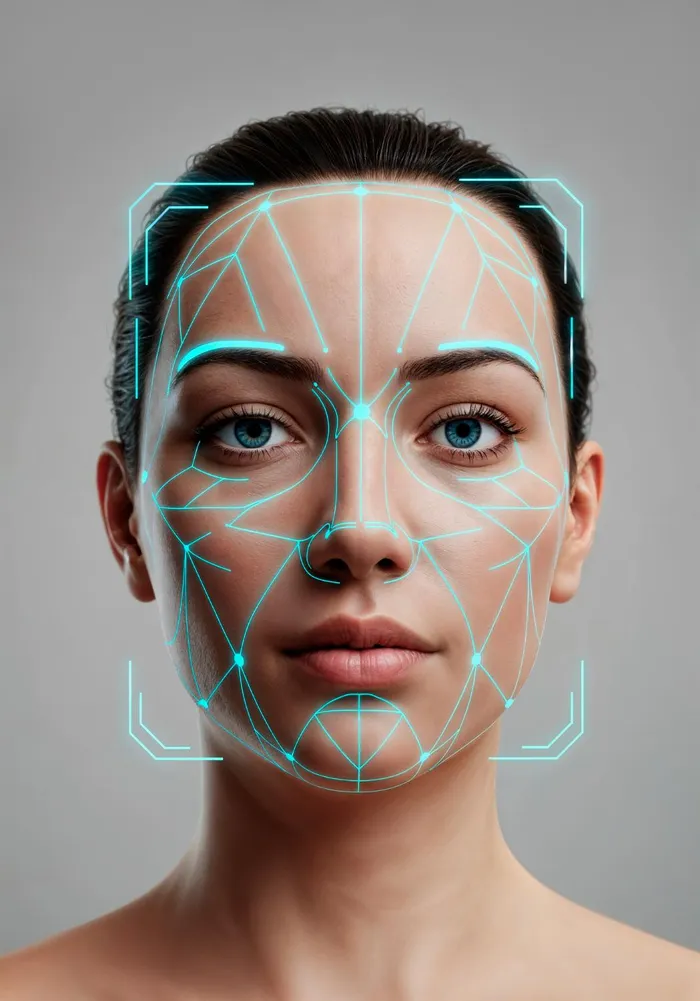
AI remains a support tool.
Image: Freepik
None of this means the rise in cosmetic procedures is inherently a bad thing.
If anything, the shift towards more open conversations has made it easier for people to ask questions and make informed choices.
And many of today’s procedures are far more refined than the obvious, overdone results of the past.
The focus has moved towards natural-looking outcomes and small, personalised adjustments.
Technology will continue to play a role in that evolution. But for now, Sofianos says it’s important to keep expectations grounded.
“Modern cosmetic technology has reshaped how we help patients, and innovation continues to make surgery safer and recovery faster,” he says.
“AI holds real promise… For now, we must recognise that it remains a limited and highly flawed tool still early in its development.”
His advice is simple. If an app promises a guaranteed result, take it as inspiration, not instruction.
A proper consultation, he stresses, is still the only reliable way to understand what is realistically possible.