
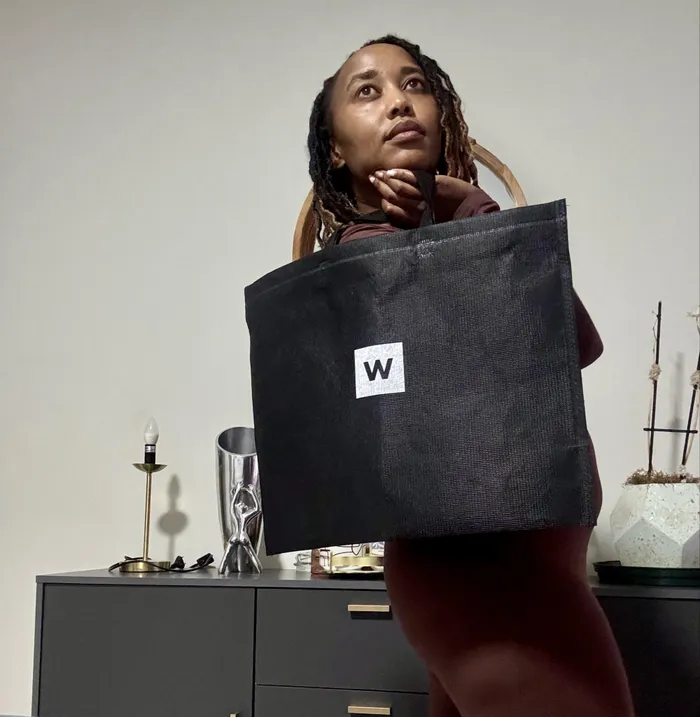
TikTok and Instagram have amplified the bag’s aspirational appeal. Watching influencers style it in lifestyle shots - alongside lattes, flowers and neatly folded groceries - cements its image as a symbol of taste, organization, and the “soft life".
Image: Picture: X/@thebiggirlcheck
In a country where luxury usually screams in gold hardware and designer logos, it’s almost hilarious that our newest status symbol doesn’t come with a price tag in the thousands.
Nope. It’s the humble black Woolworths shopping bag. Yes, the matte-black, structured tote you once used has quietly become shorthand for “I’ve got my life together.”
Once just a practical, reusable carrier, the Woolies bag now carries serious cultural clout. Minimalist, sturdy and whispering “understated wealth", it fits perfectly with the quiet-luxury trend. And here’s the kicker: shopping at Woolworths itself is part of the flex.
Unlike budget chains, Woolies is a place you visit when you’re willing to pay a little extra for quality.
Fresh herbs, artisanal bread, boutique skincare, carrying a Woolies bag signals that you value the finer things (or at least want people to think you do). It’s a subtle badge of taste, financial stability, and lifestyle aspiration (apparently).
The bag’s rise to iconic status was already underway thanks to social media. The black and white Woolies bag also taps into very South African habits: grabbing Houw Hoek pies “for the road,” treating Chuckles like a food group, and somehow always smelling faintly of lemongrass handwash.
Its versatility adds to its cultural clout - gym bag, library bag, work bag, beach bag, or the “don’t judge me, I’m buying wine at 9am” disguise.
Influencers didn’t hurt either: #WooliesBagTok features the bag perched in the passenger seat alongside flowers, lattes, and neatly folded groceries, the “soft life” equivalent of a designer handbag parade.
And then Vusimuzi “Cat” Matlala happened.
During recent parliamentary hearings, he admitted to using Woolies bags to transport alleged bribe money, R300,000 at one point, R200,000 later. He even called it his “money bag.”
The internet lost it. The bag we once associated with tidy groceries and a gentle, domestic lifestyle became a symbol of alleged corruption overnight. Memes, tweets, jokes and yes, even disbelief flooded timelines.
People compared it to designer handbags, luxury safes, and even cash-carrying briefcases from spy movies. TikTok reels showed users mockingly packing everything from “R300,000 in cash” to “just my weekly gammon and a bag of Chuckles,” pretending to be part of the scandal.
Some joked it was the “official bag of doing well in life… and maybe breaking the law.” Comments ranged from shock to pure hilarity: South Africans were simultaneously horrified, entertained, and for some reason, obsessed.
Now the black Woolies tote occupies a strange cultural sweet spot: practical, aspirational, meme-worthy and somehow scandalous all at once.
It signals a certain type of South African lifestyle, someone who shops at the “expensive store,” buys fresh produce, and maybe even picks up a gammon on the way home, while reminding us that even the most mundane objects can take on unexpected significance.
Whether it’s stuffed with herbs, your beach towel, or hypothetically R300,000 in cash, the Woolies bag has officially earned its place in South African culture.
Stylish, versatile and now infamous. Who knew grocery shopping could come with such serious status?