
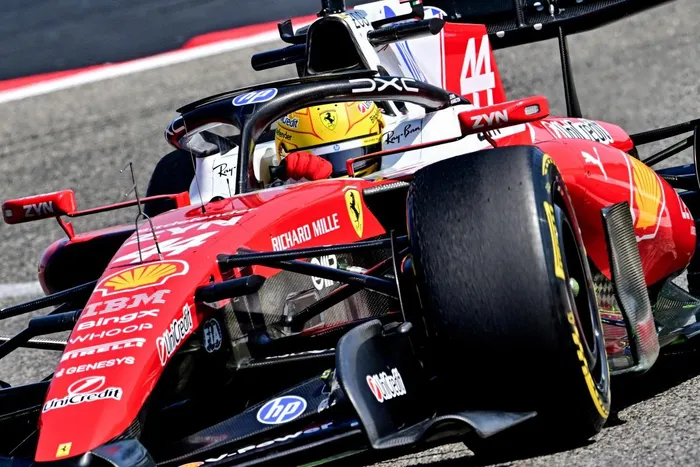
Ferrari have started the F1 season well, showcasing a radical active rear wing and smaller turbo on the new SF-26.
Image: AFP
Ferrari's gamble to use a smaller turbo on their new SF-26 to delay lag off the start-line has worked in their favour under the new regulations.
But with the rest of the paddock struggling to get off the line in decent time, there have been growing calls for another rule change.
Ferrari principal Frederic Vasseur says he won't budge. What once looked like a risky engineering decision has quickly turned into one of the defining advantages of the 2026 season. Ferrari’s power unit concept, built around improved responsiveness rather than outright peak deployment, has allowed their drivers to consistently nail race starts while rivals battle with hesitation and poor traction.
The issue stems from the new hybrid regulations, where energy deployment and turbo management play a far greater role than before. Several teams have found themselves caught out, unable to generate enough usable power in the critical seconds before the lights go out. The result has been sluggish launches and lost positions before Turn One.
That has prompted frustration up and down the grid, most notably from George Russell, who has been vocal about the need for further tweaks to the start procedure. From his perspective, the current system creates inconsistencies and undermines fair competition, especially for teams that interpreted the regulations differently.
However, Ferrari see things very differently. Vasseur has made it clear that the regulations were known well in advance and that teams had ample time to prepare. Ferrari chose a direction, committed to it early, and are now reaping the benefits.
For them, changing the rules midstream would effectively punish good engineering and reward those who got it wrong. The FIA has already introduced adjustments to the start sequence in an attempt to smooth out the issues, but further changes require agreement among the teams.
Ferrari’s resistance has effectively stalled any additional amendments, much to the frustration of their rivals. And Vasseur is not interested in softening his stance. In response to the growing criticism, particularly from Russell, the Ferrari boss delivered a firm reminder that Formula One is as much about foresight as it is about speed.
Teams were given the same rulebook, and Ferrari simply read it better. Now that their gamble has paid off, the rest of the grid wants a reset. Ferrari, however, are standing their ground, and Vasseur made it clear he has little sympathy for those playing catch-up.