
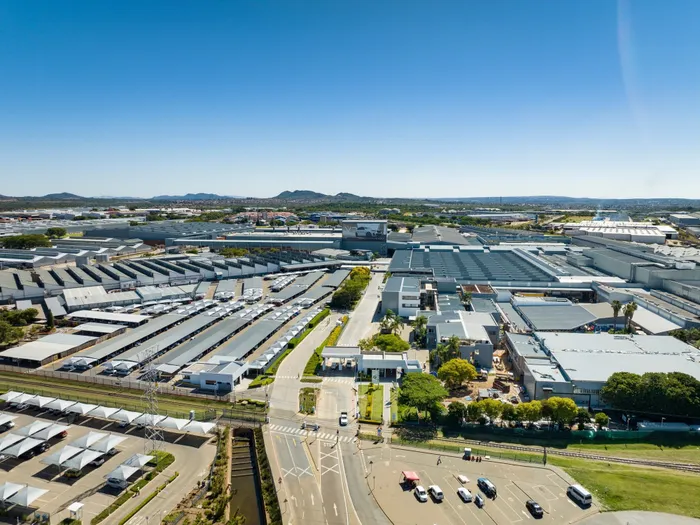
The BMW South Africa plant in Rosslyn produces the X3 end the X3 plug-in hybrid exclusively for global consumption.
Image: Supplied
BMW Group Plant Rosslyn has been making cars for 50 years, and despite being the first plant ever outside of Germany, when it comes to producing world-class vehicles, performance is the only thing that matters in a modern world of globalisation.
Reflecting on a record-breaking year, plant director Danny Bester noted that over that time, they had built multiple models and embedded themselves deeply in the Pretoria community.
Some current employees, he said, attended BMW-supported preschools and are now working on the production line. That continuity has helped create what he describes as a strong family culture.
A global network
Rosslyn operates within BMW’s global manufacturing footprint of more than 30 plants. That brings flexibility, but it also brings pressure. Production is allocated based on performance, not geography.
The BMW X3 is built in three locations worldwide: South Africa, China and the United States. “We’re not only competing with other OEMs,” Bester explained, “we also compete amongst ourselves. If a plant doesn’t deliver on cost, quality and reliability, production volume simply moves elsewhere.”
For Rosslyn, the challenge is even bigger. The current-generation X3 plug-in hybrid (PHEV) is produced exclusively in South Africa for global markets, the first time the plant has been the sole producer of a BMW model worldwide.
“We have to deliver; customers don’t care about load shedding or port issues. They expect their car on time.”
Record 2025
Last year, the plant produced more than 79,000 vehicles - the highest annual output in its 52-year history. That achievement secured the continuation of a three-shift, 24-hour weekday operation, supported by additional Saturday shifts to meet demand.
Rosslyn’s performance saw it outperform sister plants in China and the US in the volume allocation race.
According to Bester, it showed that South Africa can match BMW’s global quality standards. “A customer in Germany doesn’t care where the car is built; it has to meet BMW standards,” he said.
People matter
Behind those numbers are about 2,800 employees that Bester credits as a decisive factor in Rosslyn’s success, saying associates “stepped up” to meet global demand.
The plant’s impact also spreads beyond the factory gates. BMW’s operations support jobs across a wide supplier network, logistics providers and port operations. Job creation, Bester says, remains central to why BMW continues to invest locally.
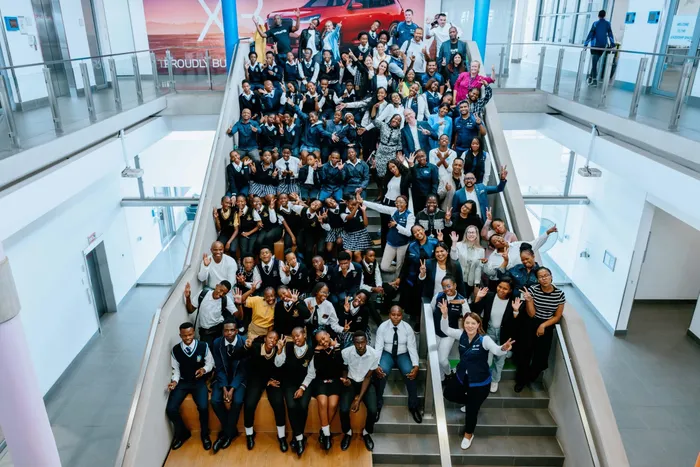
Through vocational training, graduate programmes and other initiatives, around 300 trainees are taken in annually.
Image: Supplied
Complex but flexible
Rosslyn’s supply chain spans continents, with components sourced from North America, China, the Far East and local suppliers. That complexity makes deep localisation difficult, particularly when a model is built in multiple plants worldwide.
However, Bester said that global sourcing also provides resilience. With shifting tariffs and trade tensions, BMW has been able to redirect supply routes to protect production and manage costs. “In a volatile global environment, that flexibility has become a competitive advantage.”
X3s across the globe
Vehicles built at Rosslyn are exported across the globe, with Europe accounting for 88% of production. Other destinations include Australia, Mexico, Uruguay and parts of South America. If you buy an X3 plug-in hybrid anywhere in the world, it comes from South Africa.
Production is currently split 40% plug-in hybrid and 60% internal combustion engine vehicles, with petrol and diesel mixes determined by market demand. Bester added that local sales have also grown, increasing South Africa’s share of Rosslyn’s output.
Technology and skills
Electrification, digitalisation and artificial intelligence are now central to operations. AI has long been used in camera systems to detect defects, but its role is expanding into predictive maintenance and quality forecasting.
Bester emphasised that technology is not about replacing people. “We don’t want to replace our associates,” he said. “We want to be faster and more competitive.”
Through vocational training, graduate programmes and other initiatives, around 300 trainees are taken in annually. Those not absorbed into the business move into the broader automotive industry.
Sustainability
Sustainability extends beyond emissions. Rosslyn has reduced water consumption by 38% and has achieved zero waste to landfill since 2022. Even problematic materials such as polystyrene packaging are repurposed into construction materials for low-cost housing.
The plant also supports local schools, using second-life plug-in hybrid batteries and solar installations to take them fully off-grid.
Staying nimble
Repeating 2025’s record performance won’t be easy, Bester added. Markets remain unpredictable, and demand continues to shift. His focus is on flexibility - exploring new markets, adjusting production mixes and acting quickly when opportunities arise.
“Nimble is the key,” he concluded.