

Caitlyn Micholson's journey reflects the heartbreaking struggle against cancer, as her mother believes delays in treatment and inadequate responses from government hospitals robbed her daughter of a fighting chance.
Image: Supplied
In a national health crisis, South Africans who rely on government hospitals are enduring agonising waits for essential surgeries and treatments, with their health deteriorating alarmingly as a result.
Durban resident Caitlyn Micholson is a heart-wrenching example of this plight.
Diagnosed with metastatic melanoma, her condition worsened to a stage where she could no longer fight, with her mother, Tamarin Nieuwoudt, lamenting the inadequate response from hospitals, which ultimately sealed her daughter's fate.
In response to a Parliamentary question in September 2024, Health Minister Aaron Motsoaledi said there was an elective surgery backlog in hospitals in varying degrees across provinces.
The types of surgeries that have backlogs include: orthopaedics, general surgery, urology, ophthalmology, maxillofacial, cataract, ear, nose and throat, neurosurgery, and gynaecology.
“One of the reasons why there are surgical backlogs is the limited number of skilled specialists in our hospitals,” Motsoaledi had said.
Nieuwoudt, from the Bluff in Durban, believes that her 24-year-old daughter may still be alive today had she received time-sensitive medical treatment at several government hospitals.
She said had the hospitals acted with the urgency that her daughter's disease warranted, she may have had a fighting chance.
Micholson was seen to at Wentworth Hospital, Saint Augustine's Hospital, King Edward Hospital, and Albert Luthuli Hospital.
“The process just to get a diagnosis was so prolonged. We had to wait weeks for a scan and weeks for a biopsy, and then the results were inconclusive, so we had to do the biopsy all over again.
“By the time we got to Albert Luthuli Hospital, I believe it marked the beginning of the end,” she said, adding that the first time her daughter was diagnosed, she did not receive radiation treatment.
Nieuwoudt called for the government to assist more with informing the doctors of trials and helping patients get into them.
“By the time we got Caitlyn an interview with the trials, it was too late for her. I had asked her treating doctors for months about the trials, and they kept saying they would help us get in, but when the time came, there was no assistance. I trusted them to do all they could do, and they failed us miserably,” she said.
Tracey Williams, 48, from Wentworth in Durban, said she has been waiting for a surgery date for her gallbladder to be removed at King Edward Hospital since 2020.
“That never took place. This year, in May 2025, my gallbladder was in a bad state. I was rushed to St Augustine's Hospital as I have an emergency assistance with Dischem Health.”
The CT scan indicated severe dehydration and revealed that Williams' gallbladder was in poor condition.
According to Williams, her son had to come up with R100,000 cash at Durdoc Hospital, where they also discovered that she was going through kidney failure and needed dialysis.
“Today I am still here, but there are other complications that I need to be treated for,” she said.
She stated that her current financial situation prevents her from being able to afford private healthcare.
Williams further stated that one of her current illnesses will require a costly open-heart surgery. She also suffers from calcification of her bones and severe numbness of her limbs.
Her only option is government hospitals, which she “dreads because of past experiences”.
“I have seen many lose their lives to negligence; we have so many sitting in management not overseeing what is going on in the hospital.”
Cheryl Wagner, 56, from Port Shepstone on the KZN south coast, said she has been waiting for 19 months for a hip replacement from Port Shepstone Hospital.
“From a limp, I am now permanently on crutches and scared to death that I will end up in a wheelchair,” she said.
Wagner is now restricted to sleeping sitting up due to “excruciating pain”.
Unemployed, with no medical aid or money to afford a doctor, Wagner sought help from the government hospital after a pain in her groin persisted.
Born with a shallow hip, Wagner said her X-rays, according to the main surgeon, showed “bone on bone” grinding together.
Treated for pain at a clinic, she was given prescriptions for Tramadol, but sometimes only received 20 tablets per cycle. The orthopaedic clinic reportedly told her that all surgeons resigned due to the impending National Health Insurance (NHI).
When she sought a referral, she was informed that other hospitals also faced surgery backlogs and was told to return in six months.
Wagner recalled the doctor telling her that while she deserved the operation, there was nothing that they could do.
Desperate, Wagner's sister and partner put her on a medical aid plan costing R5,000 monthly, with a 12-month waiting period for treatment. She fears her loved ones cannot sustain the steep payments.
Dr Imran Keeka, DA spokesperson on Health, said he is not aware of backlogs in emergency surgeries; however, depending on the discipline, non-emergency procedures do have backlogs.
Keeka said these range from a few days in general surgery to several years in highly specialised areas such as cardiology, urology, orthopaedics, and ophthalmology.
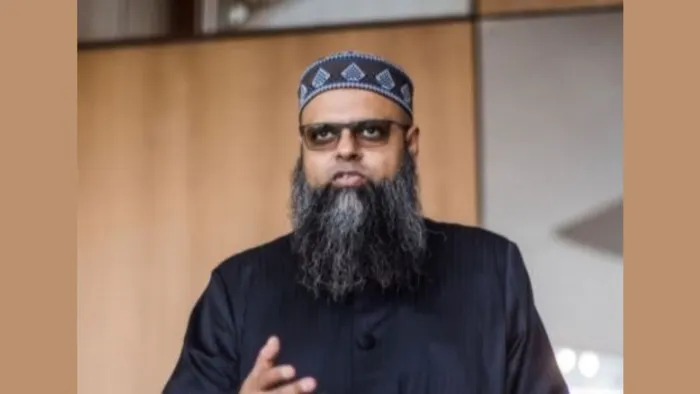
DA Health spokesperson Dr Imran Keeka condemns the disrespect faced by patients in public health facilities, asserting that every individual deserves compassion and dignity. He urges that complaints be lodged directly at the facility to ensure accountability and meaningful action, emphasising that respect must govern all interactions in healthcare.
Image: File
Diagnostic services such as MRI and CT scans also face significant backlogs, he added. Keeka said the consequences of delayed diagnosis, particularly in cancer and other serious conditions, can be devastating.
“This challenge affects all hospitals offering specialised services and is often linked to a shortage of specialists and trained personnel,” he said.
He said it is encouraging that, for the first time in many years, the Department of Health has advertised 50 specialist posts.
“We believe this is a positive step towards addressing these backlogs.”
According to Keeka, the department also has a duty to keep morale high and retain those specialists in state service.
The DA has expressed concern, citing off-the-record discussions with stakeholders who suggest they intend to leave the department.
Reasons for this potential exodus include poor working conditions, problems with equipment, and insufficient staffing, according to Keeka.
“While the department’s financial position has shown slight improvement, far more must be done to ensure that every cent is directed toward patient care. This will require refined systems, stronger oversight, decisive action against misconduct, and a renewed commitment to accountability.”
He added that exploring public-private partnerships may provide additional capacity and innovation in reducing waiting lists and improving service delivery.
In July, Keeka received a written response to questions he posed from KZN Health MEC Nomagugu Simelane about the state of the general surgery service in the province.
State hospitals offering general surgery services in KZN | Number of Specialist Surgeons | Number of Specialist Surgeons required | Number of Medical Officers |
| 1. Inkosi Albert Luthuli Central Hospital | 11 | 3 | 8 |
| 2. Ngwelezane Hospital | 5 | 1 | 14 |
| 3. Harry Gwala Regional Hospital | 4 | 2 | 2 |
| 4. Addington Hospital | 4 | 2 | 2 |
| 5. Madadeni Hospital | 2 | 4 | |
| 6. Port Shepstone Hospital | 1 | 2 | 2 |
| 7. RK Khan Hospital | 6 | 5 | |
| 8. General Justice Gizenga Mpanza Hospital | 1 | 6 | 2 |
| 9. Dr Pixley Ka Isaka Seme Hospital | 4 | 2 | 3 |
| 10. Greys Hospital | 6 | 2 | 2 |
| 11. Victoria Mxenge Hospital | 10 | 2 | 2 |
| 12. Prince Mshiyeni Memorial Hospital | 6 | 2 | 6 |
| 13. Ladysmith Hospital | 1 | 3 | 6 |
There are 61 full-time specialist surgeons at the 13 hospitals that offer general surgery services in the province, 15 of whom have applied for remuneration work outside the public service (RWOPS).
At the time of the response on July 16, there were 3,090 backlogs for appointments in each faculty to see a general surgeon for a first-time appointment.
According to the MEC, 12 of the 13 hospitals require an additional 31 posts to be filled. There are also 35 general surgery registrars currently training at Victoria Mxenge Hospital and Greys Hospital, while no new registrars will be admitted this year.
The Department of Health, both provincially and nationally, was approached for comment more than a week, but did not respond by the time of publication. Individuals approached for comment include Foster Mohale, Nathi Oliphant, Mkhize Sibongiseni, and Agiza Hlongwane.
However, in his parliamentary response, Minister Motsoaledi said all provinces have put measures in place to manage these backlogs, which include but are not limited to surgical marathons, outreach to lower-level facilities to reduce referrals, capacitation of regional hospitals to do some of these surgeries, and upgrading ageing equipment in theatres.
Have thoughts on this topic or other subjects you’d like us to explore? Want to share your experiences? Reach out to me at karen.singh@inl.co.za – I’d love to hear from you!