
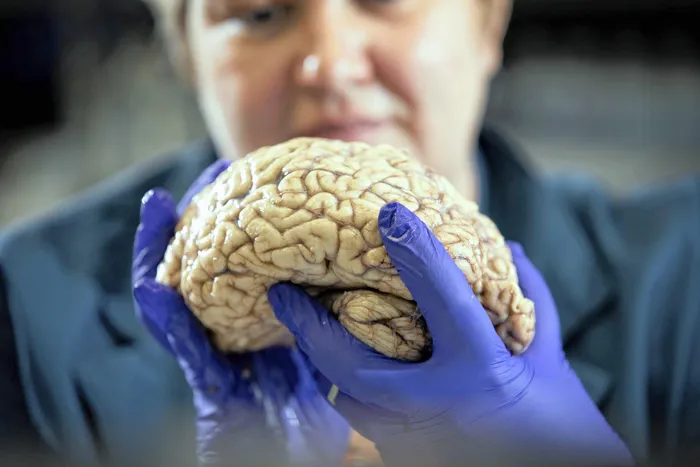
New medical techniques mean brain tumours no longer require cutting through the skull for treatment. And recovery times are much shorter too.
Image: File
While working as a senior communications professional, Samson Mabunda began experiencing troubling symptoms that intertwined to challenge both his career and personal life. Initially dismissed as unrelated, these symptoms — visual disturbances, dizziness, and overwhelming headaches — would lead to a shocking diagnosis: a pituitary adenoma, a non-cancerous tumour at the base of the brain.
“Since my duties centred on writing, editing, and proofreading stories, working on the computer became a daily challenge. The screen appeared to shine and flash, and I constantly had to force my eyes to focus,” recalls Mabunda, describing the ordeal that led to his eventual collapse at work. Rushed to the hospital, he learned that this life-altering health issue was more than just a simple eye problem.
Even after he was discharged, the symptoms persisted. “At 60, I was at retirement age, and although I would have liked to carry on working, my health was changing drastically, and so I called it quits,” he said, contemplating the impact of his condition.

Retired senior communications professional Samson Mabunda can drive again after surgery to remove a brain tumour.
Image: Supplied
Upon visiting his optometrist, Mabunda's hopes for a stronger prescription were dashed as the optometrist sensed deeper issues. A referral to ophthalmologists in Centurion ultimately led him to Dr. Stevens Hlahla, a neurosurgeon at Netcare Unitas Hospital. The tests revealed a pituitary adenoma, a condition that affects pituitary function and can lead to devastating consequences if left untreated.
“Pituitary adenomas are often slow growing and tend to go undetected until significant damage occurs,” Dr Hlahla explains. “These tumours can cause hormonal imbalances and, if they grow large enough, can even compress the optic nerve, leading to severe vision impairment or blindness.” The larger tumours, like the one Mabunda had, are particularly perilous, and the symptoms can often be vague and misleading, resulting in misdiagnoses.
Mabunda shares his experience in the hope of raising awareness, noting how many patients often go undiagnosed for years. “It’s disheartening to hear some patients being dismissed as ‘imagining’ their condition,” Dr Hlahla adds, underscoring the importance of listening to one’s body when unusual symptoms arise.

Neurosurgeon Dr Stevens Hlahla says endoscopic techniques avoid many risks of transcranial surgery, offering new hope for patients previously considered inoperable, or for whom open brain surgery would have been the only option.
Image: Supplied
However, new advancements in medical technology have been a beacon of hope for patients with pituitary adenomas. Dr Hlahla elaborates on the benefits of endoscopic techniques, a minimally invasive approach that avoids the complications associated with traditional brain surgery. Through a carefully guided endoscope, surgeons can access the tumour via the nostrils, significantly decreasing recovery times.
“There is a high probability of cure with the endoscopic approach,” explains Dr Hlahla, who notes that the advancements can restore vision for many, although timing is critical. “This emphasises the importance of early diagnosis and treatment.”
Since undergoing surgery in August 2023, Mabunda has experienced a remarkable turnaround in his quality of life. “Today, I am living my life to the fullest. I can drive again, and it feels as though a heavy weight has been lifted from my body,” he reflects with gratitude.
His story serves as a precious reminder: “The signs and symptoms we feel are messages about our state of health, and we should never ignore them,” he advises.
IOS