
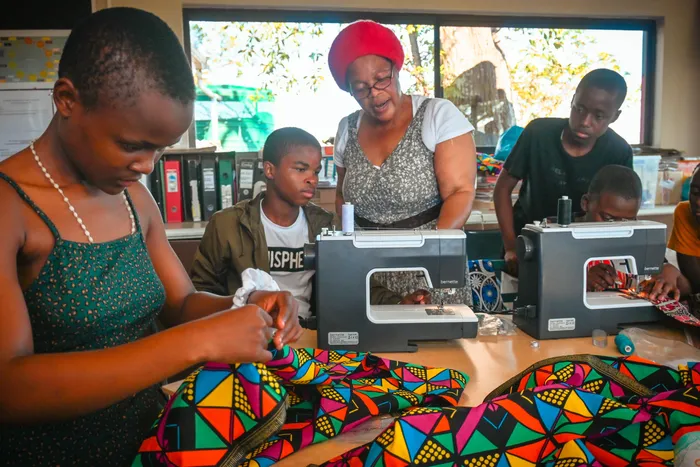
Grade 8+ Skills Programme participants learn to sew ‘bhayis’ (a traditional blanket shawl) using sewing machines during a practical skills session facilitated by nonprofit Thanda.
Image: Supplied
In a transformative effort to support rural teenagers as they transition from adolescence to adulthood, nonprofit organisation Thanda has officially launched its Grade 8+ Skills Programme. The initiative comes in response to the growing challenges faced by young people in under-resourced communities, where limited guidance and opportunities often hinder their development.
Thanda's Grade 8+ Skills Programme aims to strengthen confidence and cultivate extracurricular opportunities through hands-on skills development. By providing structured lessons twice a month across three semesters, the programme has already encompassed a collective 240 hours of skills training since kicking off its pilot phase in early 2025. The goal is clear: equip participants with practical competencies while developing important life skills such as problem-solving, resilience, patience, and teamwork.
Each skills session is facilitated by local elders who serve as craftspeople and mentors, working alongside Thanda's team to offer computer training and programme co-ordination. This intergenerational teaching model not only fosters a sense of belonging among participants, but also preserves traditional knowledge while imparting relevant, modern skills.
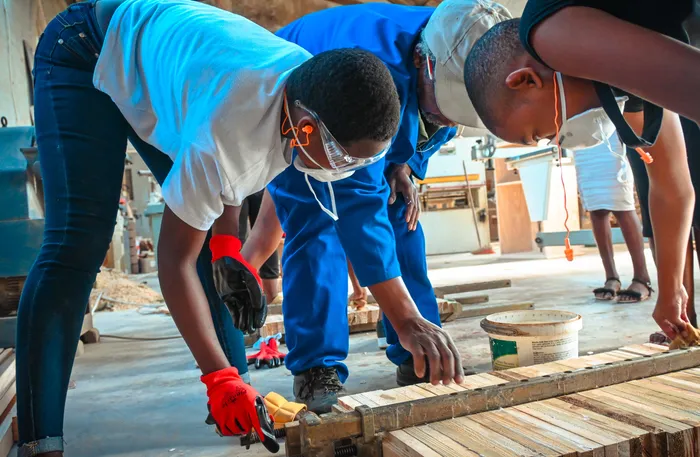
Community mentor Bernard leads a carpentry session with pupils in Thanda’s Grade 8+ Skills Programme teaching foundational woodworking skills.
Image: Supplied
Wesihle Msane, a 15-year-old participant, reflects on her experience: “When I cut my first circle on the bandsaw, I realised if I put my mind to something, I can achieve it. Thanda has become a home for many of us, where we can talk about things we can’t always say at home. A certificate doesn’t guarantee a job, but a skill can change your future.”
The inception of this programme was spurred by a significant trend: older teens returning to Thanda’s community centre even after they had aged out of the flagship Siyazazi programme, which serves children up to Grade 7. “Their willingness to keep coming back told us that they wanted to belong to a place where they could create and take pride in what they make,” Angela Larkan, Executive Director and Co-Founder of Thanda, explains.
Sixteen-year-old Smukelo Chiliza echoes this sentiment, stating, “I used to watch older boys in my area make music on laptops. Now, thanks to Thanda, I can type, use Excel, and do much more. It’s the only place in our community where we can explore our talents and learn for free.”
The Grade 8+ Skills Programme includes carpentry, sewing, beading, and digital literacy classes. While these competencies are undeniably valuable, Larkan emphasises that the programme’s aim extends beyond material skills: “Our programme is about restoring that feeling of ‘I can do this.’ It builds a sense of worth that ripples into every part of our participants’ lives.”
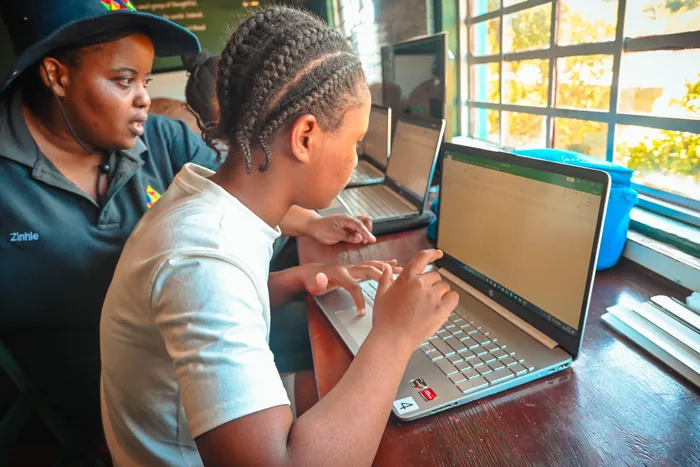
Thanda facilitator and mentor Zinhle helps pupils as they develop essential digital skills during computer lessons in the Grade 8+ Skills Programme.
Image: Supplied
Moreover, the structure of the programme encourages community cohesion, keeping youth engaged in a supportive ‘ecosystem’ that connects them with positive role models and fosters meaningful contributions to their families and communities. The expanded model will accommodate both beginners and semi-skilled learners, while more experienced participants will take on mentorship roles to enhance peer-to-peer learning.
The next phase of the programme aims to weave in entrepreneurial thinking and applied skills, equipping youth to pursue practical livelihoods and small business opportunities within their communities. “By investing in rural teens,” Larkan says, “we’re not just teaching skills; we’re shaping futures that feel possible.”
This year, 75 adolescents from several rural wards in Mtwalume participated in the programme, with plans for Thanda to increase reach to at least 85 pupils in 2026. Collaborations with partners are underway to ensure the programme’s sustainability, increase facilitator capacity, and broaden access to more youth in the region.
For more information about how to get involved with Thanda and support this initiative, visit www.thanda.org or contact info@thanda.org.
IOS